When people talk about iGaming, bingo is rarely the first game that comes up, most people talk about sportsbook, online casino or whatever new game format is getting attention at that moment. Yet Bingo keeps showing up year after year, and the reason for that is that it is simple. Players already understand it.
You might find that to be obvious but Bingo’s simplicity is actually one of its biggest strengths.
A new player can usually grasp the basics within minutes, there are no betting systems to learn, no complicated odds to explain.
You just get a card, the numbers are drawn and you try to complete the pattern before everyone else. And with all our experience with iGaming, we can say this with certainty: ‘the easier a product is to understand, the easier it is to market, explain, and convert.’
What Is Bingo?
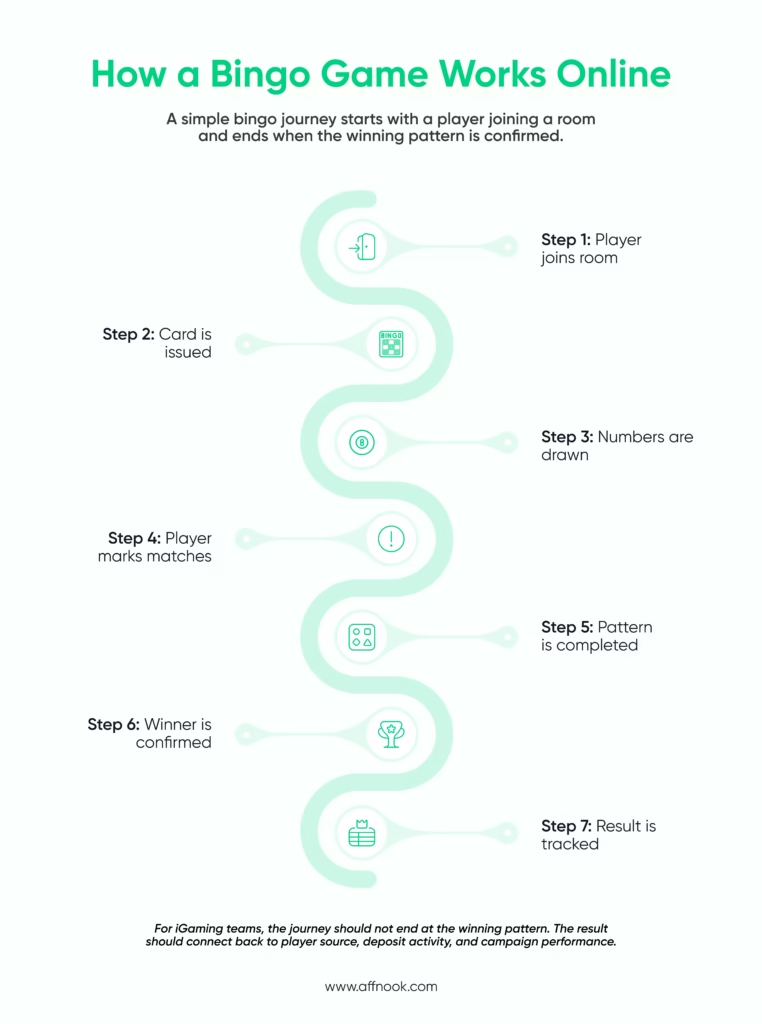
It is a game of chance where players receive cards or tickets with numbers. Numbers are then selected at random. Players mark matching numbers on their card, and the winner is the first person to complete the required pattern.
That pattern may be one line, two lines, four corners, or a full house. The exact format depends on the market, product, and operator.
In regulated markets like the UK, bingo is treated differently from casino gaming. It is described as a lottery played as a game, and it generally needs three basic features. It should be an equal chance game, it should involve player participation, and it should have a clearly defined endpoint.
That is why iGaming teams should not treat every number-based game as the same thing. The label matters. The structure matters. The player journey matters too.
How Does Bingo Work in iGaming?
Online bingo follows the same basic idea as traditional halls, but the experience is digital.
A player buys a card or ticket. Numbers are drawn by the system. Matching numbers are marked on the card. The game ends when a player completes the winning pattern.
Some products automate the marking process. Others keep the player more involved. Well, that detail matters because participation is one of the things that helps separate the game from a straight lottery.
The Gambling Commission also notes that bingo can be delivered through technology, including online play, bingo machines, and handheld devices.
For iGaming brands, this creates more product flexibility. You can run scheduled rooms, themed games, jackpot formats, social rooms, or promotion-led campaigns.
For affiliates, the pitch is also easy to understand. It is not about explaining complex odds. It is about showing players a game they can join quickly.
Why Does Bingo Matter for iGaming Growth?
Bingo is not always the most famous vertical in iGaming. Still, it has serious commercial weight.
Statista projected worldwide Lottery and bingo revenue at US$153.99bn in 2025. Its market data included GGR, user figures, ARPU, user penetration, and online and land-based revenue breakdowns.
It can support casual player acquisition. It can help brands reach entertainment-first players. It can also give affiliate networks a softer entry product to promote in mature markets like the UK, Europe, and LATAM.
Players understand the format fast. Publishers can explain it without heavy education. Operators can create themed campaigns without making the offer feel too technical.
So, the value is really in how easy the game is to communicate.
What Makes Online Bingo Different From Traditional Bingo?
Traditional bingo often depends on a hall, a caller, a fixed schedule, and a shared room experience.
Online formats change that flow.
Players can join from mobile or desktop. Games can run more often. Rooms can be segmented by stake size, theme, jackpot, region, or language. That makes the product easier to localise across the UK, Europe, LATAM, MENA, and the US.
Online journeys also create more trackable events.
A team can track registration, first deposit, first game joined, repeat play, bonus use, GGR, NGR, and player lifetime value. With the right affiliate tracking, a campaign is not judged only by signups. It can be judged by player quality.
A bingo campaign with fewer signups may still win if it brings better depositing players, stronger repeat activity, or lower bonus abuse.
How Is Bingo Regulated Across Key Markets?
Bingo sits inside a regulated category, and the rules can change by market.
In the UK, Bingo Duty was abolished from 1 April 2026. For periods starting on or after that date, businesses no longer need to register or submit returns for Bingo Duty. Older periods may still need returns, and remote bingo for UK customers can still fall under Remote Gaming Duty.
South Africa’s latest gambling sector summary reported R1.7 billion in bingo GGR for FY2024/25. The sector accounted for 2% of GGR across all gambling modes, which shows that it remains a smaller but still measurable regulated vertical.
In Europe, electronic bingo can face tighter controls. Check registration duties, player protection rules, and loss control requirements before running campaigns in any regulated market.
How Can Teams Track Bingo Affiliate Performance?
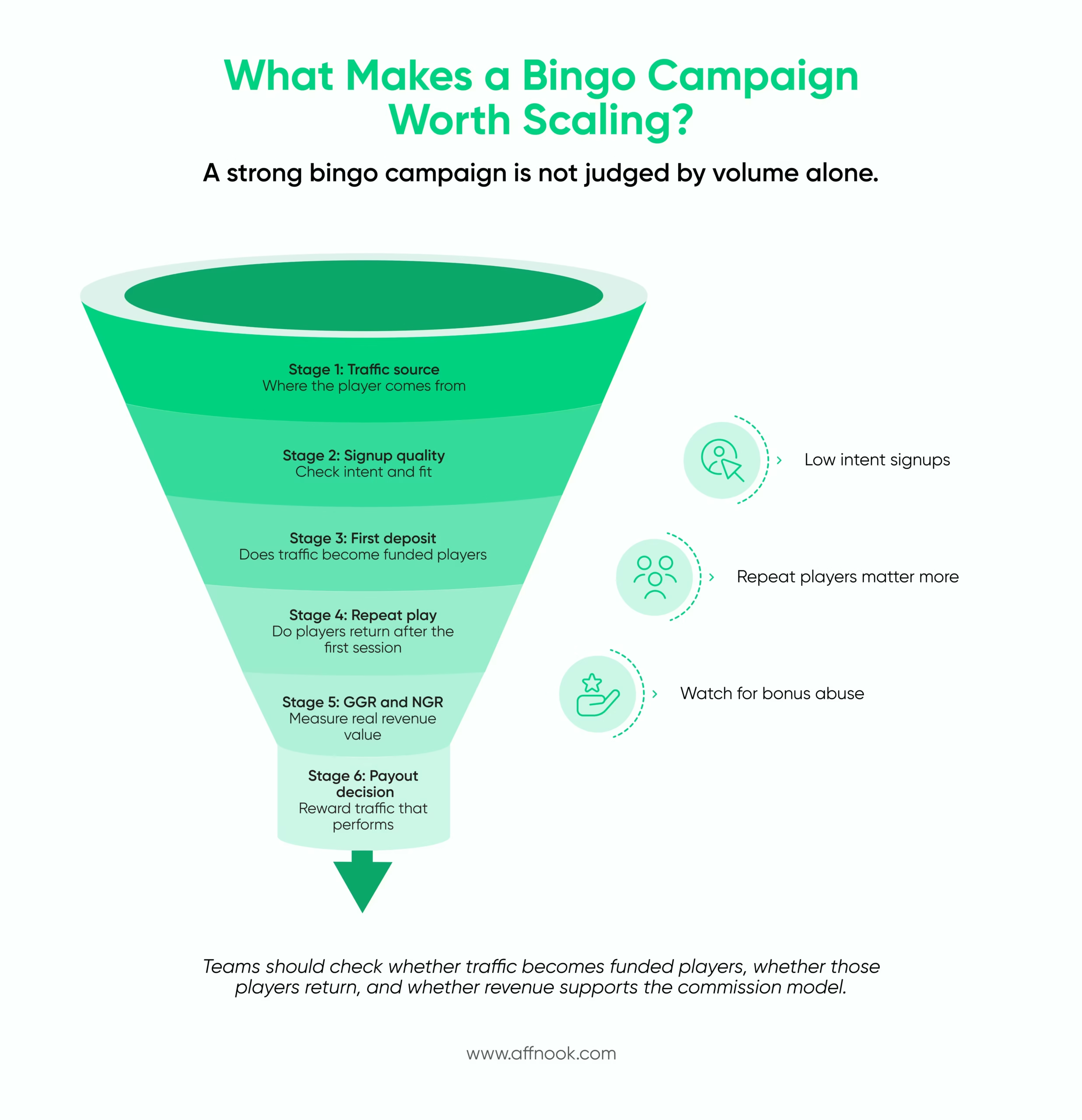
A good campaign setup should connect the affiliate source to deposit behaviour, game activity, bonus usage, payout rules, and player value. This is important when campaigns run across different geos, brands, and partner types.
Track these events where possible.
1. First Time Deposit
This shows whether the campaign is bringing real funded players. A high signup count with low deposits may point to weak traffic quality.
2. GGR and NGR
These help teams understand revenue before and after deductions. This can be more useful than only counting registrations.
3. Repeat Play
This shows whether players return after the first session. It helps separate curiosity traffic from real value.
4. Bonus Behaviour
This helps teams spot players who only chase offers. Pairing this with fraud prevention can protect the budget and improve payout control. Pay fairly and scale the traffic that actually works.
What To Do Before Promoting Bingo?
Check whether the product is allowed, how it is defined, and what responsible gaming rules apply. This matters more when campaigns run across the UK, Europe, LATAM, MENA, and the US.
Then review the offer. A good offer should be simple to explain, easy to track, and clear about eligibility. Players should understand what they get. Partners should understand how they are paid.
Then test the campaign with tracking. Use unique links, partner-level reporting, and event-based data.
Conclusion
Bingo is simple for players, but it is not a basic product for iGaming teams.
It needs clear rules, a clean campaign setup, careful tracking, and market-level awareness. Teams should understand the game format, define the player journey, track real value, and review partner quality before scaling spend.
The next steps are clear.
Check the market rules. Map the player journey. Set up event-level tracking. Review affiliate payouts against GGR, NGR, deposits, and repeat play. Then scale the partners who bring clean and useful traffic.
That is how bingo moves from a familiar game to a measurable growth channel.
Frequently Asked Questions
1. Is bingo a casino game or a lottery?
Bingo can feel close to both, but in regulated markets like the UK, it is often treated as a lottery played as a game. The difference matters because casino games, lotteries, and fixed odds betting can follow different rules. For iGaming teams, the safer approach is to review the game structure before promotion. Check whether the format has equal chance play, player participation, and a clear endpoint.
2. Why do affiliates promote bingo offers?
Affiliates promote bingo because the product is easy to explain and often appeals to casual players. A publisher does not need to teach complex odds or betting systems. The message can be simple, such as join a room, get a card, and play for a pattern. For affiliate teams, the real test is quality. Good bingo traffic should show deposits, repeat activity, and fair bonus use.
3. What metrics matter most in bingo affiliate campaigns?
The most useful metrics are first-time deposit, GGR, NGR, repeat play, bonus use, and player lifetime value. Clicks and registrations are still useful, but they do not show whether a player is commercially valuable. A bingo campaign may look strong at the signup level and weak at the revenue level. That is why teams should connect affiliate source data to post-signup activity before changing payouts or budgets.