The 2026 FIFA World Cup is the largest football tournament in history, and it is set to redefine the commercial ceiling of sports betting. With 48 nations competing across 104 matches in the United States, Canada, and Mexico, the structural, regulatory, and technological forces converging on this single event are unlike anything the industry has seen before.
For iGaming operators, sportsbook brands, and affiliate marketers, the question is no longer whether to prepare. It is whether their platforms, partnerships, and programmes can grow fast enough to capture the moment.
| $150B+ | 104 | 6B+ | 60% |
| Projected global betting handle | Matches, the most ever | Anticipated global viewers | Fans who plan to wager |
This report examines the FIFA World Cup betting landscape in 2026. It covers the size of the global market, the key trends reshaping wagering behaviour, the geographic opportunities that matter most, the affiliate marketing ecosystem evolving around the tournament, and the platform capabilities operators need to win. It also addresses the fraud and compliance risks that every sportsbook must take seriously before, during, and after the tournament.
The Super Bowl moves the needle. The World Cup rewrites it. With 48 nations, 3 host countries, and a global fanbase that dwarfs any single league, the 2026 FIFA World Cup is an important FIFA World Cup betting opportunity iGaming has ever seen, and the operators who prepare now will be the ones who capture it.
This report examines the FIFA World Cup betting landscape in 2026. It covers the size of the global market, the key trends reshaping wagering behaviour, the geographic opportunities that matter most, the affiliate marketing ecosystem evolving around the tournament, and the platform capabilities operators need to win. It also addresses the fraud and compliance risks that every sportsbook must take seriously before, during, and after the tournament.
The brands that convert tournament bettors into long-term players through fraud-proof affiliate programmes and data-driven commission structures will define the competitive landscape for years to come.
1. The Scale of the FIFA World Cup Betting Opportunity
Every four years, the FIFA World Cup reshapes the global sports betting calendar. The 2022 tournament in Qatar generated approximately $35 billion in sports betting activity, up 65% from the 2018 tournament in Russia, establishing a clear trajectory of compounding growth.
For 2026, analysts are projecting a leap that makes even those gains look modest.
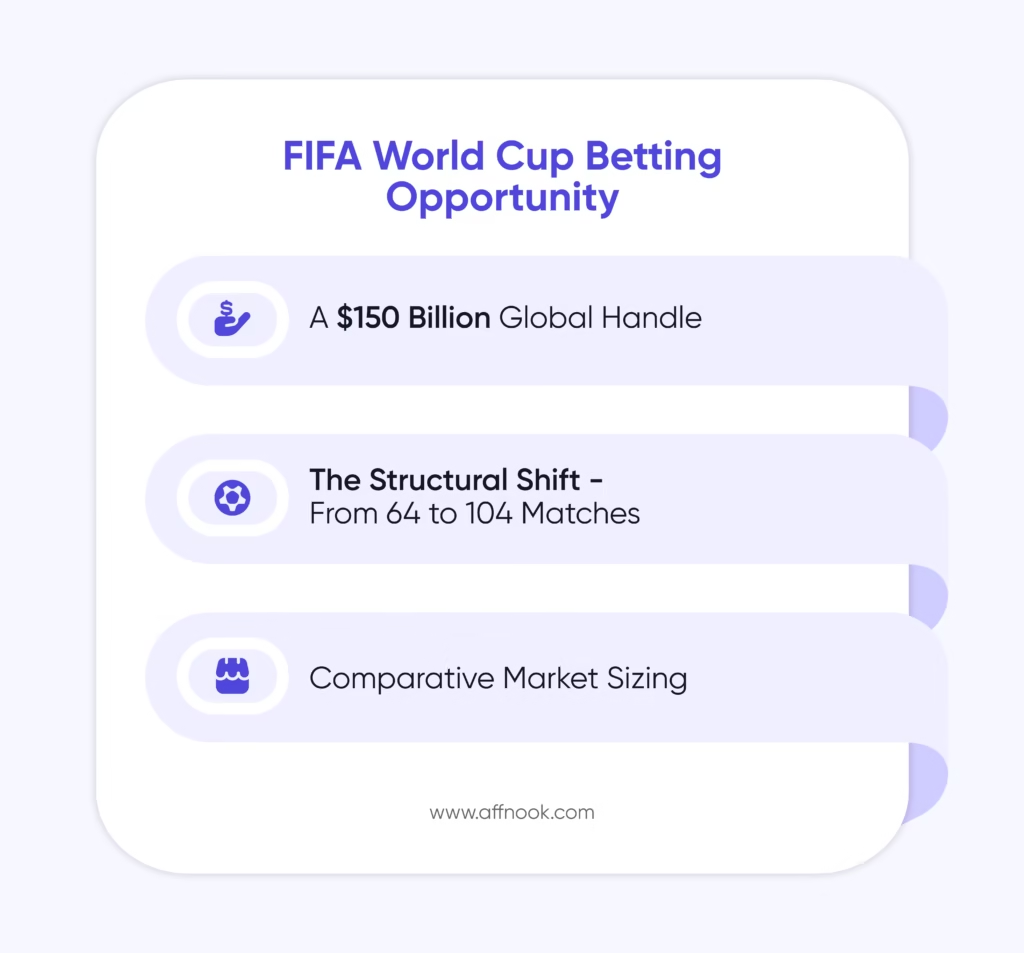
A $150 Billion Global Handle
Global sports betting on the 2026 World Cup is projected to surpass $150 billion. That figure reflects a combination of structural changes: more matches, more qualified nations, more regulated markets, and the maturation of digital betting infrastructure worldwide.
The 2018 tournament in Russia generated an estimated €136 billion in global wagering activity, establishing a precedent for triple-digit-billion turnover even before the era of widespread mobile betting apps and same-game parlay markets.
The 2026 event is larger by design and will take place in a more digitally mature betting ecosystem with wider access to live data and micro-markets.
The United States market alone accounts for a significant share of that global story. Deutsche Bank analyst Steven Pizzella projected US betting handle on the 2026 tournament at a base case of $3.3 billion, with projections ranging from $2.5 billion to $4.1 billion.
That would represent more than double the estimated $1.6 billion wagered in the US during Qatar 2022, itself a figure constrained by the comparatively smaller number of regulated states and the unfriendly time zones of Middle Eastern broadcast windows.
The Structural Shift – From 64 to 104 Matches
The expansion from 32 to 48 participating nations, and from 64 to 104 matches, is the single most commercially significant structural change in World Cup history. For sportsbooks, every additional match is an incremental revenue event.
Group stages now consist of 12 separate groups, followed by a new round of 32 before the traditional knockout rounds begin. This gives operators hundreds of additional opportunities across player props, live wagering markets, score predictions, corner totals, booking cards, and halftime betting options.
For affiliate marketers, the extended calendar spanning June 11 to July 19, 2026, over a full 39-day window means sustained traffic acquisition campaigns rather than short-burst promotion strategies. The financial consequences of that calendar extension compound across every commercial metric.
Comparative Market Sizing
| Tournament | Global Betting Handle | US Handle (est.) | Matches | Teams |
| Russia 2018 | €136 billion | N/A (pre-PASPA) | 64 | 32 |
| Qatar 2022 | $35 billion | $1.6 billion | 64 | 32 |
| USA/CAN/MEX 2026 (projected) | Over $150 billion | $2.5B to $4.1B | 104 | 48 |
The growth trajectory is not merely cyclical. It reflects secular expansion: more regulated markets globally, deeper mobile penetration, a maturing live-betting ecosystem, and, uniquely for 2026, the combination of a North American host and the largest regulated US sports betting market in history.
2. Regulatory Landscape and Geographic Opportunity in FIFA World Cup Betting
One of the most consequential changes in sports betting over the four years since Qatar 2022 is the breadth of new regulated markets that have come online. The global regulatory environment has never been more favourable, or more complex, for operators running international affiliate programmes.
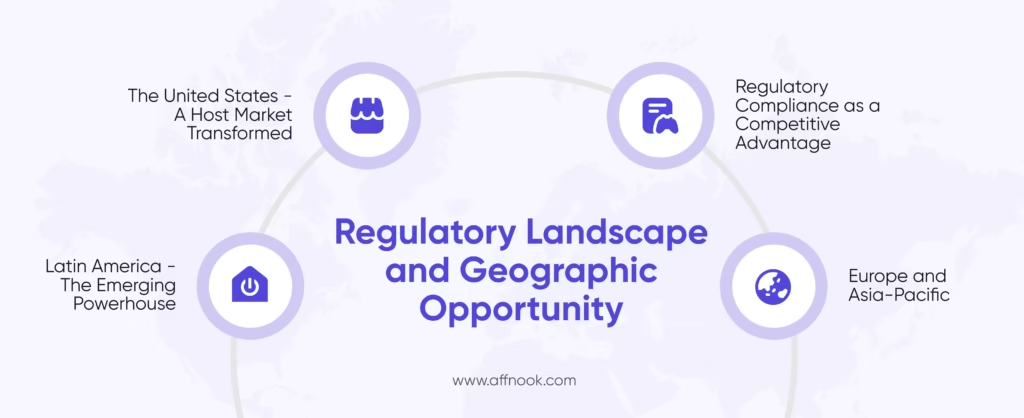
The United States – A Host Market Transformed
The 2018 Supreme Court decision in Murphy v. NCAA struck down the federal Professional and Amateur Sports Protection Act (PASPA), opening the door for individual states to legalize and regulate sports betting.
At the time of the 2022 World Cup, 31 US states had enacted some form of legalisation. By the start of 2026, that number had expanded to 38 states plus Washington D.C. and Puerto Rico, covering approximately 135 million eligible adults, up 20% from 104 million in 2022.
The significance of the 2026 tournament cannot be overstated. Matches held across US cities in time zones that align with evening prime time eliminate the single biggest obstacle to US engagement that hampered Qatar: the 3 AM kickoffs.
American audiences will watch morning, afternoon, and evening fixtures at normal viewing hours, with legal sportsbooks, digital betting apps, and broadcast betting integrations all active simultaneously.
Note –
Legal online sports betting remains unavailable in California, Texas, Alabama, and Georgia as of May 2026. Operators and affiliates targeting US audiences should ensure geo-targeting compliance and should not direct bettors in non-regulated states toward offshore books.
Latin America – The Emerging Powerhouse
No region bleeds football like Latin America, and the data makes that clear. The 2024 Copa America drew 84.6 million viewers in Brazil alone, an 82% jump over 2021, and 86% of Latin American bettors plan to wager on the 2026 FIFA World Cup, according to Optimove Insights.
The co-hosting role of Mexico and the rising regulatory tide across Latin America position the region as the most dynamic new growth corridor in World Cup betting.
Brazil, Peru, Chile, and Paraguay have all enacted or advanced legislation establishing formal online betting frameworks since 2022. Brazil’s regulated market alone represents one of the largest sports betting populations on the planet.
For operators running affiliate programmes, Latin America presents a significant opportunity for player acquisition. The condition is that campaigns must be structured to comply with the distinct regulatory requirements of each country and delivered in localised languages with region-specific payment methods.
Europe and Asia-Pacific
The United Kingdom remains the most mature regulated iGaming market in the world and a major source of FIFA World Cup Betting volume. European operators and their affiliates will compete intensely for engagement across the tournament’s duration, with enhanced in-play markets, bet builder tools, and promotional campaigns driving acquisition.
The UK Gambling Commission’s ongoing regulatory updates mean compliance is non-negotiable for any affiliate-driven acquisition strategy.
In the Asia-Pacific region, enormous volumes operate across a complex mix of regulated, grey, and black markets. India’s growing legal fantasy sports and emerging betting frameworks position it as a critical long-term market.
The Philippines, Japan, and parts of Southeast Asia each carry significant betting populations. For affiliates operating in these geographies, due diligence on local advertising regulations is essential, but the potential growth is transformative for operators who establish the right regulatory footing.
Regulatory Compliance as a Competitive Advantage
The expansion of regulated markets globally raises the compliance bar for the entire industry. Operators running multi-geography affiliate management programmes must manage geo-specific advertising standards, bonus promotion restrictions, and responsible gambling messaging requirements.
Affiliates that position themselves as trusted, compliant partners rather than volume traffic sources operating at the edge of the rules will command better commission structures and longer-term programme relationships.
3. Betting Trends Shaping the 2026 FIFA World Cup Tournament
The nature of World Cup betting has changed substantially since 2022. Three parallel forces, namely technological advancement, regulatory expansion, and shifting bettor demographics, are converging in 2026 to create wagering behaviour patterns that operators and affiliates need to plan for explicitly.
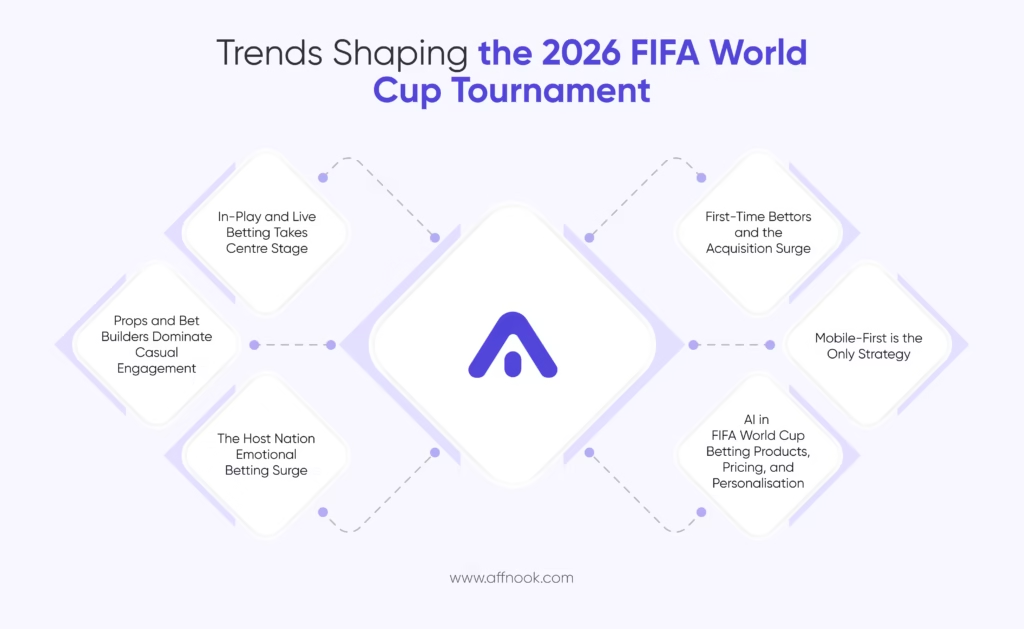
In-Play and Live Betting Takes Centre Stage
Live, in-play betting has been the dominant growth driver in sports wagering for several years, and the 2026 World Cup will be its largest showcase yet. Group-stage matches run across multiple time zones, often during US working hours, which means mobile in-play wagering is the primary access point for the majority of bettors.
Sportsbooks monitor real-time data from player movement, substitution timing, possession trends, and tactical adjustments during every match, with odds updating almost instantly after meaningful on-pitch moments.
Operators are investing heavily in real-time data infrastructure to power this experience. Sportradar’s Alpha Odds service uses AI-driven algorithms to generate bespoke betting prices aligned with operator risk exposure and live market conditions.
The company reports that its automated odds recalculation tool improved client profits by an average of 10% in 2023 compared to conventional odds products. For affiliates, referring bettors to platforms with deep live market depth is both a differentiator in creative campaigns and a driver of higher lifetime value.
As more bettors adopt second-screen habits, granular live markets lift total handle by turning every phase of play into a decision point. This is not a peripheral product feature for 2026. It is the core of how most bettors will engage with the tournament.
Props and Bet Builders Dominate Casual Engagement
Proposition bets covering player-specific markets for goals, assists, shots on target, corners, bookings, and dozens of other outcomes are the fastest-growing product category in sports betting globally. Parlay and prop bets already account for 27% of total US sports betting volume, and a disproportionately higher share of operator revenue, driven by recreational bettors gravitating toward same-game parlays and player props, which carry hold rates exceeding 15% for operators.
Kambi’s 2025 Sports Betting Trends Report found that 88% of Super Bowl pre-match wagers using the bet builder function included at least one prop bet. The World Cup will amplify this behaviour significantly as casual bettors drawn to the tournament’s biggest names place wagers on individual performance rather than match outcomes alone.
For operators, the commercial implication is material. Prop menus increase average bet counts per session, extend engagement throughout the match, and serve the casual bettor who may not have a strong view on which team wins but has a clear opinion on whether a favourite player will score.
Affiliates whose content strategy captures this audience through player preview guides, prop bet explainers, and performer-specific articles will generate significantly higher conversion rates than those focusing exclusively on outright betting markets.
First-Time Bettors and the Acquisition Surge
A survey commissioned by payment platform Paysafe of 3,850 respondents across North and Latin America found that 60% plan to wager on the 2026 World Cup. Crucially, 29% of US bettors engaging with the tournament will be wagering on a World Cup for the first time.
An estimated 20% of all 2026 World Cup bettors globally are expected to be first-timers, driven by betting legalisation in the US and much wider digital access than existed four years ago.
This represents a structural acquisition opportunity that extends well beyond the tournament itself. A bettor acquired during the World Cup group stage who deposits, places wagers, and has a positive platform experience in June 2026 represents a potential long-term active player whose lifetime value to an operator may extend years into the future.
The operators and affiliates who convert tournament excitement into registered, depositing players and then retain those players in domestic leagues, Champions League, and other sports will generate outsized returns on their World Cup affiliate investment.
Mobile-First is the Only Strategy
Mobile betting is not a segment of the market. It is the market. The US now has 38 states with legal sports betting, up from 31 during Qatar 2022, meaning an entirely new tier of mobile-first bettors is entering the market for the first time.
Betting apps determine whether a sportsbook captures its full commercial potential during the tournament or cedes share to competitors with better mobile UX. Group-stage fixtures running during working hours mean second-screen betting will be the dominant engagement pattern for tens of millions of bettors.
AI in FIFA World Cup Betting Products, Pricing, and Personalisation
Artificial intelligence is reshaping how operators build and market their FIFA World Cup betting products across three areas:
- Dynamic odds pricing – AI algorithms analyse real-time data to generate player-specific pricing, moving beyond static market odds toward individually calibrated offers
- Personalised bet-builder recommendations – operators surface tailored accumulator suggestions based on individual betting history and preferences, increasing engagement and ticket size
- AI-driven promotions – bonus structures, free bet triggers, and loyalty incentives are increasingly automated and personalised at scale, reducing blanket promotional spend in favour of targeted retention
For affiliates and affiliate managers, AI is also reshaping how FIFA World Cup betting traffic gets acquired and ranked. AI-generated content, SEO volatility, and algorithmic content ranking have made World Cup traffic more competitive and technically demanding than previous cycles.
The strategies that now drive disproportionate traffic share include:
- Community-led platforms and forums that generate authentic engagement signals
- Video content optimised for algorithmic discovery across YouTube and short-form channels
- Proprietary data and original research that AI-generated content cannot replicate
The Host Nation Emotional Betting Surge
Host country sentiment is one of the most powerful conversion triggers in sports betting. Fans who would not normally wager on football are drawn in by national pride when their own country is hosting or competing prominently.
For 2026, the United States, Mexico, and Canada all carry this dynamic simultaneously. In the US, where sports betting is now legal in 39 states, that combination of hosting duties and widespread legal access creates an acquisition environment with no historical parallel.
4. The Affiliate Marketing Opportunity in FIFA World Cup Betting
Affiliate marketing has become one of the primary digital channels through which iGaming operators acquire players during major tournaments.
The combination of high consumer intent, sustained calendar volume, and global audience reach makes the World Cup the most commercially important affiliate event in the iGaming calendar. The 2026 edition represents an expansion of that opportunity that has never previously been achievable.
Why the World Cup Is the Peak Affiliate Event
FIFA World Cup Betting finds its most natural audience once every four years. And a big reason for that is timing. Prediction markets have spent the last few years quietly making “having a stake in the outcome” feel completely normal, and that cultural shift carries over. For users in markets where betting is legal, the mental barrier is lower than it has ever been.
What does the heavy lifting, though, is genuine fan interest. People are not casually watching these matches. They have opinions. They have favorites. They care deeply about how things unfold. That kind of real emotional investment in results is exactly what makes the right acquisition strategy click.
For established affiliates, the World Cup also enables more favourable commission negotiation. Brands consistently seek trusted affiliate partners with large, active followings during peak periods. Partners who can demonstrate quality player delivery, measured by deposit rates, first-bet completion, and early player LTV signals, will command revenue share structures that reflect their commercial value.
The FIFA viewership base is also simply enormous. The global soccer audience stands at approximately 3.5 billion people and continues to grow. FIFA anticipates total tournament viewership exceeding 6 billion people in 2026, meaning roughly 75% of the planet’s population will watch at least some part of the tournament.
Content Strategies That Convert
The most effective affiliate content formats during a World Cup fall into distinct categories, each serving a different segment of the bettor journey.
- Outright market guides cover previews of tournament favourites, dark horses, and value picks that capture search traffic from bettors researching which team to back before the tournament begins.
- Match preview and team analysis articles are pre-match pieces for individual fixtures that capture intent traffic in the days and hours before kickoff, embedding promotional betting offers naturally within tactical and statistical analysis.
- Prop bet explainers and player performance previews focus on individual player markets and convert casual fans with specific team or player allegiances. This is the fastest-growing bettor demographic and one that is largely underserved by traditional football betting content.
- Live betting guides are educational content explaining in-play markets, how live odds work, and platform-specific live features. This type of content drives both conversion and bettor confidence, particularly among first-time users.
- Bonus and promotion roundups are comparative content covering welcome offers, enhanced odds, free bet promotions, and cashback deals across sportsbook partners. This format captures high-conversion, decision-stage traffic from bettors who have already decided to wager and are choosing where to do so.
- Video and social content covers short-form clips, odds explainers, and match reaction pieces distributed across YouTube, Instagram, and TikTok to reach audiences who do not find information through traditional search channels.
The critical insight for 2026 is that undifferentiated SEO traffic is becoming scarcer and more expensive. Affiliates and affiliate managers who build content strategies on authentic expertise, player-specific data, and community-led distribution will outperform volume-driven approaches in an environment of rising CPCs and AI-mediated search results.
Commission Structures for the Tournament Window
The World Cup creates a specific challenge for commission structuring. The tournament window is defined, intense, and followed by a long post-tournament period during which the true value of acquired players becomes clear. Effective commission models for the 2026 window should reflect this dynamic.
Revenue share models align affiliate incentives with long-term player value, rewarding partners whose referred bettors continue wagering beyond the tournament. These are ideal for affiliates with content strategies designed to build ongoing engagement rather than one-time sign-ups.
CPA models provide immediate, predictable payouts per registered depositing player. These suit affiliates are operating high-volume referral campaigns where individual player LTV is harder to forecast in advance.
Hybrid models combine a lower CPA payment for initial acquisition with an ongoing revenue share component. This structure balances affiliate cash flow requirements with the operator’s long-term value alignment objectives.
The most sophisticated operators are also building tiered commission structures that reward affiliates not just on volume but on the quality of players delivered, measured by first deposit size, early wagering activity, and post-tournament retention metrics.
Affiliates who deliver bettors that convert from first-time World Cup wagers into regular sports bettors represent dramatically higher lifetime value than those who drive sign-up volume without downstream engagement.
5. Technology and Platform Imperatives for FIFA World Cup Betting
The technical infrastructure underpinning an operator’s affiliate programme during a peak event like the World Cup is a direct determinant of commercial performance.
During tournament periods, the volume of clicks, referrals, registrations, and wager events flowing through affiliate tracking systems is orders of magnitude higher than standard operating conditions. Platforms that cannot process that volume in real time, attribute it accurately, and pay it out correctly will lose affiliates to competitors who can.
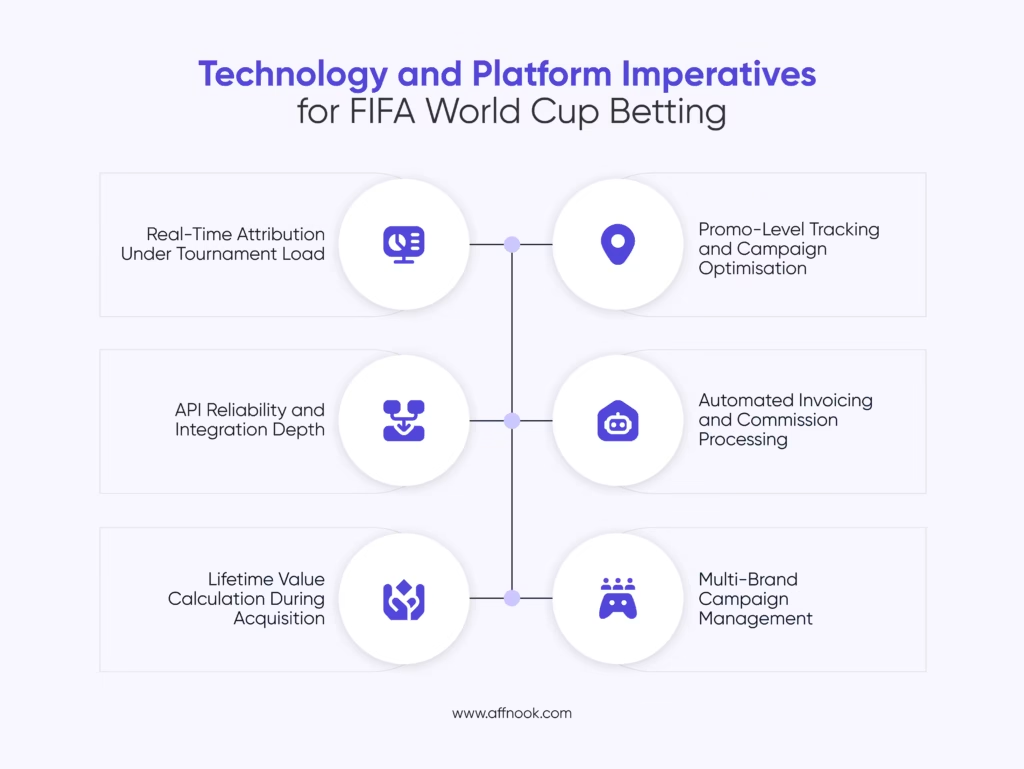
Real-Time Attribution Under Tournament Load
Live attribution data is the foundation of any high-performance affiliate programme. During the World Cup, sportsbooks and their affiliate networks experience massive intraday traffic spikes, particularly in the hours before and during major fixtures.
Affiliate tracking platforms must be capable of maintaining sub-second attribution latency during these spikes, ensuring that every click, registration, and first deposit is correctly attributed to the originating affiliate partner without error or delay.
Delayed or inaccurate attribution creates two compounding problems.
- Affiliates lose confidence in the platform and become less willing to prioritise it in their promotional activity.
- Operators make commission decisions based on incomplete data.
During a tournament where every day brings multiple fixtures and fresh promotional triggers, this can have material financial consequences.
Promo-Level Tracking and Campaign Optimisation
The World Cup is not a single campaign. It is dozens of simultaneously running promotions targeting different geos, different match events, and different bettor segments. Operators need the ability to track performance at the promotional level: which creative, which landing page, which bonus offer, and which affiliate is driving depositing players versus non-converting registrations.
Promo-level insights that surface these distinctions in real time allow affiliate managers to reallocate budget, adjust commission structures, and redirect creative assets within a single tournament day, turning the World Cup’s intensity into a competitive advantage rather than an operational challenge.
Lifetime Value Calculation During Acquisition
The World Cup creates an unusual acquisition environment. Large numbers of first-time or infrequent bettors deposit alongside a platform’s regular active base. The ability to distinguish high-LTV tournament bettors from low-retention sign-ups in real time, and to adjust commission payouts accordingly, is a significant operational capability.
Player lifetime value calculators embedded in affiliate platform reporting allow operators to segment acquired players by predicted long-term value, informing both real-time promotional decisions and post-tournament retention investment.
Multi-Brand Campaign Management
Large iGaming operators often run multiple brands positioned for different geographies or bettor demographics. The World Cup is the single most important event for driving brand differentiation and multi-brand performance analysis.
Managing affiliate campaigns across multiple brands simultaneously through a single platform, with unified reporting, consolidated affiliate management, and cross-brand performance benchmarking, is an operational requirement that separates serious operators from those who are merely participating in the tournament cycle.
Automated Invoicing and Commission Processing
The volume of affiliate transactions during the World Cup creates significant operational pressure on commission processing and invoicing. Manual invoice handling at a tournament is both error-prone and time-intensive.
Automated invoice generation with configurable scheduling, threshold management, and multi-currency support ensures affiliates are paid accurately and on time, maintaining the partner relationships that drive continued promotional activity through the tournament’s 39-day window.
Support for 50 or more currencies is particularly important for operators running international affiliate programmes across the geographies where World Cup betting is most commercially significant.
API Reliability and Integration Depth
The World Cup betting ecosystem requires seamless data exchange between affiliate tracking platforms, sportsbook platforms, CRM systems, payment gateways, and analytics tools. The fastest API refresh rates available, delivering player action and conversion data in minutes rather than hours, allow operators to act on performance intelligence within tournament windows rather than reviewing yesterday’s data the next morning.
Platform providers that offer genuinely two-way API integration, pushing and pulling data across the full marketing stack, give operators the flexibility to build bespoke performance workflows without being constrained by platform limitations.
6. Fraud, Integrity, and Risk Management for FIFA World Cup Betting Operators
The commercial opportunity that FIFA World Cup Betting presents is matched by an equally significant fraud and integrity risk. Global sporting events with multi-billion-dollar wagering volumes attract organised fraud activity in proportion.
The Levels of World Cup Fraud Risk
Organised gambling bonus abuse groups can create thousands of fraudulent accounts to exploit welcome offers during tournament periods. Through coordinated multi-accounting schemes, syndicates may bypass user limits and extract promotional value in an industrial scenario.
Beyond bonus abuse, the World Cup is also a peak period for arbitrage betting, account takeover fraud, and suspicious betting patterns that may compromise match integrity. FIFA maintains an official integrity monitoring partnership with Sportradar specifically to detect suspicious betting activity across all 104 fixtures.
Fraud Prevention Capabilities That Matter in FIFA World Cup Betting
- Blocking data centre traffic filters out conversions originating from cloud providers, VPNs, and proxy networks, which are disproportionately associated with bot activity and fraudulent lead generation.
- IP blacklisting involves maintaining dynamic blacklists of suspicious IP ranges and updating them in real time as new fraud sources are identified during the tournament window.
- Device fingerprinting identifies and blocks conversions from unknown or suspicious device and OS combinations that fall outside normal bettor behaviour patterns.
- KYC and identity verification ensure that players acquired through affiliate programmes complete identity verification at the point of registration, eliminating the possibility of synthetic identities being used to abuse welcome bonuses.
- Continuous monitoring uses in-built fraud protection that works across affiliate tracking, player acquisition, and ongoing player monitoring simultaneously, rather than relying on manual review processes that cannot operate at tournament-level volume.
For operators, the World Cup is a test of fraud infrastructure at the highest volume their systems will ever encounter. Platforms with in-built fraud detection provide a material operational advantage over those relying on point-in-time auditing.
7. Converting FIFA World Cup Betting Excitement into Long-Term Player Value
The World Cup acquisition window is 39 days. The lifetime value of a player acquired during that window extends indefinitely. The operators and affiliates who treat World Cup acquisition as the beginning of a relationship rather than a transactional event will generate long-term returns that significantly exceed those of competitors focused solely on first-deposit volume.
The First-Time Bettor Pipeline
They are sports fans whose engagement with football during the tournament creates a natural gateway to ongoing sports wagering.
The brands that deliver the most intuitive onboarding experience, the clearest educational content, and the most personalized promotional offers during the first weeks of the tournament will be best positioned to retain these bettors beyond July 19.
Post-Tournament Retention Levers
Effective post-tournament retention strategies build on the habits formed during the World Cup and bridge bettors into the next phase of the sports calendar. European domestic leagues resume in August, the NFL season begins in September, and Champions League group stages follow shortly after.
Affiliates and operators who plan content and promotional calendars that transition World Cup bettors naturally into these events, using personalised offers based on World Cup wagering history and demonstrated team or player preferences, will achieve retention rates significantly above tournament-only acquisition campaigns.
A critical strategic imperative for both operators and affiliates is having a clear plan for how to turn one-time World Cup bettors into longer-term players. This requires deliberate retention planning that begins during the acquisition campaign, not after the final whistle.
Affiliate Attribution Through the Retention Window
For affiliates operating on revenue share commission structures, post-tournament player retention is a direct determinant of long-term commission income.
Affiliate programmes that provide partners with visibility into the ongoing performance of players they have referred, not just the initial conversion event, create the right incentive for affiliates to refer genuinely engaged bettors rather than maximising sign-up volume at the expense of quality.
This alignment between affiliate incentives and operator LTV objectives is a defining characteristic of high-performing iGaming affiliate programmes and one that separates platforms built for long-term partnership from those optimised purely for acquisition throughput.
8. Strategic Recommendations for FIFA World Cup Betting Operators and Affiliates
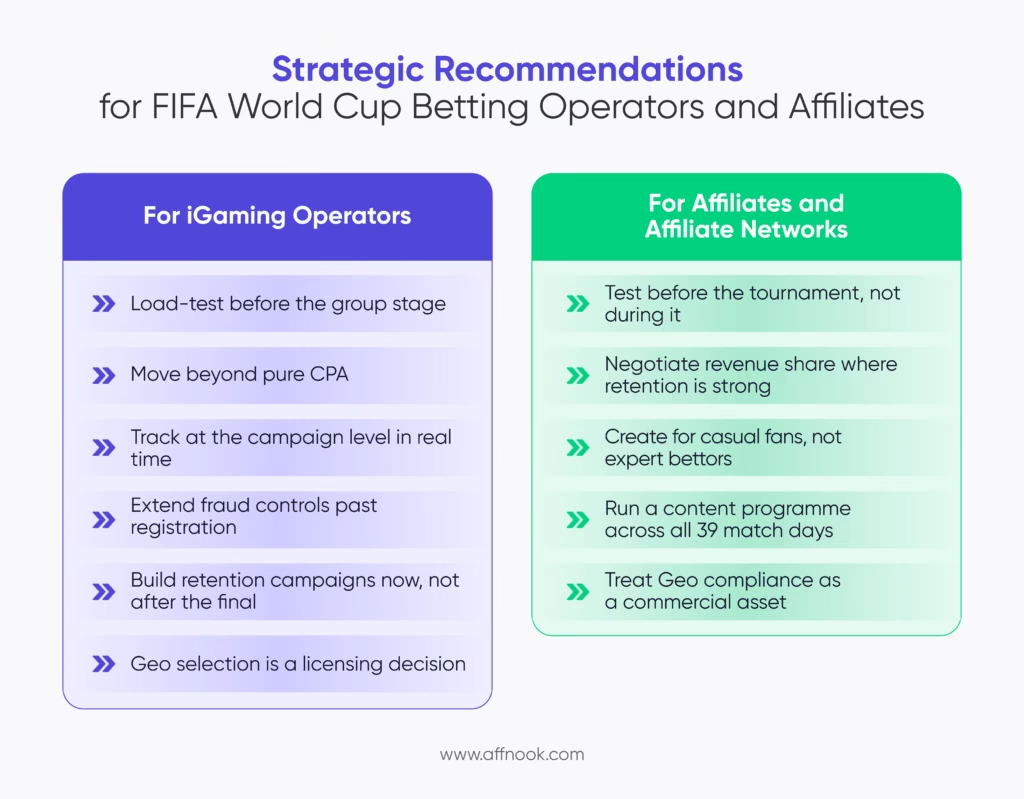
For iGaming Operators
- Load-test before the group stage. A single affiliate campaign during the 2018 World Cup hit nearly 4 million redirects in one day, six times the normal traffic. Platforms that buckle lose conversions and affiliate relationships simultaneously.
- Move beyond pure CPA. Hybrid CPA plus revenue share aligns affiliate incentives with operator LTV. The affiliates worth keeping post-tournament are the ones whose referrals are still active in September.
- Track at the campaign level in real time. Which promo, which geo, which affiliate is producing quality bettors is a live decision during a 39-day window. Bet365 built infrastructure to update ad creatives in seconds based on live match odds, running over 600 dynamically updated ads per month globally.
- Extend fraud controls past registration. Bonus abuse and multi-accounting pass signup checks but never produce genuine revenue. Protect commission budgets at the behaviour level, not just the entry point.
- Build retention campaigns now, not after the final. First-time World Cup bettors are the highest-value long-term cohort the tournament produces. Re-engagement for August and September needs to be planned alongside the June acquisition.
- Geo selection is a licensing decision. Prioritise markets where licensing, payment rails, and localised content are already operational. The 2026 tournament is hosted in the most commercially developed legal sports betting market in the world, and regulatory exposure in unlicensed markets has never been higher.
For Affiliates and Affiliate Networks
- Test before the tournament, not during it. Identify top-converting geos, formats, and landing pages before budget is committed. The World Cup produces high conversion rates with new and returning bettors entering the market at the same time. The group stage is too late for discovery.
- Negotiate revenue share where retention is strong. A CPA on a World Cup deposit is one payment. A revenue share on a bettor active through the club season is recurring income.
- Create for casual fans, not expert bettors. Prop bet guides and player-specific content convert the 2026 growth demographic. Outright market analysis serves an audience that already knows where to go.
- Run a content programme across all 39 match days. DraftKings activated a six-week pre-event campaign ahead of Super Bowl LVII, generating sustained brand presence at a fraction of sponsorship cost. Compounding content authority across the full tournament window outperforms any single launch burst.
- Treat Geo compliance as a commercial asset. Sending traffic to unlicensed operators puts affiliate accounts, payment history, and domain authority at risk. No tournament commission is worth that.
9. Before the Opening Whistle: FIFA World Cup Betting Starts Now
The 2026 FIFA World Cup Betting is not just going to be a football tournament, but much more about real-life behaviours. The FIFA World Cup is the most commercially significant iGaming event in history. With over $150 billion in projected global betting handle, 104 matches across 39 days, 48 nations, and the first regulated North American host market in the sport’s betting history, the structural conditions for extraordinary commercial performance are firmly in place.
For operators, the opportunity is to convert the largest first-time bettor cohort ever seen into long-term active players. This requires precise attribution, quality-driven commission structures, real-time campaign optimisation, and post-tournament retention infrastructure.
For affiliates, the FIFA World Cup Betting opportunity is to capture the highest-intent sports audience in the world through FIFA World Cup Betting content strategies built on genuine expertise, geo-targeted precision, and long-term revenue share alignment with the right operator partners.
The brands that will emerge from the 2026 World Cup in the strongest competitive position are those that have built the infrastructure, both technical and commercial, to handle the tournament without operational failure, to distinguish genuine player acquisition from fraudulent volume, and to turn 39 days of extraordinary engagement into years of player value.
Affnook exists to make that outcome achievable. As the iGaming affiliate marketing platform built for operators, brands, and affiliate networks who intend to grow with confidence, Affnook provides the attribution, intelligence, fraud protection, and automation infrastructure that World Cup-level affiliate programmes require.
The 2026 FIFA World Cup runs from June 11 to July 19, 2026, across 16 cities in the United States, Canada, and Mexico. The affiliate acquisition window is open now. Operators and affiliates who build the right infrastructure and partnerships before the opening whistle will be the ones lifting the commercial trophy when the final whistle blows. Book a free demo to see how Affnook can power your World Cup affiliate programme.
FAQs
What is the projected global handle for FIFA World Cup Betting in 2026?
Global betting handle on FIFA World Cup Betting in 2026 is projected to exceed $150 billion. This reflects the expansion to 104 matches across 48 nations, wider mobile betting access, and the first regulated North American host market in the tournament’s history. The scale of FIFA World Cup Betting this year has no historical precedent.
Why is FIFA World Cup Betting bigger in 2026 than in previous tournaments?
Three structural shifts make the 2026 FIFA World Cup Betting the largest betting event in history. First, the tournament expands from 64 to 104 matches. Second, 38-plus US states now have legal sports betting, dramatically widening the addressable market for FIFA World Cup Betting.
Third, prime-time kickoffs for North American audiences create peak engagement windows across regulated markets. Combined, these factors establish a commercial environment for FIFA World Cup Betting with no historical parallel.
Which regions represent the biggest affiliate opportunity for FIFA World Cup Betting in 2026?
The US, Latin America, and the UK lead the opportunity for FIFA World Cup Betting affiliate programmes. Legal access, newly regulated markets, and passionate football audiences make all three high-priority targets for affiliate-driven acquisition in FIFA World Cup Betting.
Latin America’s strong cultural connection to football, paired with emerging mobile penetration, positions the region as a growth engine for FIFA World Cup Betting operators.
How should operators protect their affiliate programmes from FIFA World Cup Betting fraud?
The tournament’s scale draws organised bonus abuse, multi-accounting, and bot traffic at unprecedented volumes, critical risks for any FIFA World Cup Betting programme.
Device fingerprinting, real-time IP blacklisting, and KYC verification at registration are baseline protections every operator running FIFA World Cup Betting campaigns needs in place before kickoff.
Q: What retention strategies work best after the FIFA World Cup Betting tournament ends?
Players acquired during the FIFA World Cup Betting represent peak-value cohorts, but tournament churn is brutal post-final.
Operators should launch player retention campaigns 2–3 weeks before the final, offering enhanced odds on domestic leagues, introducing live betting on non-football sports, and segmenting high-value FIFA World Cup Betting customers for personalized loyalty incentives.
When should affiliates start FIFA World Cup Betting campaigns?
Launch FIFA World Cup Betting promotions 6–8 weeks before group stage kickoff. Early movers capture planning-phase traffic, but the bulk of demand peaks 3 weeks pre-tournament. Stagger creatives across this window to maximize FIFA World Cup Betting volume without burning audience fatigue.
Which betting markets drive the most FIFA World Cup Betting volume?
Match winner and over/under goals dominate FIFA World Cup Betting. Accumulators on opening matchdays capture peak casual traffic. Live in-play markets explode during the knockout stages, prioritize these in your FIFA World Cup Betting campaigns.