Lottery bonds are a savings product where players keep their money while entering prize draws. It’s a contradiction—you save AND have a chance to win. Operators love it because players stay longer and engage more.
The UK’s Premium Bonds, managed by National Savings and Investments, have demonstrated this model works since 1956. Now, European iGaming operators are adapting it as a retention tool and an emerging product category.
In this guide, we will discuss what they are, how they work, how they are regulated, and why both operators and affiliates need to be aware of them.
What is a Lottery Bond?
These bonds might seem self-contradictory — being both an investment for savings and a form of betting. But that’s exactly why it works.
Simple Definition:
You deposit money, receive tickets that allow you to enter into frequent drawings, and, if unsuccessful, the amount you deposited is returned to you. When playing online slot machines, you lose your initial bet, but with these prize bonds, your capital is guaranteed, and you also have a chance at winning.
Here’s How Lottery Bonds Work:
- Deposit €100
- Enter the monthly draw alongside other players
- Win prizes and jackpots (€500-€5,000 depending on operator)
- Keep your €100 anytime you want to withdraw
Key Difference from Traditional Gambling:
When you play a slot machine, you gamble €100 and lose it, whereas when you play a prize bond, you hold onto your €100 and hope to win something in the future.
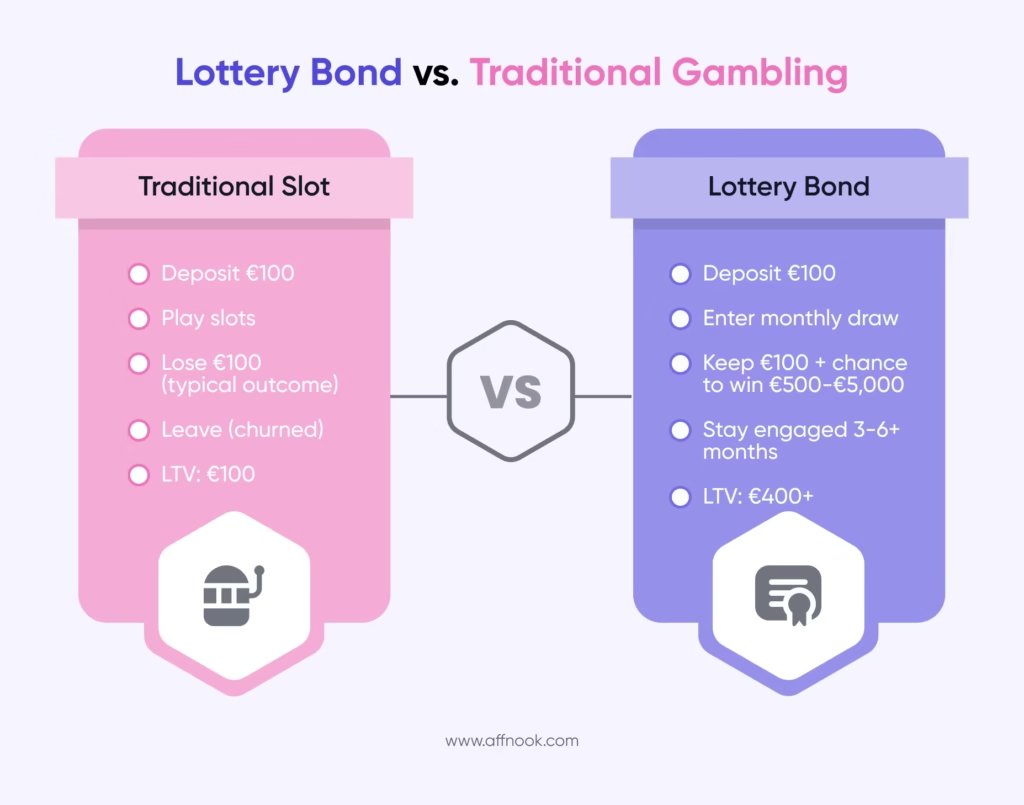
Real-World Example:
UK savings bonds have been known for this for many years. Players can deposit their money and, once per month, the winners are drawn. Anyone who did not win still has their money in the bank. Many iGaming operators in Europe have adopted the use of ‘lottery bonds’ or ‘prize draw savings’.
You can think of it as a lottery syndicate, except the entire community will have its shares preserved in the case of losing.
How Lottery Bonds Work
The mechanics are easy, but it is the revenue potential that creates excitement among operators.
The Player Journey Goes Like:
- Player deposits €100
- Deposit added to a monthly draw pool
- Operators select 10-20 winners out of thousands of players
- Each winning player will receive a prize of €500 – €2,000
- All players who did not win their draw will receive their €100 back and may withdraw at any time.
How Operators Make Money:
Wondering why operators make such a losing bet? Operators earn their profit by charging fees.
- Entry Fee: 1-2% of the deposit amount will be charged. Therefore, if you deposit €100, you will have to pay €1-2 in fees.
- Interest Spread: The operator will collect all of the pooled deposits and will earn interest on them, with a typical return of 2-3%.
- Unclaimed Prizes: Not every winner will claim their prize, so there are funds available from unclaimed prizes to provide funding for future draws.
Let’s See a Quick Math Example:
- 1,000 players deposit €100 each which equals €100,000.
- The operator takes a 1% fee, which means €1,000 is paid to him right away.
- The monthly prize pool is €5,000 (5% of total deposits).
- The operator will earn interest on the remaining €95,000.
- If 20% of prizes are unclaimed, this makes the operator an extra €1,000 for next month.
Conclusion: The operator profits without taking player loss risk, and the players remain engaged in the hope of winning.
Types of Lottery Bonds
Not all of these bonds are created equal. Operators offer variations to appeal to a variety of players.
Standard Lottery Bond:
Regular lottery draw with a monthly deposit. Requires a basic monthly deposit and is an easy way to participate in the regular lottery.
Tiered Lottery Bond:
The more you deposit, the bigger your chances of winning. You can deposit €50 to be in for standard draws, or more than €100 to be eligible for larger (VIP) draw prizes. It is designed to incentivize larger deposits.
Recurring Bond:
The player makes deposits weekly or monthly. For example, A player makes a €25 weekly deposit for 3 months and has 12 entries versus 4 entries. This gives the player better odds of winning, as well as increased engagement.
Syndicate Bond:
Multiple players pool their deposits into a shared prize pool. Like a lottery syndicate, better collective odds, split winnings.
Real example: 50 players deposit €50 each, which equals a €2,500 prize pool (much larger than individual draws).
Linked Bond:
Eligibility for a prize is tied to another activity. An example would be: deposit into the bond and place 5 sports bets would mean double entry into the draw. There is a crossover between the products.
The Reality:
The majority of operators use standard or tiered combination variations. The variations often get creative with an attempt to increase player LTV and cross-sell products.
Regulatory Landscape: License Requirements
Here are the rules regarding lottery bonds, which depend on your area of jurisdiction:
UK (UKGC):
Prize bonds that are chance-based (random draw) are considered gambling, which requires a gaming licence. As a result, most operators assume they are a safe choice.
Malta (MGA):
Prize bonds with any type of prize that is determined by chance will also require a gaming licence (i.e., strictly defined with no grey area).
Curaçao (GCB):
Historically viewed as financial products instead of gambling. This is changing because of the LOK reform.
The Real Issue: A bond that is legally permitted in Curaçao may violate UKGC regulations. Operators that operate across multiple jurisdictions must adhere to the strictest jurisdiction of the player.
Safe Approach: Treat these bonds as though they are gambling products. Obtain all necessary online gambling business licenses. Regulators will forgive over-compliance, but will never forgive under-compliance.
Why Operators Use Lottery Bonds
Operators utilize these bonds because they are appealing to players who are drawn to traditional games of chance.
- Risk-Averse Players: Older, more conservative savers who want to keep their money while having an opportunity to win and zero loss create less stress.
- Longer Retention: Slot players have a higher turnover (lose money and leave) than lottery bond players, who stay with their money. This can give operators better lifetime value.
- Cross-Sell Tool: Lotteries give players a safe product to become familiar with before trying out slot machines or sports betting (the gateway product).
- Better Brand Image: “Safe savings with a chance of winning” looks better to regulators than straight gambling and helps with licensing discussions.
The Affiliate Perspective: Promotion Strategy
For affiliates, these bonds require a completely different pitch than traditional gambling.
The Angle:
Instead of saying “win big,” say “save and win.” Market to those who would never play a slot machine but enjoy being entertained.
Who Will Come On Board:
A more conservative demographic, savers, and those who are risk-averse when playing. Many are older and are also new to iGaming. Completely different traffic source.
Commission Realities:
Lottery bonds have a lower CPA ( €20 to €50) than slots. However, they have a higher revenue share potential since these players will continue to be active for a longer period of time. You are giving up immediate commission for a larger lifetime value.
Affnook will track their cohorts separately so that you can see what affiliates are delivering quality, long-term players versus one-time bonus players.
Final Thoughts
Lottery bonds are a unique hybrid of gambling and savings. To the operator, this is a machine that keeps the more risk-averse players loyal.
To affiliates, this is a different product altogether since they provide money lost in the beginning, but the lifetime value of the players is significantly better. A better understanding of this product category provides an opportunity to be at the forefront of a growing, underserved market.
Help Centre
What are lottery bonds in iGaming, and how does it differ from traditional gambling?
A bond that lets players deposit money, enter prize draws, and keep their original stake. Unlike slots, where you lose your deposit, these protect capital while offering prize potential. Zero-loss product attracts risk-averse players.
Are these bonds regulated under gaming licenses in EU jurisdictions?
Lottery bonds regulation varies by jurisdiction. The UK and Malta treat these chance-based bonds as gambling requiring licenses. Curaçao historically classifies them as financial products. Operators must comply with the strictest jurisdiction where players reside to stay compliant.
How do these bonds generate revenue for iGaming operators?
Operators profit from entry fees (1-2% on deposits), interest spreads on pooled deposits, and unclaimed prize portions. Unlike traditional gambling, operators don’t rely on player losses—revenue comes from fees and the financial management of player funds.
Can affiliates promote lottery bond products to players?
Yes, however, there are differences in messaging as well. For example, affiliates are messaging in terms of “save and win” rather than “win big.” The cost per acquisition (CPA) is €20-50 lower than slots, but the potential for a higher revenue share will be present because of both longer player lifespans and better rates of retention with conservative demographics.
What player demographics do these bonds attract in iGaming markets?
They will attract players who are risk-averse, i.e. older demographic, conservative savers and those who aren’t comfortable with traditional gambling. Lottery bonds also have a player lifespan four times longer than slot players; therefore, they are an asset for operators who focus on retention and sustainable revenue.