When we talk about betting, we naturally assume that it is online betting. This is because that is what the trend shows. But, in the midst of this, one must not forget the roots and traditional forms of betting. Retail betting is that form of betting.
In fact, it is the most lively and profitable part of the gambling industry. While online betting is convenient and more accessible, veteran players still prefer retail betting for the buzz and thrill of physically placing bets in a shop or casino.
What is Retail Betting?
It is the practice of betting in person at locations such as betting shops and casinos, or even at sports events. In this form of betting, customers visit the location, review the available odds and place bets directly. Because it is an old-school approach, it also involves cash or card transactions and self-service betting terminals.
What makes it stand out?
As times have gone digital, this form of betting preserves the social and sensory element of gambling. The ritual of filling out slips at live events instead of watching live screens gives it resilience.
How it Works
The retail betting process here is simple yet straightforward.
- Visit a physical outlet – The bettor has to visit a licensed betting shop or venue.
- Review odds and market – Odds are displayed prominently on screens or printed lists.
- Place a bet – Bets can be placed through either an attendant at the counter or via a self-service betting terminal, which offers a sense of liberty and ease of use.
- Payment and settlement – Bettors pay through cash or card and once the results are revealed, they can collect winnings immediately from the counter.
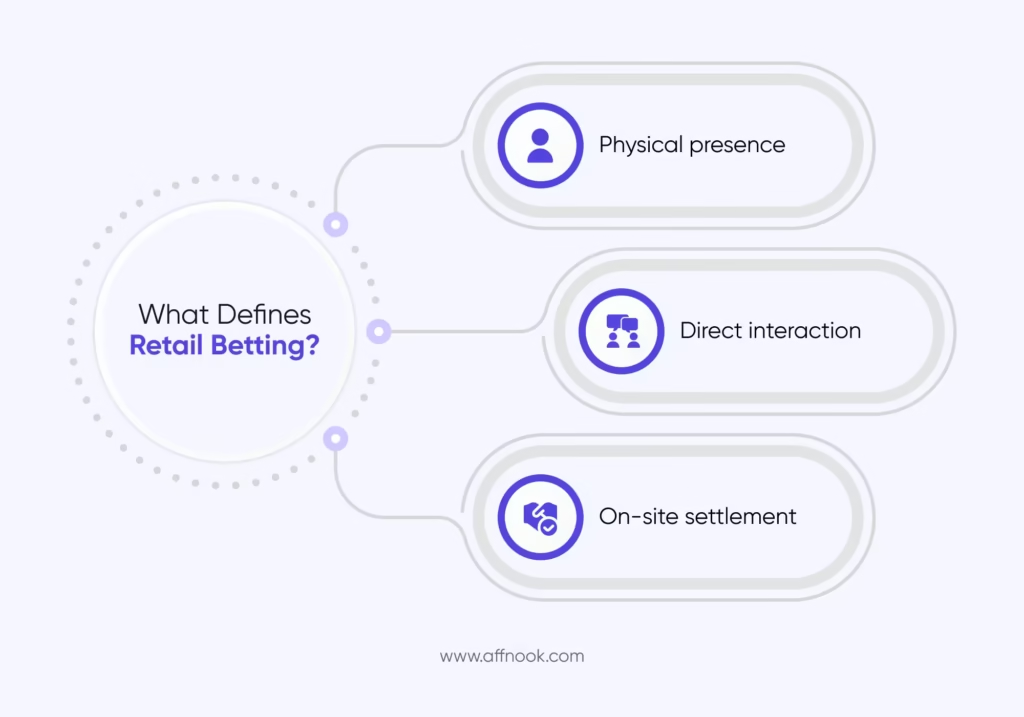
So, at its core, what defines this form of betting is the idea of physical presence, direct interaction and on-site settlement. These elements make it different from online betting while keeping it relevant at the same time.
Different Types of Retail Betting
In-person form of betting supports multiple wagering formats in accordance with the player’s preferences. Some of the most popular ones are as follows
Fixed Odd Betting
This is the most frequently used form of betting. In this type of betting, the odds are confirmed at the same time the bet is placed. As a result, the returns are also determined by those odds. This form of betting is simple to understand. The chances of winning are therefore higher
For example, if you bet $50 on a horse at 8/1 odds, you win $400 plus your $50 stake if the horse wins.
Pool Betting
As the name itself suggests, this form of betting involves the “pooling together” of the financial contributions of the players. The stake is then divided amongst those who predict the correct outcomes.
For instance, 100 players each bet $10 on a horse race, creating a total pool of $1,000. If 10 players correctly pick the winning horse, the pool is divided among them, giving each player $100.
Prop Betting
Prop bets are bets that are placed on some specific events within the game and not just the final outcome. In-game events that can be wagered on range from the score of a particular player to even the length of a national anthem at Superbowl.
As unusual as it may seem, these forms of bets are meant to add an element of excitement to the sports events.
Retail Betting vs Online Betting
The two types of betting are quite different from one another. Let us understand how-
- Access – This difference is self-explanatory. Land based betting requires traveling to a physical location, while online betting is remote and can even be done through a mobile phone.
- Interaction – Retail is a more personalised experience with face-to-face interaction. The setup is that of trust and engagement. Online, on the other hand, is a more self-directed method, which makes it more convenient and private.
- Payment methods – Many players find cash transactions to be simpler and more secure, and hence, they prefer retail betting. This is not an option in online forms of betting. Online platforms have payment providers that offer different methods like e-wallets, bonuses, and even cryptocurrencies.
- Regulation – The regulatory environment is quite stable and clear when it comes to retail betting because it is physical and localised, and hence they tend to operate in accordance with the established local laws. However, online betting operates in a borderless digital ecosystem where users can access platforms across jurisdictions. These “online boundaries” are not physical but legal and geographical, defined by licensing requirements, territorial restrictions, and compliance frameworks that vary from country to country. This is why regulatory compliance in online betting is far stricter.
Through these differences, we can understand who uses retail betting and why it continues to co-exist with the digital channels despite being an old and traditional method. Let us now dig deeper into the reasons why it is still relevant.
Evolving with Technology
Even though this form of betting is old-fashioned, it is not static but is evolving with technology. Innovations such as self-service betting terminals (SSBTs) and in-store digital screens are enhancing convenience and engagement.
These tools reduce queues, offer live odds and graphics, and modernise the retail betting experience without losing its core in-person identity.
There is also growing interest in hybrid models that bridge physical and digital channels, such as enabling bettors to fund online accounts at retail locations, expanding payment options and integrating both experiences.
Conclusion
Despite the digital developments, this form of betting has not lost its relevance. There are multiple reasons behind it –
- In many regions of the United Kingdom, Italy and South Africa, land-based betting is the primary and trusted legal option for gambling.
- Physical outlets help in establishing brand visibility and credibility
- Retail locations often act as entry points for new or casual bettors
Retail betting is hence not being replaced, but is getting adapted to changing consumer behaviour.
Help Centre
How does retail betting impact local economies and employment?
Retail betting outlets contribute to local economies by creating direct employment, supporting nearby businesses, and generating tax revenue. Because operations are location-based, they often play a role in sustaining high-street activity and regulated entertainment ecosystems in specific regions.
What role does customer trust play in the success of retail betting venues?
Customer trust is central to retail betting because transactions, payouts, and identity verification happen face-to-face. Physical presence, visible compliance, and human assistance help build long-term confidence, especially in regions where digital gambling adoption is still developing.
How do major sporting events influence retail betting activity?
Retail betting activity often peaks around major sporting events such as tournaments, derbies, and championship finals. Physical venues benefit from increased footfall, group betting behaviour, and extended dwell time as customers gather to watch and wager collectively.
What operational challenges do retail betting businesses face today?
Retail betting operators must manage rising property costs, staff training, compliance obligations, and fluctuating foot traffic. Balancing operational efficiency with customer experience is crucial, especially as consumer expectations are now shaped by faster, digital alternatives.
How is retail betting adapting to changing consumer behaviour globally?
Retail betting is adapting by modernising store layouts, introducing digital terminals, and integrating account-based systems. These changes help venues remain relevant to younger audiences while preserving the in-person experience valued by long-standing customers.