
Imagine launching a casino advertising campaign that brings thousands of clicks, strong visibility, and rising traffic, but when finance asks, What revenue did this actually generate? The answer is unclear.
This is one of the biggest challenges in casino advertising today. With rising acquisition costs, stricter regulations, and crowded markets, measuring ROI is no longer optional. It is the difference between scaling profitably and wasting budget on vanity metrics.
In this guide, we break down how to accurately measure ROI on casino advertising, which metrics truly matter, and how to connect ad spend directly to player value.
Why Measuring ROI in Casino Advertising Is More Complex Than It Looks
Casino advertising is not like standard e-commerce advertising. A player rarely converts instantly. Instead, the journey often includes multiple touchpoints such as display ads, search, affiliates, bonuses, and retargeting.
Unlike buying a product, casino revenue unfolds over time. A player might deposit today but generate revenue for months. That makes ROI measurement dependent on both short-term performance and long-term player value.
This complexity is why many iGaming operators still struggle to link advertising spend to real profitability.
The global online casino market is expected to grow from USD 19.11 billion in 2024 to USD 38.00 billion by 2030, fueled by rising smartphone usage and high-speed internet access.
What ROI Means in Casino Advertising
At its core, ROI measures how much revenue you earn for every dollar spent on advertising.
Basic ROI Formula:
ROI = (Revenue Generated – Advertising Cost) / Advertising Cost
However, in casino advertising, revenue is not just the first deposit. True ROI must account for player lifetime value, churn, and retention.
Key Metrics That Define Casino Advertising ROI
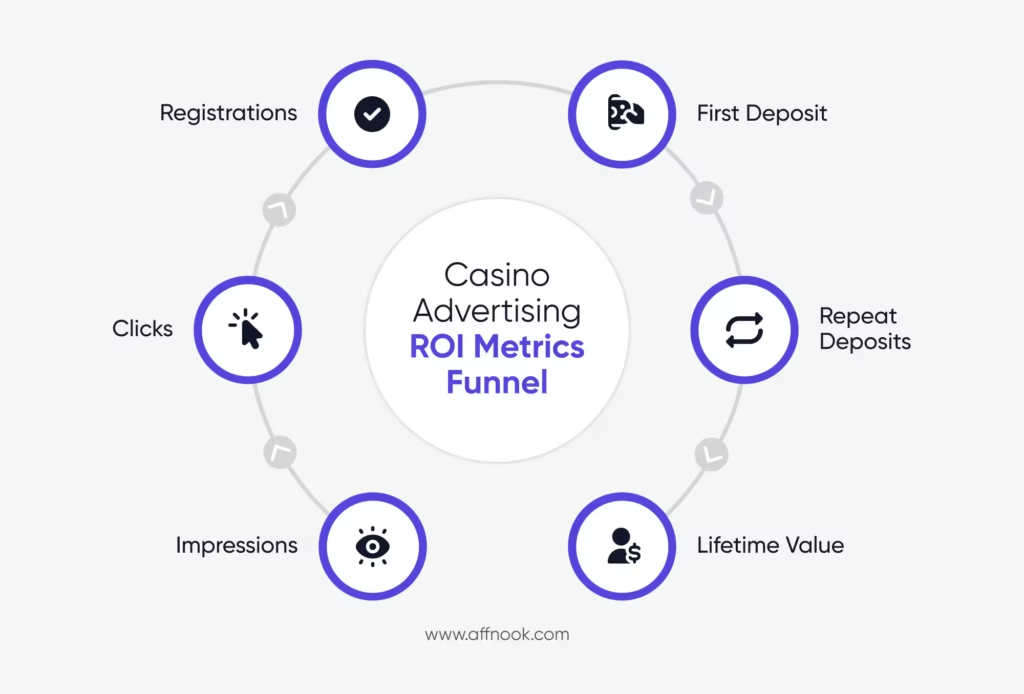
To measure ROI correctly, you need to go beyond clicks and impressions.
- Cost Per Acquisition (CPA)
CPA shows how much you spend to acquire one depositing player. It is one of the most common pricing models in casino advertising.
CPA = Total Ad Spend / Number of Acquired Players
A low CPA looks good on paper, but it means little without understanding player quality.
- Average Revenue Per User (ARPU)
ARPU reveals how much revenue each player generates over a defined period.
ARPU = Total Revenue / Number of Active Players
When ARPU is higher than CPA, your casino advertising campaign is moving toward profitability.
- Player Lifetime Value (LTV)
LTV is the most important metric in casino advertising ROI.
LTV estimates how much revenue a player generates throughout their entire relationship with your platform. This includes deposits, wagering, and retention over time.
A campaign with a higher CPA can still be profitable if LTV is strong.
Attribution Models: Knowing What Really Drives Conversions
One of the biggest mistakes in casino advertising is relying on last-click attribution.
Players often interact with multiple ads before converting. If you only credit the final touchpoint, you undervalue upper-funnel campaigns like display and video.
Common Attribution Models in Casino Advertising
- Last-click attribution: Credits the final interaction
- First-click attribution: Credits the first touchpoint
- Multi-touch attribution: Distributes value across all interactions
For accurate ROI measurement, multi-touch attribution provides the clearest picture of which casino advertising channels actually influence player decisions.
Tracking Tools That Improve Casino Advertising ROI Measurement
Without proper tracking, ROI measurement becomes guesswork.
To measure casino advertising ROI accurately, operators need a unified tracking setup that connects every touchpoint across the player journey. This includes:
- Conversion tracking for player registrations and first-time deposits
- Postback URLs to monitor in-game activity and ongoing player behavior
- Analytics platforms that measure retention, lifetime value, and revenue
- Affiliate and ad tracking software that directly links ad spend to outcomes
This is where platforms like Affnook add real value. Affnook brings all these elements together by tracking players from the first ad click through registration, deposits, and long-term revenue.
With real-time reporting, postback integration, and deep affiliate attribution, operators gain a clear, data-backed view of which campaigns, affiliates, and channels are actually driving profitable growth.
The ultimate goal is not just tracking conversions, but understanding the full player journey from acquisition to long-term value, and Affnook enables exactly that
Segmenting Campaigns to Measure True Performance
Not all casino advertising campaigns serve the same purpose.
Brand awareness campaigns should be measured differently from retargeting or high-intent search ads.
Segment Your Casino Advertising By:
- Channel (search, display, native, social)
- Geography and regulatory market
- Device type
- Player intent stage
This segmentation allows you to compare ROI accurately and optimize budgets where returns are strongest.
Short-Term ROI vs Long-Term ROI in Casino Advertising
Many iGaming brands make the mistake of killing campaigns too early.
Casino advertising often needs time to show real returns. A campaign may appear unprofitable in the first 30 days but deliver strong ROI over 90 or 180 days due to player retention.
Best Practice:
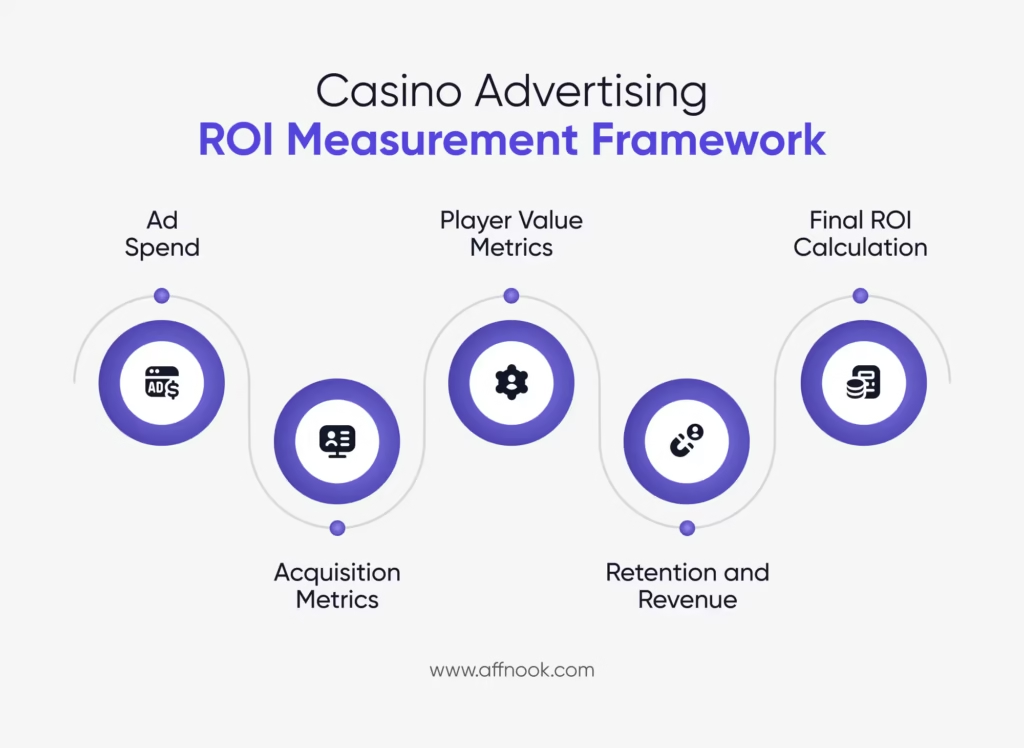
Measure ROI across multiple timeframes:
- 30 days for acquisition efficiency
- 90 days for revenue stabilization
- 180 days for lifetime value clarity
This approach prevents underinvestment in high-quality traffic sources.
Common Mistakes That Distort Casino Advertising ROI
Even experienced operators fall into these traps:
- Focusing only on first deposit value
- Ignoring churn and retention
- Using single-touch attribution
- Comparing different campaign goals using the same KPIs
- Not factoring bonuses and promotional costs into spend
Avoiding these mistakes brings casino advertising ROI closer to reality.
How to Optimize Casino Advertising Spend Using ROI Insights
Once ROI is measurable, optimization becomes straightforward.
- Scale campaigns with high LTV-to-CPA ratios
- Reduce spend on traffic sources with poor retention
- Refine creatives that attract higher-quality players
- Reallocate budget toward markets with stronger ROI
Casino advertising is not about spending more. It is about spending smarter.
Final Thoughts
Measuring ROI on casino advertising spend is no longer a technical exercise reserved for analysts. It is a strategic necessity for sustainable growth.
By tracking the right metrics, applying smarter attribution models, and focusing on long-term player value, casino advertising transforms from a cost center into a predictable revenue engine.
The brands that win are not those with the biggest budgets but those that understand exactly what every advertising dollar returns.