Every iGaming operator is competing for the same audience—Google, Meta, affiliates, influencers. The competition is fierce; CPAs are increasing, and players have become adept at scrolling past casino advertisements.
So what if your next player acquisition touchpoint wasn’t online at all?
ATM kiosks are emerging as an offline-to-online acquisition channel for iGaming operators, not via cash deposits, but via branded screens, QR codes and promo codes at the time when players are most likely thinking of money—right then and there!
There are no competing ads, no ad blockers, and no algorithms to contend with.
This article discusses how ATM kiosk marketing works, current testing and why ATM kiosk marketing should be added to your overall acquisition program.
How ATM Kiosk iGaming Marketing Actually Works
ATM kiosk marketing isn’t just what’s on the screen. It’s a full physical marketing ecosystem—and providers are already deploying it in gas stations, convenience stores, bars, and restaurants across the US.
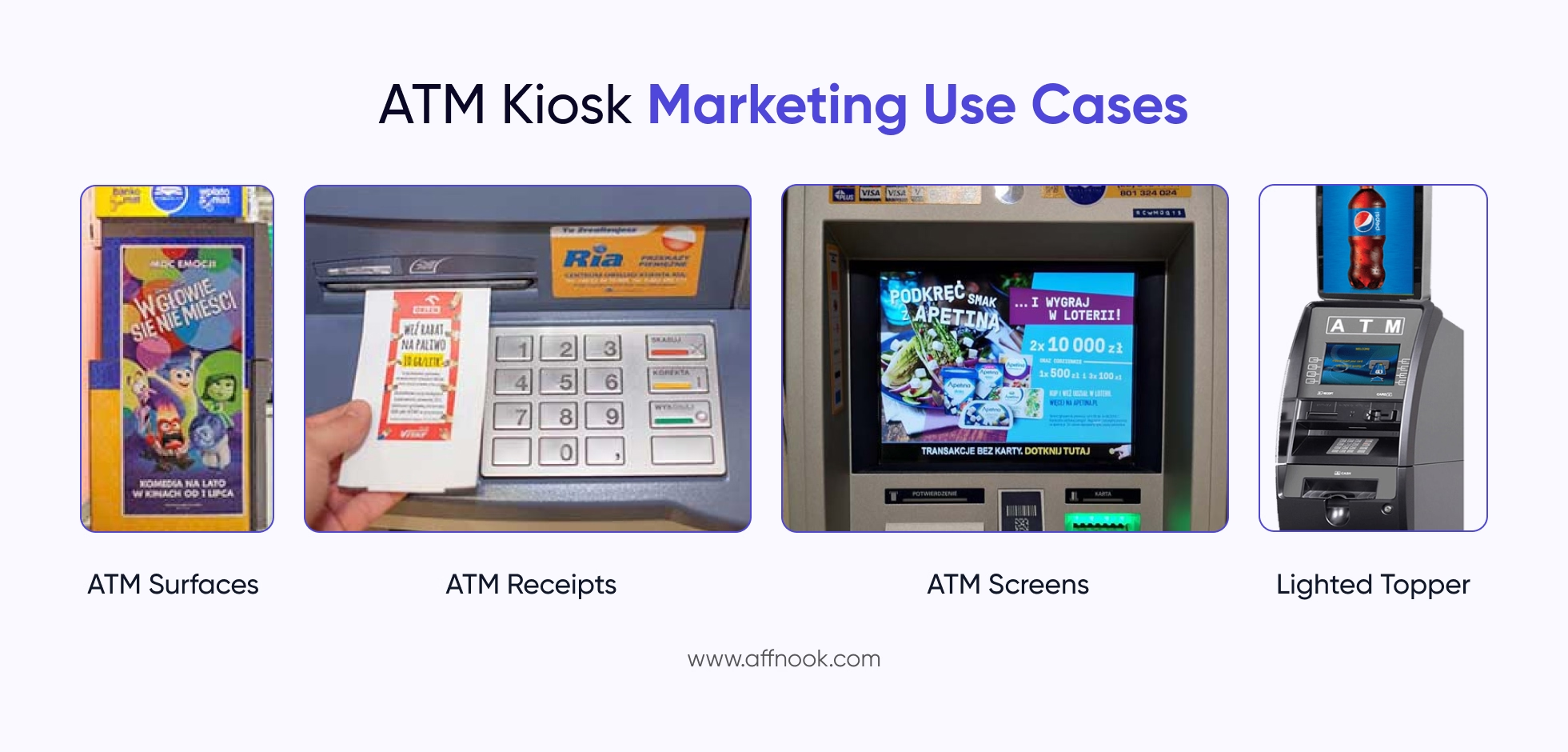
- Pre-card insertion (attract screen),
- While withdrawing cash (transaction screen),
- And on the printed receipt.
Beyond the Screen—Physical Marketing Materials
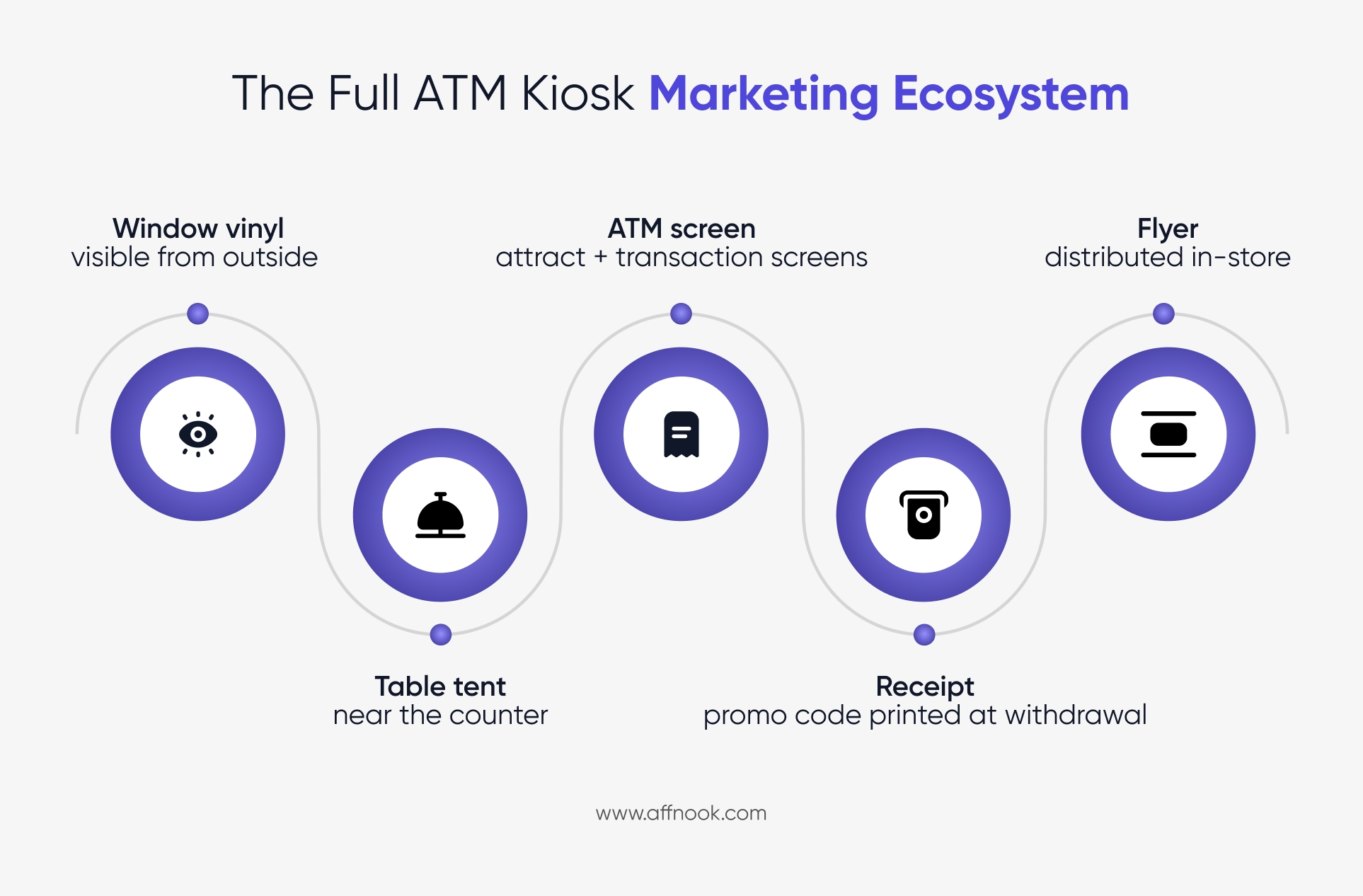
What makes kiosk marketing more powerful than a digital ad is the surrounding physical presence. Providers like GameFleet supply operators with a full suite of in-location materials:
- Table tents with QR codes and step-by-step registration instructions placed near the kiosk
- Window vinyls with QR codes and URLs visible from outside the location, driving foot traffic in
- Flyers with download links distributed in-store to keep players engaged even when away
- Kiosk stickers featuring game characters and QR codes that make the unit itself a visual focal point
Together, these touchpoints turn a single ATM placement into a multi-surface brand presence within a location.
The User Journey
The user journey is simple and can be measured in the following steps:
- Player enters the location, sees window vinyl or table tent
- Approaches ATM, sees offer on attract screen
- Completes withdrawal, sees offer again on transaction screen
- Scans QR code or writes down promo code from receipt
- And registers online at a later time, tracked via that same promo code
An average ATM transaction lasts 43 seconds, a unique opportunity for the user to focus without competing distractions (multiple tasks or scrolling past competing advertisements).
How this might look in iGaming: ATM screen reads “Place $10 Bet Get $20 Free – Scan to Claim!” with a QR code linking to a registration page that includes a pre-populated promotional code. When the player finishes registering, the player will be tracked through the use of the same promo code above.
Why ATM kiosk iGaming marketing works:
Captive audience: consumers are less likely to be distracted while completing their financial transaction.
Geographically specific: ATM locations can be easily targeted based on areas in legal betting jurisdictions, locations of sporting events, or neighbourhoods.
High volume of foot traffic: ATMs located within or near casinos, entertainment districts, or convenience stores generate high amounts of foot traffic.
100% share of voice: only one ad displays per transaction session, no competing messages.
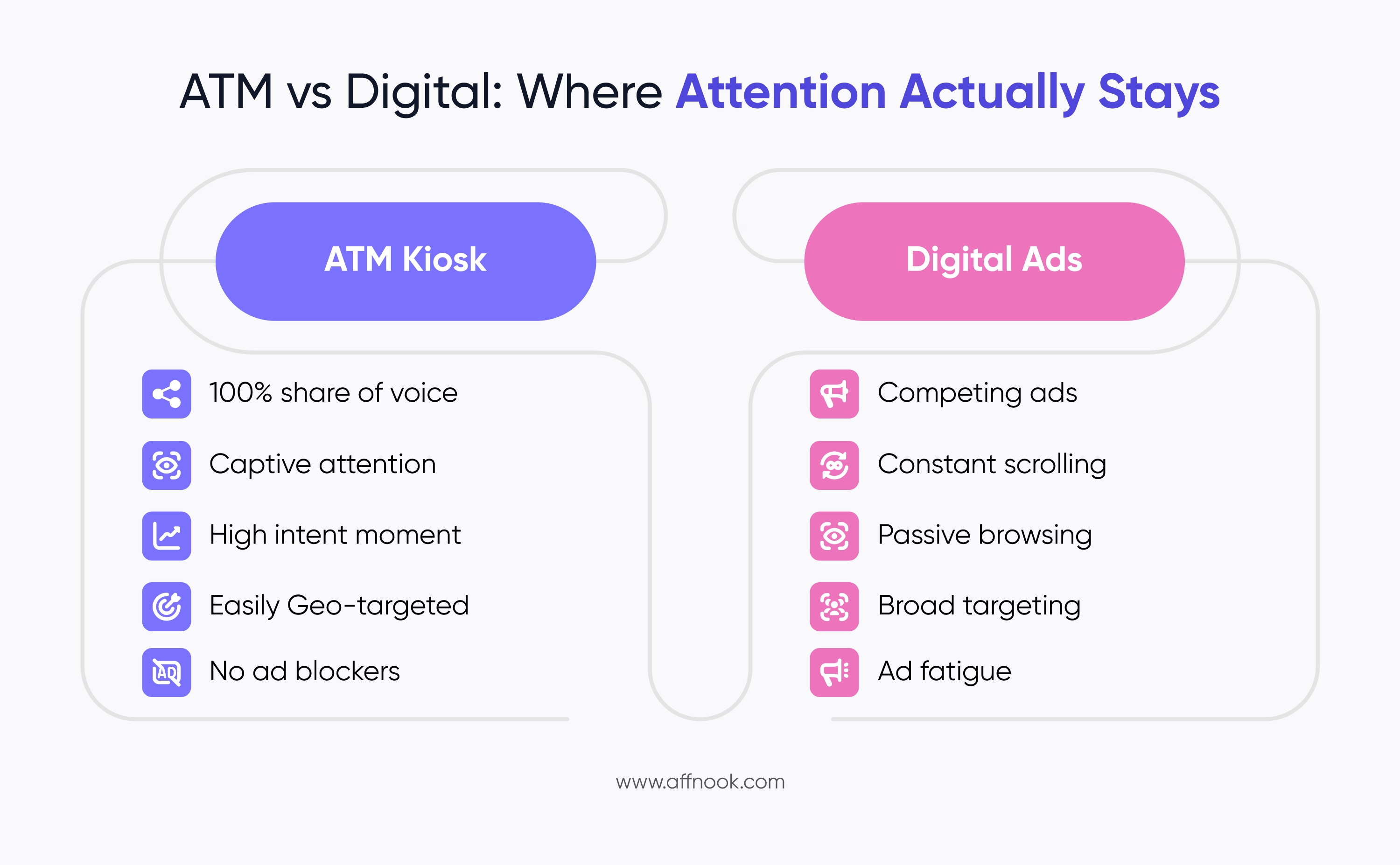
Unlike digital ads, where users scroll past hundreds daily, ATM advertising gets undivided attention at a moment of financial engagement.
Real-World Examples (Non-iGaming Context)
ATM advertising exists in three verified applications: brand campaigns on screens, receipt-based promotions, and experiential stunts.
Brand Campaigns on ATM Screens
British Airways and Nivea have conducted advertising campaigns on ATMs in the UK with the help of i-design, an ATM advertising software, to reach customers before and during their cash withdrawal. While not an ATM kiosk iGaming marketing, the campaign demonstrates the same core mechanics—targeted advertising on both attract screens and transaction screens, and will be placed in high-volume locations, such as supermarkets and convenience stores.
Receipt-Based Promotions
The backs of ATM receipts typically provide customers with discount coupons. Research shows 20-40% of users who withdraw cash make purchases at nearby stores immediately after. Grocery and convenience stores often provide discounts specific to each location (e.g., “Get a free cup of coffee with a purchase of $10 or more”).
Because ATM users frequently check their receipts to confirm their balance, the effective rate at which these types of advertisements are read is higher than with passive, outdoor advertisements.
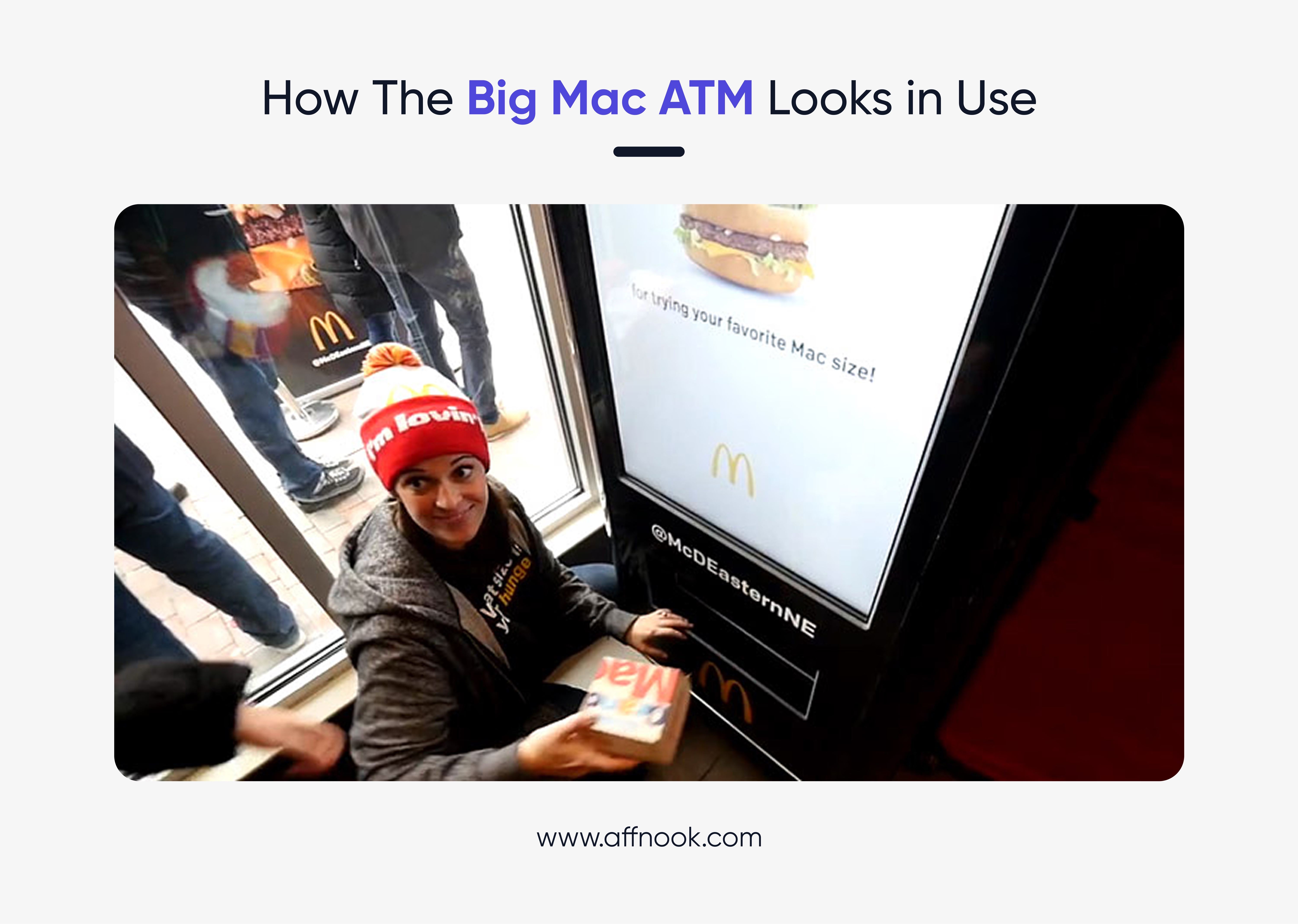
The Big Mac ATM (McDonald’s, 2015)
McDonald’s installed an ATM that dispensed Big Macs instead of cash as a promotional stunt. It demonstrated how ATMs could become brand experience platforms, creating buzz at the exact moment customers were thinking about cash and convenience.
Physical In-Location Marketing
The multi-surface physical marketing model is well-established in retail—think how convenience stores and fast food chains use window decals, counter displays, and floor stickers together to create unavoidable brand presence within a location. The same principle now applies to iGaming ATM kiosks.
It’s the same mechanics that iGaming kiosk providers like GameFleet are now applying: window vinyls visible from outside, table tents with QR codes near the unit, branded stickers on the kiosk itself, and flyers distributed in-store—all working together to make a single ATM placement into a multi-surface brand presence.
Early iGaming Applications & Tests
ATM kiosk iGaming marketing is already making inroads in iGaming-adjacent spaces—and the infrastructure is clearly ripe for operators to go further.
Land-Based Casino Cross-Promotion
This is a very logical place to start, and it is happening now. iGame Marketing, for example, has begun placing branded ATMs in bars, restaurants, and convenience stores to advertise online gaming brands by showing promotions on the ATM screen and encouraging players to register with QR codes.
If the casino has a physical location, the same logic applies directly on the floor: a player withdrawing cash mid-session is already financially engaged, making it an ideal moment to introduce their online platform with a “Play from home” prompt and a pre-loaded bonus code.
Sportsbook Geo-Targeting Near High-Intent Venues
The hardware is already in place. IGT already has over 700 sportsbook kiosks installed in regulated U.S. locations. There is tons of documentation that shows QR code wagering is occurring at terminals surrounding sporting venues and sports pubs.
The most obvious step after this phase of development is to leverage that same ATM touchpoint for ATM kiosk iGaming marketing campaigns on game days, which hasn’t been explored as a true marketing channel, but the infrastructure and target market exist.
Emerging Markets—Africa and LatAm
There is an enormous opportunity in this space that most operators have not capitalized on yet. In Africa, M-Pesa holds more than 93% of Kenya’s mobile money market, and ATM and agent point cash transactions remain the main financial touch points for millions of would-be players, making it a natural on-ramp for online gaming through physical kiosk placements.
In Latin America, with Brazil now completely regulated and projected to have a market size of $10-12B, ATM kiosk marketing can provide operators with a less saturated and more compliant marketing vehicle than broad, digital campaigns. The infrastructure is there; it just hasn’t been fully realized.
Event-Based Campaigns
Testing the channel with a low-risk approach: installing temporary ATM kiosks with advertising during large sporting events (World Cup, Super Bowl, IPL). ATM kiosk iGaming marketing works particularly well in these windows. The campaign window is tight, the audience is self-selected, and a unique promo code per location or event keeps attribution clean. It’s a contained, measurable test that doesn’t require a full network commitment.
Why ATM Kiosks Work for iGaming Specifically
ATM kiosk marketing isn’t just a novelty—for iGaming operators, it solves some real problems that digital-only acquisition creates.
Geographic precision: ATM locations can be chosen based on particular catchment areas (venues, communities, districts), allowing operators to specifically target only in regulated jurisdictions. Each impression relates to a compliant use of your product.
Moment of financial intent: When a gambler takes out cash from an ATM, they are already in a transaction mindset, which is exactly what makes ATM kiosk iGaming marketing so effective. The distance between “I’ve seen this offer” and “I’m going to deposit and wager” is shorter at an ATM than while scrolling through social media.
Bypasses digital saturation: iGaming advertising is among the most aggressively marketed online. ATM kiosks provide a clean, neat way to get your message to consumers without competing with other casino messages on the same screen.
Compliance-friendly: In many regulated markets, offline ad channels are generally subject to less regulation than online ones, allowing for a good option through ATMs when certain online locations are blocked or have very stringent regulations.
Clear attribution: Use of QR codes and unique promo codes at different locations allows for easy tracking between offline and online, allowing you to see precisely which ATMs were used to get registered—no trial and error.
Challenges & Considerations
ATM kiosk iGaming marketing isn’t without its hurdles. Before testing the channel, iGaming operators should be aware of a few practical realities.
Cost of Premium Placement
Locations with heavy footfall, such as casinos, stadiums, and chain convenience stores, typically charge larger amounts for placement. Within premium placement areas, ATMs located at casinos typically have floating amounts of over $10,000 per ATM, in addition to processing, maintenance, and compliance costs.
For a marketing-based kiosk, operators should consider their expected conversion volume relative to the cost of placing their kiosk before the commitment.
Creative Space—Less Limited Than You’d Think
ATM screens are small, and the interaction window is short. There’s no room for storytelling—the message needs to land in seconds. But physical materials like window vinyls, table tents, and flyers give operators significantly more creative real estate around the unit, allowing for a fuller brand story beyond what the screen alone can deliver.
Advertising Restrictions
Digital advertising restrictions are tightening—but offline isn’t exempt either. Digital platforms already block gambling ads across 85% of markets. Regulators in markets like Ireland have banned gambling ads on TV, radio, and online platforms during large parts of the day.
Offline channels, such as ATM kiosks, have fewer restrictions on them; however, operators should verify the applicable laws and understand the specific limitations to avoid any assumption of compliance.
Conversion Lag
Unlike a digital ad, where the click happens instantly, ATM-driven conversions require users first to either scan codes or physically remember promo codes and then return to complete the conversion at a later date. As a result, it’s important to establish attribution windows for ATM conversions so attribution can be tracked.
Audience Fit
This channel performs best in markets that continue to have high usage of cash and where every targeted player in the market is physically seen to go to locations that have a high volume of foot traffic.
Conversely, in heavily cashless markets, the volume of foot traffic at ATMs may not justify the expense for advertisers to advertise on that channel.
How to Test ATM Kiosk Marketing
Start small: Pilot program by trialling it first at about 5–10 locations where high volumes of players are available in your primary market. These could be sports bars, entertainment districts, convenience stores near stadiums, ideally venues where your target player already spends time.
Use unique codes per location: Use one unique QR code for each individual offline placement, each code leading the user to its own individual tracked URL. This is critical in helping you track which ATM actually produced which registrations (instead of combining all ATM traffic data into one database).
Tag everything properly: You have to tag the QR codes with UTM tracking parameters so that it will be possible for your analytics tools to attribute the QR code scan to the correct campaign prior to any other activity launched.
Leverage physical materials: Don’t rely on the screen alone. Deploy table tents near the unit, window vinyls at the entrance, and flyers in-store. The more surfaces your message appears on within a location, the higher the chance a player acts on it.
Run time-limited campaigns: Test around major sporting events or holiday weekends to measure engagement spikes against a controlled window. Easier to attribute, easier to evaluate.
Set longer attribution windows: When direct link attribution cannot be established before an app’s first use, you can shift the attribution of unique promo codes entered in-app from scan moment to the first in-app action. This is actually a more meaningful conversion signal for iGaming anyway.
Integrate with your affiliate platform: Verify that all ATM-attributed conversions can be accounted for, tracked, attributed and reported with your digital acquisition channels. With Affnook, custom tracking parameters mean ATM-sourced registrations don’t get lost or miscounted in your broader acquisition data.
Measure beyond direct conversions: Track the lift in brand search volume at your target locations during your campaign periods. Some players will see the offer and search for your brand at a later time—that is also a conversion signal you would want to track.
Conclusion
ATM kiosk iGaming marketing won’t replace digital acquisition—but that’s not the point. This is still a viable method for operators to diversify their business beyond the heavily saturated online channels, reach customers at the precise moment they are financially motivated, and geographically target specific local areas.
The infrastructure is already there. The conversion model is proven in adjacent industries. And in emerging markets like Africa and LatAm, the opportunity is arguably ahead of the curve.
The key is treating it like any performance channel: unique QR codes, UTM parameters, and promo codes per location make attribution just as clean as any digital campaign. With Affnook, ATM-driven conversions can be tracked and reported alongside your existing affiliate channels—no separate silos, no lost data.
Test small, track everything, scale what works.
Help Centre
What is ATM kiosk iGaming marketing, and how does it work?
Through branded screens on ATMs, kiosks, unique promo codes, QR codes & printed receipts, ATM kiosks can convert a player who has just withdrawn cash at an ATM to play at either an online casino or a sports book, measured through unique promo codes assigned to each location.
Can ATM kiosk advertising help iGaming operators acquire players in newly regulated markets?
The placement of ATMs provides operators with the ability to target specific locations in jurisdictions where they can legally operate. This allows operators to create a precise and compliant user acquisition channel in newly regulated markets throughout the United States, Latin America, and select areas of Africa.
How do iGaming operators track conversions from offline ATM kiosk campaigns?
Using unique QR codes & UTM tagged URLs, when a player scans and registers at any of the ATMs, that conversion is attributed back to that location. This allows operators to measure their offline to online conversions with the same measurement tools as other forms of digital marketing.
Is ATM kiosk marketing a cost-effective player acquisition strategy for sportsbooks?
The expense of premium placements varies due to market conditions and location. However, the combination of 100% share of voice, captive audience, and uncluttered attribution through brand-specific promo codes can create significant ROI, especially at high-intent times or locations such as game day.
How is ATM kiosk iGaming marketing different from traditional digital affiliate marketing?
Unlike digital affiliate marketing, ATM kiosk iGaming marketing targets players while they are offline and have no distractions or financial obligations. This allows you to cut through ad fatigue and platform restrictions while allowing you to provide your affiliates with tracked registrations that can be entered into your affiliate reporting pipeline.