
In the online sports betting market of USD 49.74 billion, tennis betting accounts for a major part. Among the other prominent sports, tennis exceptionally attracts bettors because of its comparatively high frequency of professional world tournaments.
From the Grand Slams to ATP, WTA, Challenger, and ITF events, matches take place across different time zones, surfaces, and competition levels. While this provides more opportunities to reach different audiences, it also makes tennis as a betting sport more complex to manage. Simply listing matches and setting odds is not enough in this scenario. This becomes even more apparent during live events.
A break of serve, an injury timeout, or a sudden change in a player’s performance might affect the probability of an outcome. It is the operators’ responsibility here to respond to these unexpected developments.
The work is not done here because, at the same time, operators would also need effective marketing and affiliate acquisition strategies to attract relevant audiences and understand which campaigns deliver meaningful results.
For sportsbooks, gaming operators, and media brands, sustainable growth depends on connecting these functions. Understanding tennis betting markets, managing operational risks, delivering relevant content, and measuring affiliate performance can help businesses make better-informed decisions.
What is Tennis Betting?
Tennis is built around individual players or pairs, hence, its betting involves placing wagers on the outcome of a tennis match or on specific events within it. These events include, but are not limited to, set winner, total games, or the result of an individual game. For sportsbooks, this means –
- Bringing offers to these markets
- Setting and updating odds
- Accepting wagers
- Settling the wagers according to published rules
Some of the aspects that should especially be taken into consideration are –
- Outcome – The outcome depends on factors such as serving performance, return quality, court surface, fitness, and match conditions.
- Scoring structure – It creates multiple points at which the perceived probability of winning can change.
- Calendar – The professional tennis calendar provides opportunities almost throughout the year.
This means tennis betting requires more than broad event coverage. It also involves know which competitions to offer, which markets to make available, and what level of trading oversight each event requires.
What are the Main Tennis Betting Types?
The wide range of bets determines how customers can engage with a match. Each type of bet has its own pricing, settlement, and risk-management requirements.
- Match winner – This form of bet is also called moneyline betting. Here, the bettor wagers on the player or pair whom they think will win the match. It is a straightforward starting point for customers and an important reference market for traders.
- Set betting – Customers predict the match score in sets, such as a 2–0 or 2–1 victory in a best-of-three match. It requires accurate settlement rules because the match format and retirement conditions can affect the result.
- Game and set handicaps – Tennis handicap betting applies a virtual advantage or disadvantage to a player’s final tally to balance lopsided matchups. The favorite must win by more than the specified margin to cover the spread, while the weaker opponent can lose the actual match but still win you the bet by keeping the final score close.
- Over or under totals – These bets aim to determine whether the total number of games or sets will finish above or below a specified line. The pricing here is influenced by the match length, service performance, and the likelihood of tie-breaks.
- In-play betting – Entain reported in early 2025 that roughly 90 percent of tennis bets placed across its sportsbook operation were in-play. These bets allow customers to place bets after a match begins. Depending on the operator and event, available options may include the next game winner, set winner, or updated match winner.
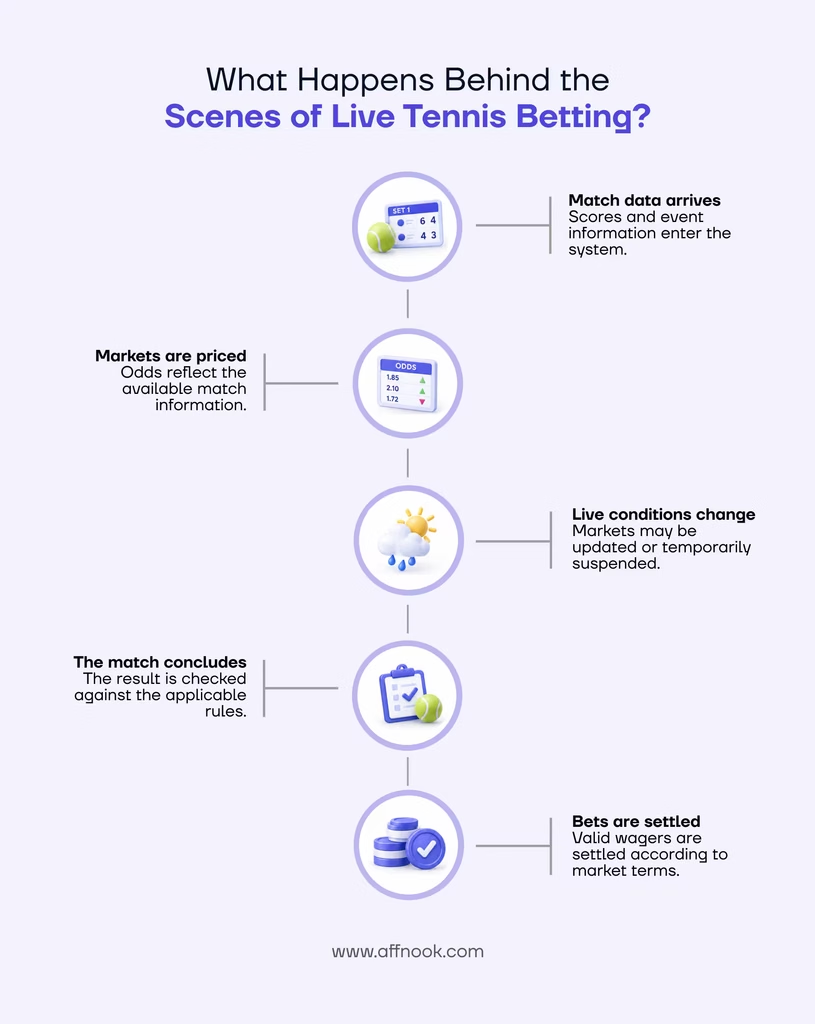
A broader market selection can improve the betting experience, but adding specifications also increases the need for reliable data, accurate pricing, and consistent settlement. Operators should consider event coverage and trading capacity together rather than expanding market depth without the infrastructure to support it.
What Makes Tennis Betting Operationally Complex?
Tennis is perfect for live betting because the score changes quickly, which constantly shifts the odds of who is expected to win.
For example, if a player loses their own serve, their odds of winning go down. On the other hand, if a player breaks their opponent’s serve, their odds of winning shoot up.
As every single point can change the momentum, the betting market keeps moving throughout the entire match.
Real-Time Data and Pricing
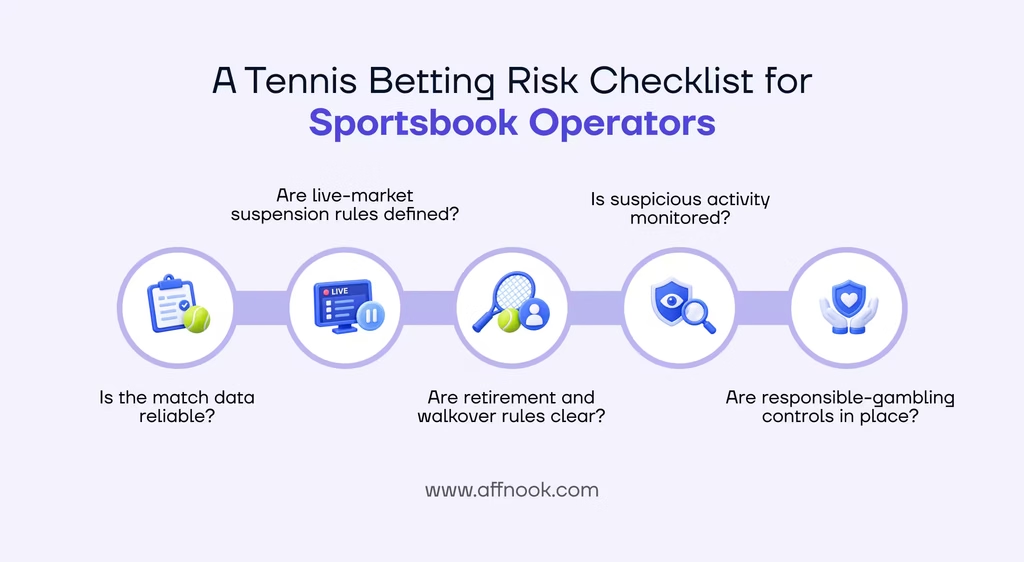
Live odds depend on accurate information about the score and match state. If the data feed is delayed or incorrect, the odds displayed to customers would not be showing what the current situation is. Operators would hence need reliable data providers, automated pricing systems, and procedures for suspending markets when information is uncertain.
Latency and Courtsiding
Courtsiding means the transferring of live match information from a venue for betting purposes without the required authorization. The process has its loopholes where delays between an event, its score being recorded, and odds being updated can create opportunities for fraudsters with faster information to exploit a sportsbook. This is something the International Tennis Integrity Agency also pointed out in its Tennis Anti-Corruption Program.
This is something the operators shall keep in mind and hence should assess data-feed speed, monitor suspicious betting patterns, and use market suspension controls when the integrity or accuracy of live information is in question.
Rapid Price Movements
Tennis betting markets can change quickly after a break of serve, an injury, or a shift in performance. Trading systems must update prices and manage exposure without leaving markets open at outdated odds.
Event Level Differences
A major tournament and a lower-tier event may differ in available data, broadcast coverage, liquidity, and the level of operational oversight. Operators should not assume that the same market limits and controls are suitable for every match.
The objective is not simply to offer more live markets. It is to ensure that each market can be priced, monitored, and settled reliably.
How Can Operators Manage Tennis Betting Risks?
Risk management in tennis betting goes beyond adjusting odds. What operators must also take into consideration: settlement disputes, match integrity, information quality, and the potential harm associated with betting activity.
Establish Clear Rules for Match Retirements
Nothing is predictable and so is the case with player retirements, something that is a particularly important aspect when it comes to sports betting. A match may end early because of injury or illness, leaving customers uncertain about whether their bets stand, are settled, or are invalidated.
Operators should define their settlement policies for match-winner, set-betting, totals, and other markets, including what happens when an outcome has already been determined. Walkovers, disqualifications, and abandoned matches should also be addressed as and when necessary.
When the terms are clear and easily accessible, there is less potential confusions and even if there are any, the support team has a consistent base to solve them.
Strengthen Integrity Monitoring
Operators should establish procedures for identifying unusual betting activity, escalating suspicious patterns, and reviewing potential integrity concerns. Where appropriate, they should work with relevant data providers, integrity-monitoring services, and governing bodies.
Unusual betting activity is not, by itself, proof of iGaming fraud or wrongdoing. Reviews should consider context and follow documented escalation procedures.
Anti-fraud tools for sports betting can help operators trace unusual activity by –
- Monitoring betting patterns
- Account behaviour
- Frequent transaction signals
- Deviations from expected activity
These tools flag unusual betting volumes, coordinated activity across multiple accounts, or wagering patterns. These are all red flags that require further investigation or simple blacklisting of the concerned bettor.
For tennis, monitoring is especially important during live matches, because at this time rapid odds movements and frequent betting opportunities can complicate risk assessment.
How Can Betting Brands Grow Their Tennis Audience?
A strong tennis betting offering needs a user acquisition strategy that reflects how audiences follow the sport. A campaign designed around a major tournament may not work equally well during a smaller tour event or in a region where different players attract attention.
Build Content Around the Tennis Events
Content such as tournament previews, explainers about court surfaces, match-format guides, and coverage of tournament schedules can help brands reach people already interested in tennis. Educational content can also explain available markets without promising outcomes or presenting betting as a reliable way to make money.
Localize the Experience
Featured events, content language, and campaign timing should reflect the markets the iGaming brand is aiming to serve. Local relevance can make communication more useful, but there is a catch. Before targeting and initiating promotional activities on the basis of geography, they should also take into account the applicable licensing, advertising, and age-restriction requirements.
Make Promotions User-Friendly
Odds boosts and other offers may support acquisition, but their terms should clearly explain eligibility, wagering requirements where applicable, market restrictions, and expiry dates. Promotions should be evaluated on their commercial results and customer impact rather than registration volume alone.
Improve the Overall Betting Experience
Customers need accurate live scores, responsive interfaces, and clear information about available markets and betting rules. Operators should also make bet histories and settlement details easy to access, helping customers understand how their wagers have been handled.
Payment options are equally important. Operators should offer reliable payment methods through trusted payment providers, with clear information about deposits, withdrawals, processing times, and applicable fees. Payment processes should be secure and convenient, helping customers manage transactions without unnecessary friction.
A wider selection of tennis betting markets is useful only when customers can navigate the platform easily and understand the conditions attached to each bet.
Work With Relevant Affiliate Partners
Affiliate partnerships can help legal sportsbooks reach tennis audiences through sports websites, betting comparison platforms, and other relevant publishers. However, traffic volume alone doesn’t determine a campaign’s value.
Operators should track clicks, registrations, and qualifying deposits to understand how audiences respond to campaigns. Where reliable data is available, revenue and retention metrics can provide further insight into acquisition quality.
Consistent affiliate tracking and attribution help operators identify which partners and campaigns contribute to their acquisition goals. Affiliate tracking platforms such as Affnook can support this process by helping iGaming businesses attribute conversions and monitor campaign performance.
To Conclude
Tennis betting offers sportsbook operators opportunities to engage audiences throughout the professional tennis calendar. But building a competitive offering requires more than covering tournaments or adding new markets. Operators need accurate live data, clear settlement rules, reliable payment processes, and risk controls that support a consistent betting experience.
Ultimately, a successful tennis betting offering depends on balancing market coverage, operational reliability, and customer experience. Getting these fundamentals right gives operators a stronger foundation for sustainable growth.
Help Centre
Tennis betting focuses on individual players or pairs and includes markets tied to matches, sets, games, and other match events. Frequent changes in the score can affect odds quickly, creating specific requirements for live pricing, data accuracy, and settlement.
Live tennis betting requires timely, accurate match data and pricing systems that respond to changing match conditions. Delayed scores, player injuries, rapid market movements, and incomplete information can introduce trading and settlement risks.
Settlement depends on the sportsbook’s published rules, the market type, the competition, and whether the outcome of a selection has already been determined. Operators should communicate these rules clearly before a wager is placed.
Operators can improve measurement by using reliable attribution, comparing conversion and deposit quality across partners, reviewing commission costs, and analyzing revenue and retention where available. Consistent reporting helps teams distinguish high-volume traffic from acquisition that meets their business objectives.