When any cricket or football match starts, millions of fans do not just watch the game. They discuss player performance, predict scores, follow the live game analytics, and place bets throughout the tournament. The same things happen with other games as well, like the Premier League, NBA, and UFC.
This madness of fans in sports betting has turned sportsbooks into one of the fastest- growing businesses in the iGaming industry. As more countries introduce regulated betting markets, iGaming brands are exploring how they can launch their own legal sportsbook.
But building a successful sportsbook is about much more than creating a website where users can place bets.
Behind every trusted sportsbook is a combination of licensing, technology, compliance, payment systems, fraud prevention, responsible gambling tools, and a well-planned customer acquisition strategy. Each of these elements plays an important role in keeping the business compliant, secure, and profitable.
If you’re planning to enter this industry and wondering how to start a legal sportsbook, this guide will walk you through the complete process. Whether you’re a startup founder, an established iGaming operator, or an investor looking to enter the betting industry, you’ll understand what it takes to launch a sportsbook that is built for long-term growth.
What Is a Legal Sportsbook?
A legal sportsbook is a licensed betting platform where people can place bets on sports while following the gambling laws of a specific country or region.
Unlike unlicensed betting websites, legal sportsbooks operate under the supervision of regulatory authorities. These authorities set standards that operators must follow to ensure fair play, player safety, and financial transparency.
Depending on the market, sportsbook operators may need to comply with requirements such as:
- Know Your Customer (KYC) verification
- Anti-Money Laundering (AML) regulations
- Responsible gambling policies
- Secure payment processing
- Data protection and privacy laws
- Regular financial audits
- Advertising and marketing guidelines
For players, this means they can expect a safer betting ecosystem with secure transactions and better protection.
For operators, having a licence builds credibility and opens the door to partnerships with payment providers, software vendors, affiliates, and other service providers.
Simply put, operating legally isn’t just about following regulations. It’s about building a sportsbook that players can trust.
Understanding How a Sportsbook Business Works
Before discussing licenses and technology, it’s important to understand the sportsbook business model.
A sportsbook allows users to place bets on sporting events. Instead of creating games, sportsbooks provide betting markets using data feeds and odds providers.
The basic workflow looks like this:
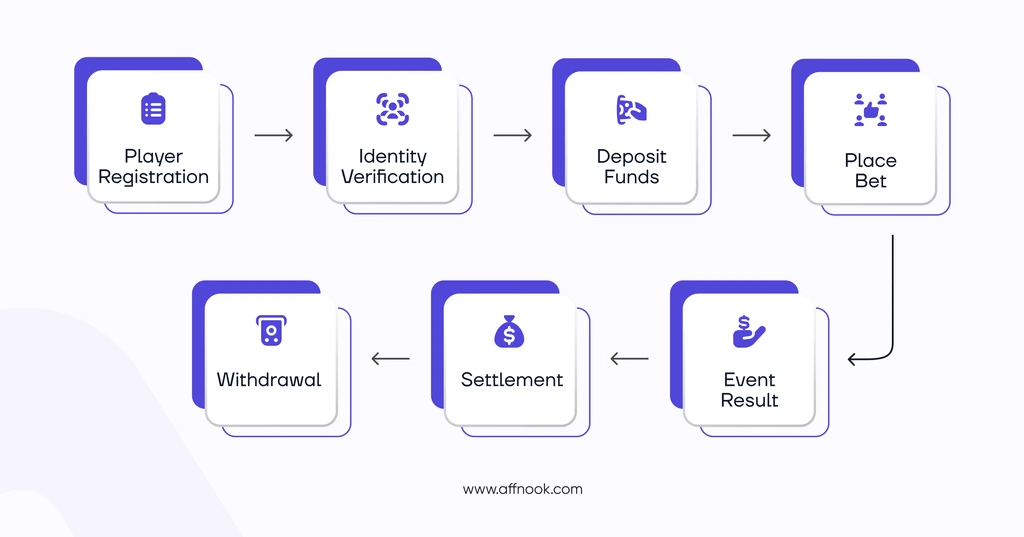
Revenue comes from the betting margin (also called the bookmaker margin or vig), rather than players losing every bet.
A successful sportsbook focuses on:
- Competitive odds
- Smooth user experience
- Fast payments
- Secure platform
- Reliable customer support
- Responsible gambling practices
- Effective player acquisition
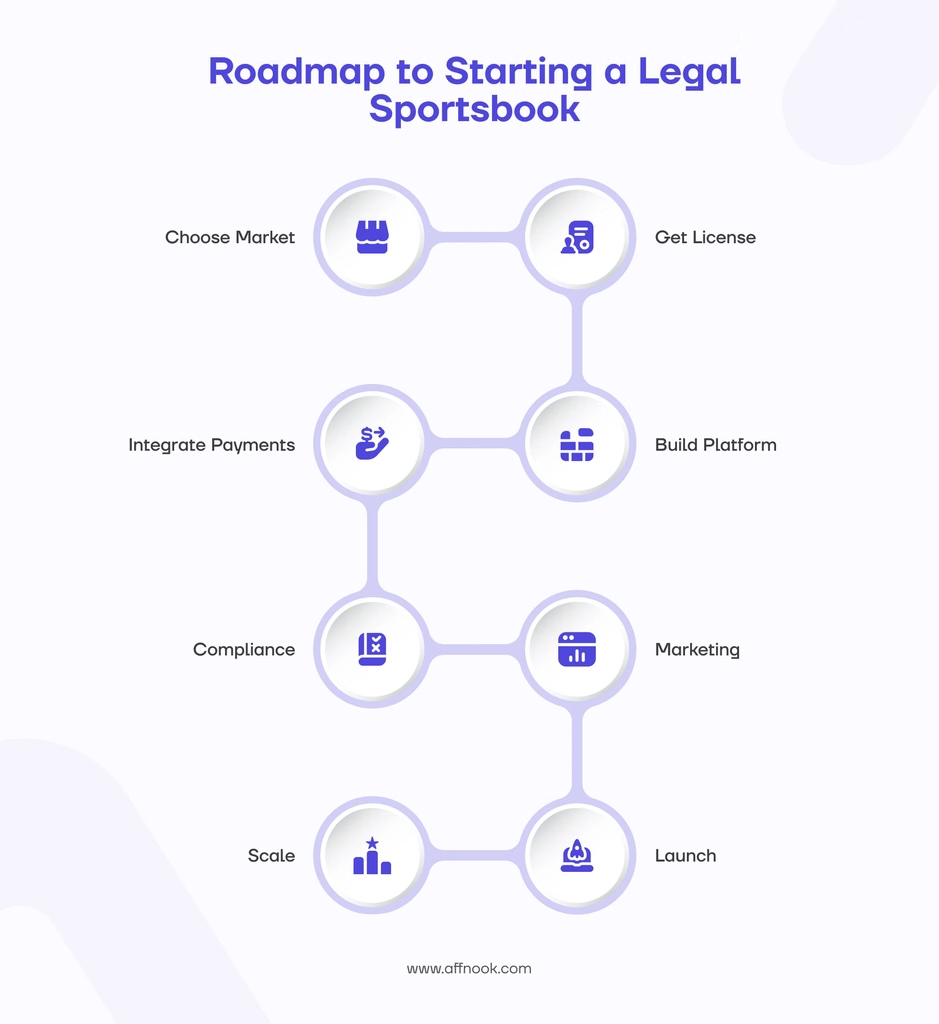
Step 1: Decide Your Target Market
The first decision isn’t choosing software.
It’s deciding where you want to operate.
Every country has different gambling laws.
Some markets are fully regulated.
Some only allow state-owned operators.
Others completely prohibit online betting.
Before investing money, identify:
- Your target country
- Target audience
- Local regulations
- Tax structure
- Licensing requirements
- Advertising restrictions
For example, operating in the UK is very different from operating in Brazil, Ontario, or certain US states.
Trying to expand into multiple jurisdictions from day one usually increases complexity and costs.
Start with one market and scale later
Step 2: Choose the Right Gambling License
Your gambling license is the foundation of your sportsbook.
Without a proper license, payment providers, software vendors, affiliates, and customers may refuse to work with you.
Some of the most recognised licensing jurisdictions include:
| Jurisdiction | Best For |
| Malta | International operators |
| Isle of Man | Premium sportsbooks |
| Gibraltar | Large gaming businesses |
| UK | UK market only |
| Curacao | Entry-level international operators (subject to regulatory reforms) |
| Ontario | Canadian market |
| Various US States | State-specific sportsbooks |
When comparing licenses, evaluate:
- Application fees
- Annual fees
- Corporate requirements
- Reporting obligations
- Responsible gambling policies
- Tax rates
- Technical audits
- Compliance requirements
Choosing the cheapest license isn’t always the smartest decision.
Your target market should determine your licensing strategy.
Step 3: Register Your Business
Most regulators require a legally registered company before issuing a gambling license.
You’ll usually need:
- Company registration
- Directors
- Shareholder information
- Registered office
- Financial records
- Online gambling Business plan
- Source of funds documentation
Many jurisdictions also require proof that company owners pass fit-and-proper assessments.
Step 4: Build Your Sportsbook Platform
This is where most businesses spend the largest part of their investment.
There are generally three options.
Option 1: Build Everything In-House
Pros
- Complete ownership
- Full customization
- Flexible roadmap
Cons
- Very expensive
- Longer development time
- Large technical team required
Option 2: White Label Sportsbook
A white-label provider supplies:
- Betting platform
- Odds
- Risk management
- Payment integrations
- Admin panel
You focus on branding and marketing.
Ideal for startups.
Option 3: Turnkey Sportsbook Solution
A turnkey solution provides almost everything except your business operations.
This option offers greater flexibility than white label while reducing development costs
When selecting sportsbook software, look for:
- Mobile compatibility
- Live betting
- Multi-language support
- Multi-currency support
- Player management
- CRM
- Reporting
- Fraud detection
- Affiliate management
- API integrations
Step 5: Integrate Odds Providers and Sports Data
A sportsbook is only as good as its betting content.
You’ll need reliable odds providers and sports data suppliers for:
- Football
- Cricket
- Tennis
- Basketball
- eSports
- Baseball
- Horse Racing
- MMA
- Boxing
Live betting has become one of the fastest-growing betting segments, making real-time data feeds essential.
Key factors when choosing providers include:
- Market coverage
- Data accuracy
- Speed
- Uptime
- API documentation
- Support
Step 6: Set Up Payment Processing
Deposits and withdrawals directly affect player satisfaction.
Offer multiple payment methods, including:
- Credit cards
- Debit cards
- Bank transfers
- UPI (where permitted)
- Digital wallets
- Cryptocurrencies (where legal)
- Local payment methods
Players expect:
- Fast deposits
- Quick withdrawals
- Low transaction failures
- Secure processing
Payment providers also evaluate your licensing and compliance before onboarding your business.
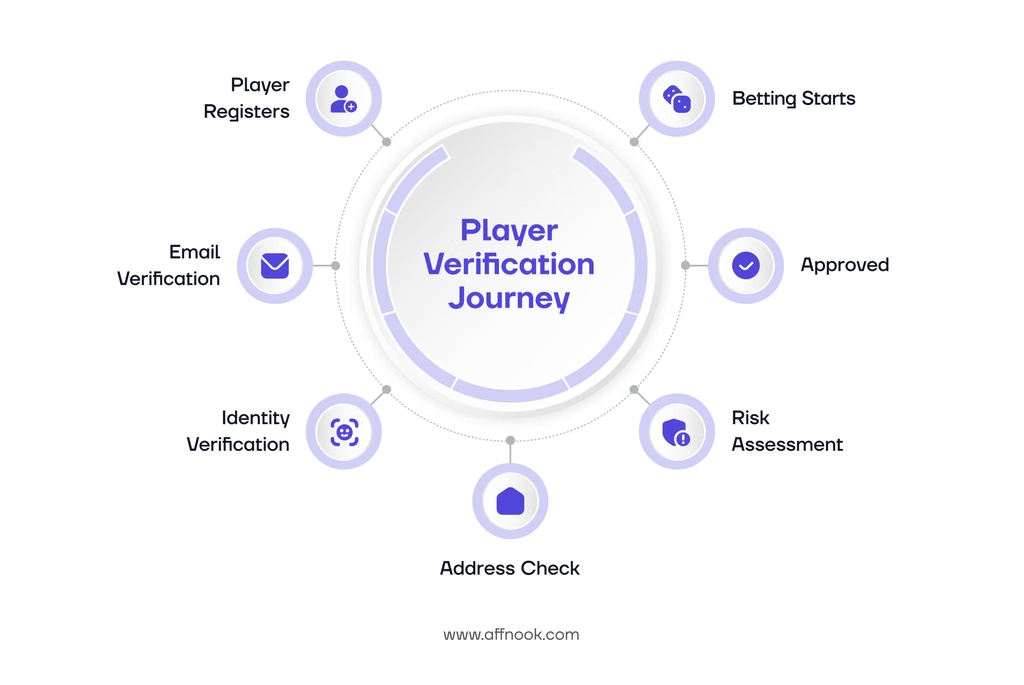
Step 7: Implement KYC and AML Compliance
Know Your Customer (KYC) and Anti-Money Laundering (AML) checks are mandatory in most regulated markets.
Typical verification includes:
- Government-issued ID
- Address verification
- Age verification
- Source of funds (for higher-risk players)
AML monitoring helps detect:
- Suspicious betting
- Money laundering
- Fraud
- Bonus abuse
Automated verification tools can reduce manual effort while improving compliance.
Step 8: Add Responsible Gambling Features
Responsible gambling is now a legal requirement in most regulated markets.
Common responsible gambling tools include:
- Deposit limits
- Loss limits
- Session reminders
- Cooling-off periods
- Self-exclusion
- Reality checks
- Responsible gambling messaging
These features protect players while helping operators meet regulatory requirements.
Step 9: Secure Your Platform
Security is essential for protecting customer funds and sensitive information.
Important measures include:
- SSL encryption
- Two-factor authentication
- Device fingerprinting
- Fraud detection
- DDoS protection
- Secure payment gateways
- Regular security audits
A single security incident can damage both your reputation and regulatory standing.
Step 10: Create Your Marketing Strategy
A sportsbook without players is just software.
Marketing should begin well before launch.
Popular acquisition channels include:
- SEO
- Content marketing
- PPC
- Social media
- Influencer marketing
- Email marketing
- Affiliate marketing
- Sports communities
Each channel should comply with the advertising rules of your target jurisdiction.
Step 11: Test Everything Before Launch
Never launch immediately after development.
Conduct extensive testing across:
- Registration
- Deposits
- Withdrawals
- Betting
- Live betting
- Odds updates
- Bonuses
- Mobile devices
- Different browsers
- Payment failures
- Security
Soft launches help identify issues before opening to a larger audience.
Step 12: Launch and Scale
Once everything is working correctly, focus on growth.
Track metrics such as:
- Cost per acquisition (CPA)
- First-time depositors (FTDs)
- Active players
- Betting volume
- Gross Gaming Revenue (GGR)
- Net Gaming Revenue (NGR)
- Retention rate
- Affiliate ROI
- Churn rate
Continuous optimisation is key to long-term success.
Why Affiliate Marketing Is Essential for Sportsbooks
Affiliate marketing remains one of the highest-performing acquisition channels in the betting industry.
Instead of paying upfront for advertising, sportsbooks reward affiliates only when they deliver qualified players.
Benefits include:
- Lower acquisition risk
- Performance-based spending
- Global reach
- Scalable growth
- Better ROI tracking
However, managing affiliates manually becomes difficult as your program grows.
That’s why many sportsbooks rely on dedicated affiliate management platforms.
Solutions like Affnook help operators manage affiliate partnerships, track player journeys, automate commission calculations, detect fraudulent activity, and generate real-time performance reports from a single dashboard.
This allows sportsbook operators to scale affiliate programs without losing visibility into campaign performance.
Common Mistakes to Avoid
Many sportsbook startups make avoidable mistakes during launch.
Some of the most common include:
- Choosing the wrong jurisdiction
- Ignoring compliance requirements
- Underestimating licensing costs
- Poor payment options
- Weak fraud prevention
- No affiliate strategy
- Delaying responsible gambling implementation
- Launching without proper testing
Avoiding these mistakes can save significant time and money.
Estimated Cost of Starting a Legal Sportsbook
Your investment depends on the market, technology, and licensing model.
Major cost categories include:
- Licensing fees
- Legal expenses
- Company formation
- Sportsbook software
- Odds provider
- Payment integrations
- Security
- Compliance tools
- Marketing budget
- Affiliate program
- Customer support
- Hosting and infrastructure
While white-label solutions reduce initial investment, custom platforms require significantly higher budgets.
Final Thoughts
Learning how to start a legal sportsbook involves much more than obtaining a license or launching a website. Success depends on building a compliant, secure, and scalable business that delivers a great betting experience while meeting regulatory expectations.
From choosing the right jurisdiction and sportsbook technology to implementing KYC, payment processing, responsible gambling measures, and a strong marketing strategy, every step plays a critical role in long-term growth.
One area that should never be overlooked is affiliate marketing. As competition increases, performance-driven acquisition channels become even more valuable. Managing those partnerships efficiently with a platform like Affnook can help operators track every referral, automate commissions, prevent fraud, and optimise campaign performance at scale.
The sportsbook industry continues to evolve with new regulations, technologies, and player expectations. Businesses that invest in compliance, data-driven decision-making, and trusted partnerships will be better positioned to build sustainable growth in this competitive market.
Help Section
Can I operate a sportsbook in multiple countries with one license?
Not necessarily. A license issued by one jurisdiction does not automatically give an operator the right to accept bets from customers in every country. Each target market may have its own licensing, registration, advertising, and market-access requirements.
Can a sportsbook offer both sports betting and casino games?
Yes, depending on the licensing jurisdiction and the scope of the operator’s authorization. Some regulators allow multiple gaming verticals under one license or framework, while others may require separate approvals or licenses for specific activities.
How do sportsbook operators manage betting risk?
Sportsbooks use risk-management systems to monitor betting patterns, player activity, odds exposure, and potential liabilities. They may adjust odds, set betting limits, suspend markets, or apply other controls to manage financial and operational risk.
How can a sportsbook prevent bonus abuse?
Sportsbooks can use identity verification, device and IP analysis, behavioral monitoring, transaction checks, and fraud-detection systems to identify suspicious bonus activity. Clear bonus terms and automated monitoring can also help reduce multiple-accounting and other forms of abuse.