Imagine you come across a link that looks something like this –
“https://www.examplevendor.com/?affiliate=123456&utm_source=affiliate&utm_medium=link”
The chances that this link will be clicked are unlikely. Regular internet users do not have an understanding of the technicalities of links and their functioning. They see links they consider ‘valid’ and ‘invalid’ – if your link doesn’t fit the archetype, there is going to be a bounce, and that doesn’t help. This is where affiliate link cloaking comes into the picture.
In affiliate marketing, everything relies on affiliate links. This is because everything, be it a click, conversion, or commission, all of it is tracked with the help of affiliate links.
If a link is not clicked in the first place, the user journey ends before it even begins. Ideally, a link should be-
- Easy to read
- Short
- Does not have strange subdomains
- Has no excessive parameters
- Users know what to expect
This can be done through affiliate link cloaking. It ensures that the links are readable, manageable, and trustworthy.
Let us now understand what it is, in detail.
What is Affiliate Link Cloaking?
As the word “cloaking” itself suggests, it is the process of masking long, complex affiliate URLs with short and clean branded links. These are usually the publisher’s own domains and do not affect the tracking process behind the scenes.
For example, instead of sharing the affiliates’ raw link that is filled with parameters and IDs, affiliates can use a cloaked link that looks simpler and is also user-friendly.
When the user clicks this cloaked link, they are smoothly redirected to the original affiliate destination, and the tracking takes place as it ideally should.
What must be noted here is that cloaking does not change the destination of the link. It only changes the way the link appears to the users. This practice aims to enhance the user experience.
Why Affiliate Links Often Look Messy
A link will need fixing, or cloaking, when it is messy. But why is it cluttered in the first place?
Affiliates and advertisers rely on multiple parameters to accurately attribute conversions. These parameters could be –
- Affiliate IDs
- Campaign IDs
- Traffic source
- Device data
As all these parameters get added to the URL for tracking purposes, the raw affiliate link gets longer and more difficult to read.
When looked at from a technical standpoint, these links should work perfectly. However, from the user’s perspective, they can appear to be suspicious — especially when placed in content, emails and social media posts.
Affiliate link cloaking bridges the gap that is created between technical tracking requirements and user experience.
Why Does It Matter?
This change may seem superficial on the surface level, but link cloaking is more than just making the link visually appealing. When acted upon correctly, it helps with trust, clicks, revenue, and even long-term affiliate growth. Let us understand how.
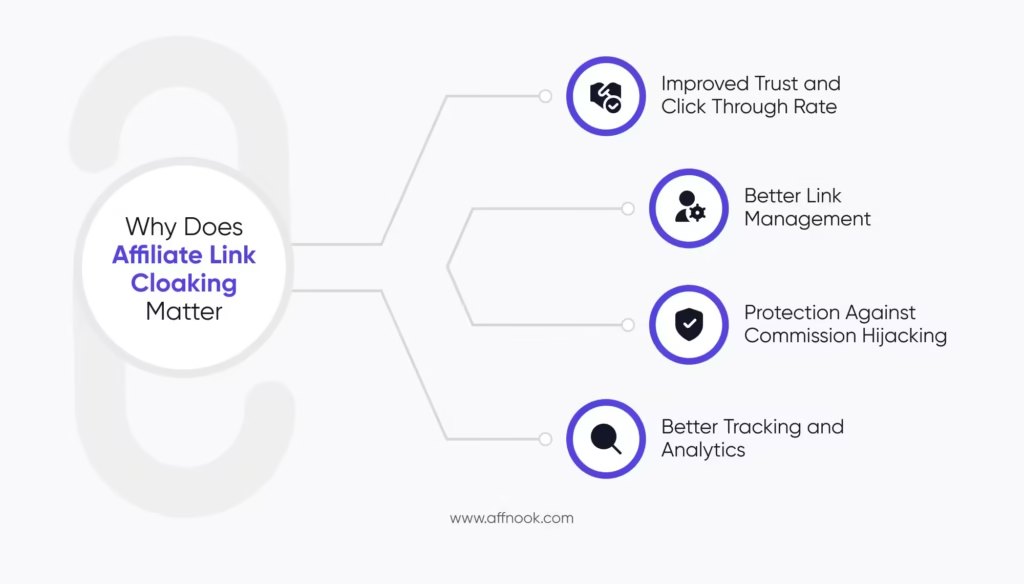
Improved Trust and Click Through Rate
Clean and branded links tend to be clicked as they feel more reliable compared to long URL links that have random characters. When users understand where a link is coming from, they are more likely to click it.
Better Link Management
Cloaked links are like a single and central point of control. For example, the same affiliate offer has been mentioned in multiple blogs. It works for a while, but then the brand changes the link, or the offer expires.
The affiliate only has to update the target behind the cloak link in such instances. They do not have to edit every instance where the link appears.
Protection Against Commission Hijacking
A raw affiliate link must be cloaked because it also reveals the affiliate’s tracking ID. This exposure can make the affiliate links vulnerable to misuse or replacement. Malicious actors or bots can easily replace them with their own, which can lead to commission hijacking.
With the help of cloaking, these identifiers can be hidden, which makes it another layer of protection against fraud.
Better Tracking and Analytics
When tracking URL becomes common and simplified, understanding and analysing the affiliate’s performance also gets easier. With the help of iGaming affiliate marketing tools like Affnook, you can –
- Tell how often the link gets clicked
- Where the traffic comes from
- What medium drives the most conversions (e.g., sign-ups, registrations, or deposits)
All of this helps affiliates identify what truly performs, optimize traffic and content over time, and build stronger, data-backed partnerships. This makes growth more predictable, scalable, and sustainable in the long run.
How Does Affiliate Link Cloaking Work?
Technically, link cloaking works through redirection.
Once the cloaked link is clicked –
- The click first lands on a URL hosted on the affiliate’s domain.
- That URL then immediately redirects the user to the original affiliate link.
- The brand, operator, or affiliate network records the click and tracks conversions as they normally do.
This redirection is handled by using standard HTTP redirects, which are faster and also invisible to the user.
While you can use WordPress plugins to set up cloaked URLs, affiliate management software also offers this as a built-in feature, where you can change the appearance of the link while setting up the campaign.
Link Cloaking Vs Link Shortening
Most people confuse link cloaking with link shortening, but they are not the same.
The role of link shortening tools is to reduce the length of the URL, generally by using third-party domains like ‘Bitly’. Link cloaking, on the other hand, usually –
- Uses one’s own domain
- Keeps branding consistent
- Allows better control over links and their destinations
- Supports long-term link management
While both make links shorter, cloaking offers better transparency and a sense of ownership.
Is Affiliate Link Cloaking Allowed?
The position of link cloaking is always somewhere in the middle.
If we look at it from an SEO perspective, it is allowed only under certain conditions. Affiliate link cloaking, on the other hand, is widely accepted.
However, it is accepted only when it is used ethically and transparently. This is because every program has its own rules. Some programs require affiliates to clearly reveal where the links lead or restrict how links are modified.
From an SEO standpoint, on the other hand, affiliate links should be clearly marked as sponsored to avoid search engine penalties.
Similarly, in the case of iGaming, most programs allow cloaking when links are transparent, properly disclosed, and compliant with regional regulations.
Cloaking should never be used to mislead users or hide the nature of a commercial relationship. This is exactly why transparency becomes key here.
Where Affiliate Link Cloaking Fits in a Scalable Affiliate Setup?
Affiliate operations grow, and management of links becomes complex. Affiliates work with multiple networks, operators, payout structures, and tracking systems.
In such scenarios, affiliate link cloaking becomes an organisational layer that brings consistency as well as control.
Affnook helps in accurate tracking and attribution of the affiliates, but is specific to the niche of iGaming. Affnook provides transparency and clear paths within the iGaming ecosystem to combat fraud and enhance data management.
It helps in masking links for improved user experience and commission protection on your own site, something traditional tools like WordPress plugins also offer. But it also provides a form of link management and emphasises a sense of clarity.
Conclusion
Affiliate link cloaking is a practical technique that helps affiliates balance technical tracking requirements with user trust and clarity. It simplifies link management, improves presentation, and supports long-term scalability when used correctly.
Like most affiliate tools, its value depends on how thoughtfully it’s implemented. When paired with structured affiliate systems and transparent practices, cloaked links become a small but important part of a sustainable affiliate strategy.
Help Centre
Is affiliate link cloaking safe to use in iGaming?
Affiliate link cloaking is commonly used in iGaming, provided it follows operator and network guidelines. Most programs allow cloaking when links are transparent, properly disclosed, and compliant with regional regulations. Affiliates should always review program terms before using cloaked links across campaigns.
Does affiliate link cloaking affect tracking or commissions?
When implemented correctly, affiliate link cloaking does not impact tracking or commissions. Clicks, registrations, and deposits are still attributed normally. Platforms like Affnook help ensure that cloaked links align with backend tracking, attribution, and payout workflows in complex iGaming affiliate setups.
What is the difference between affiliate link cloaking and link shortening?
Link shortening uses third-party domains to reduce URL length, while affiliate link cloaking typically uses the affiliate’s own domain. Cloaking offers better branding, control, and long-term link management, making it more suitable for professional affiliates managing multiple offers and regulated traffic sources.
Why do iGaming affiliates use affiliate link cloaking at scale?
iGaming affiliates use affiliate link cloaking to improve trust, protect tracking IDs, and manage links efficiently across reviews, bonus pages, and campaigns. When combined with structured systems like Affnook, cloaking supports scalable operations by connecting clean front-end links with reliable tracking and data clarity.