In modern iGaming, a casino affiliate marketing platform is more than just a tracking tool. When it is connected with other tools, like the player relationship system (CRM) and the iGaming API.
It works as a central system that helps in player acquisition, conversion, and fraud detection. For iGaming operators and casino affiliate managers, these integrations mean clearer attribution, faster payouts, smarter player segmentation, and better player experiences, which help increase revenue and reduce risk.
As the gambling marketing size is increasing day by day, according to a report, it is projected to reach USD 153,566.1 million by 2030.
In this article, you will learn more about how a casino affiliate marketing platform connects with CRM and iGaming APIs, how data flows in real time, and why this integration directly affects your revenue.
Why CRM and game API integration matters for casino affiliate marketing platforms
With the help of integration, you can remove data gaps. Instead of guessing where the real value is coming from, operators can clearly see which affiliates and campaigns drive more deposits, higher bets, and long-term value.
With this kind of visibility, operators can achieve:
- Accurate affiliate payout without delay
- Better partner grouping with fair commission levels
- Real-time fraud detection with automatic reversals
- Lifecycle campaigns triggered directly from CRM data
- Faster onboarding of new game providers and offers
When these systems work together, operators can improve player lifetime value and avoid time-consuming manual checks. Industry research also shows that CRM-based personalization helps increase player retention and overall revenue in iGaming.
The Three Integration Layers Explained (Data, Event, Product)
A well-designed casino affiliate marketing platform integration usually works across three layers. Each layer plays a different role, but together they ensure tracking, automation, and scalability without system conflicts.
1. Data Layer (Batch or Sync)
The data layer handles structured information that does not need instant updates.
It consolidates:
- Player profiles and IDs
- KYC and compliance status
- Affiliate attribution details
- Aggregated revenue and activity metrics
This layer is mainly used for nightly reconciliation, reporting, and business intelligence. It ensures that finance, compliance, and management teams work from a single source of truth without overloading real-time systems.
2. Event Layer (Real-Time Streaming)
The event layer manages everything that needs immediate action.
It streams:
- Affiliate clicks and registrations
- Deposits and withdrawals
- Bets, wins, and losses
- Bonus triggers and chargebacks
Because events move in real time, this layer powers live commission calculations, instant fraud detection, and CRM-triggered messages like welcome offers or VIP upgrades. It is critical for preventing revenue leakage and responding quickly to player behavior.
3. Product Layer (APIs and Functional Endpoints)
The product layer allows systems to take action, not just share data.
Through APIs, it enables:
- Creating affiliate links and campaigns
- Verifying deposits and player status
- Fetching game and provider metadata
- Applying bonuses or loyalty rewards
This layer connects front-end systems, affiliate dashboards, and third-party tools, making automation possible across the entire iGaming ecosystem.
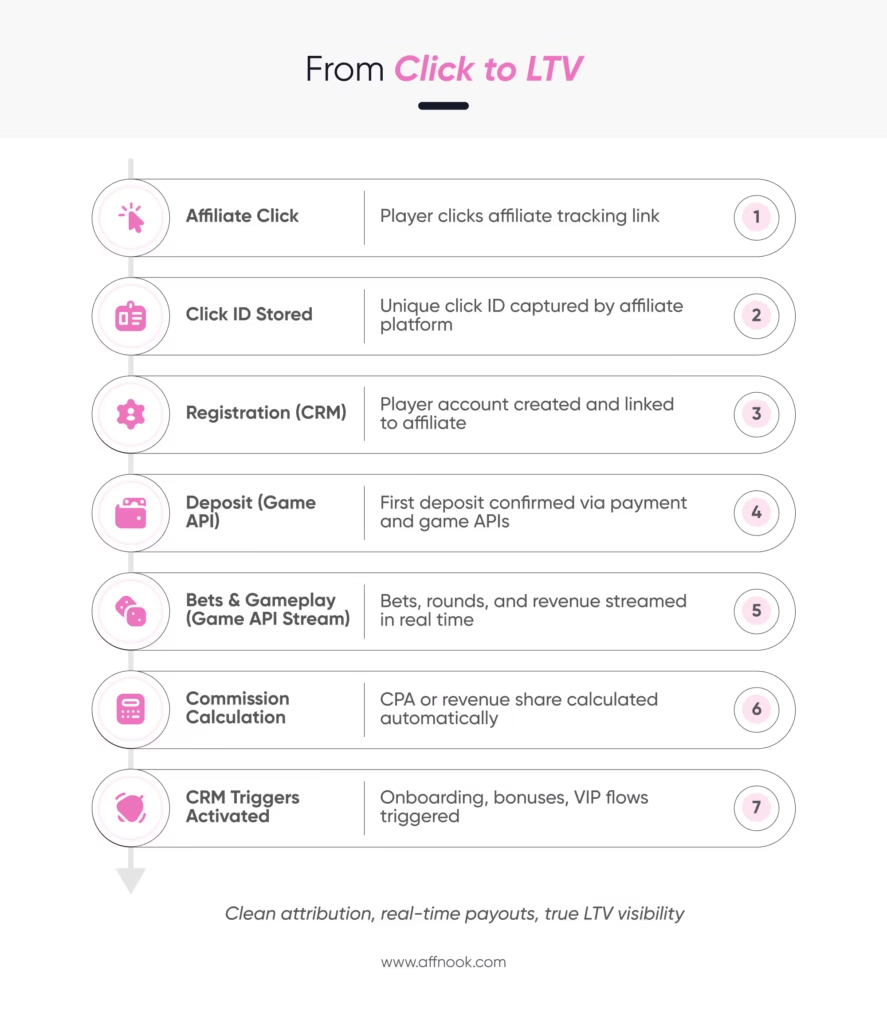
Typical Data Flow: Click to LTV
In an integrated setup, data moves in a structured way from the first affiliate interaction to long-term player value (LTV). Each step builds on the previous one, ensuring accurate tracking, fair payouts, and better lifecycle management.
1. Affiliate Link Creation
An affiliate promotes the casino using a tracking link that includes an affiliate ID and campaign parameters. This ensures every incoming player can be tied back to a specific partner and campaign.
2. Player Click Captured
When a player clicks the link, the casino affiliate marketing platform records the interaction and assigns a unique click ID. This click ID becomes the reference point for all future activity related to that player.
3. Player Registration in CRM
Once the player registers, the registration event is sent to the CRM along with the click ID and KYC status. This connects the player profile with the affiliate source while ensuring compliance checks are in place.
4. Deposit and Gameplay Tracking
When the player makes a first deposit and starts playing, the payment system and game APIs send real-time deposit and betting events to both the affiliate platform and the CRM. This is where revenue attribution begins.
5. Commission Calculation
Based on the agreed model (CPA, revenue share, or hybrid), the affiliate platform calculates commissions automatically and records them in a commissions ledger. This removes manual calculations and reduces payout errors.
6. CRM Lifecycle Triggers
The CRM uses these events to activate onboarding messages, bonuses, retention campaigns, or VIP routing. Player engagement improves because actions are timely and relevant.
7. LTV Measurement and Reconciliation
Over time, aggregated gameplay and revenue data feed business intelligence tools and the affiliate platform. This allows operators to measure true LTV, recalculate revenue share, and apply clawbacks if fraud or bonus abuse is detected.
Where CRM Fits and What It Adds
A CRM built specifically for iGaming, not a generic sales CRM, stores everything related to a player’s journey. This includes lifecycle data, campaign interactions, support history, VIP status, responsible gaming flags, and communication records. When this CRM is integrated with an affiliate platform, it adds clarity and control across the entire player lifecycle.
Acquisition becomes attributable.
The affiliate platform tracks where the player comes from, while the CRM tracks what the player does after registering. When both systems are connected, operators can clearly see which affiliates bring high-value players and calculate true acquisition costs.
Segmentation is precise.
With shared data, operators can group players based on behavior and performance. This allows targeted campaigns, such as rewarding affiliates who consistently drive players with high retention or higher lifetime value.
Personalization is automated.
When the affiliate platform reports key actions like a first-time deposit (FTD), the CRM can automatically trigger welcome messages, bonuses, or cashback offers without manual effort.
Compliance is easier.
KYC status and responsible gaming flags stored in the CRM can automatically control payouts, bonuses, or promotions, ensuring regulatory rules are followed without delays.
Operators that centralize CRM and affiliate data consistently see better retention and higher revenue per player, because decisions are based on complete, connected information rather than isolated data.
Why Game APIs are Critical
Game APIs act as the connection between the casino’s games and the rest of the iGaming tech stack. They share essential information such as game lists, RTP values, session activity, bet and round data, and in some cases live dealer telemetry. When these APIs are properly integrated, operators gain full visibility into what players actually do inside games.
1. Real-time revenue tracking
Game APIs send live data on bets, wins, and losses, allowing operators to calculate gross gaming revenue (GGR) and net gaming revenue (NGR) accurately. This makes it possible to measure revenue at a player and affiliate level without delays or manual adjustments.
2. Promo and bonus accuracy
Because game APIs identify exactly which games are being played, bonuses can be applied and tracked correctly. Operators can ensure that affiliate-promoted offers are used only on eligible games or providers, reducing bonus abuse and payout errors.
3. Better player experience
Integration allows the front-end to show players the right games based on the affiliate campaign that brought them in. This keeps the experience consistent with what was advertised and improves player trust and engagement.
4. Regulatory and reporting support
Many regulators require detailed, game-level reporting. Game APIs automate this process by delivering structured data that can be stored, audited, and reported without manual effort.
To simplify this process, many operators use game aggregators. Aggregators provide a single API that connects to multiple game providers, allowing casinos to onboard large game portfolios quickly and scale operations without building custom integrations for each provider.
This approach is quick to launch, easy to manage, and keeps development effort low.
Fraud Control, Clawbacks, and Reconciliation
One of the biggest benefits of strong integration is reduced fraud. Real-time data allows the affiliate platform to detect suspicious behavior, such as multiple accounts from one device, unusual betting patterns, or bonus abuse. When these activities are identified:
- Affiliate commissions linked to those players can be clawed back automatically.
- The CRM can flag the player for review or pause bonuses instantly.
- Payment systems can hold withdrawals until checks are completed.
This prevents revenue loss and maintains trust with affiliates. Many affiliate platforms include built-in fraud tools or connect with external fraud systems to automate this process. Proper integration also ensures every clawback is recorded clearly in both affiliate reports and CRM support logs.
Measurement: From FTD to True LTV
Tracking a first-time deposit (FTD) is only the starting point. When systems are integrated, operators can measure long-term metrics like LTV, churn, ARPU, and retention by affiliate and campaign. Accurate LTV tracking requires combining game-level revenue data with CRM-based engagement and retention data.
This complete view helps operators move away from short-term CPA deals and focus on long-term, profitable affiliate partnerships. Game analytics and LTV models also help decide whether affiliates should be rewarded through CPA, revenue share, or hybrid models.
Practical Example:
A regional operator faced frequent disputes over CPA payouts linked to self-excluded players. After integrating the affiliate platform with the CRM and responsible gaming data:
- The affiliate platform received self-exclusion alerts and automatically reversed related payouts.
- Affiliate managers had clear transaction records to explain adjustments.
- The CRM logged the action and notified support teams for compliance tracking.
The result was fewer manual checks, faster dispute resolution, and a noticeable drop in invalid payout requests.
What to Ask When Choosing a Casino Affiliate Marketing Platform
When reviewing platforms, operators should ask:
- Does it support native webhooks and APIs for real-time data sharing?
- Are attribution models flexible (last click, first click, multi-touch)?
- Is the data structure open and well-documented for developers?
- Are fraud detection tools available or easy to integrate?
- Does it work smoothly with game aggregators and providers?
- Can it send data to BI and reporting tools?
- Does it support regulatory reporting and audit trails?
Choosing a platform built for event-driven integrations helps operators save time, reduce errors, and scale efficiently.
Affnook: A Real-World Fit
For teams looking for a reliable affiliate solution, Affnook offers a clean partner interface along with the technical capabilities needed for accurate tracking and fraud prevention. Its focus on transparent reporting and flexible commission models helps operators simplify affiliate management and focus on growth.
Implementation Tips and Common Pitfalls
- Define a clear event structure with agreed naming and error handling.
- Use a message queue or event bus to keep systems loosely connected.
- Account for timing differences by storing timestamps and source flags.
- Clearly document attribution and reattribution rules.
- Test edge cases like chargebacks, bulk deposits, and manual changes.
- Make sure compliance flags can automatically affect payouts and bonuses.
The Business Payoff: Faster Scaling, Less Leakage, Higher LTV
When affiliate platforms, CRM systems, and Game APIs work together, operators gain three major benefits:
- Cleaner economics with accurate payouts and fewer overpayments.
- Better player journeys through timely onboarding and VIP engagement.
- Scalable growth with faster partner and content onboarding.
Operators who invest in integration consistently see stronger margins and fewer operational issues, allowing them to grow marketing efforts with confidence.
Conclusion
A modern casino affiliate marketing platform must integrate smoothly with CRM systems and game provider APIs. This integration turns affiliate marketing from guesswork into a measurable and profitable growth channel. Event-driven, API-first setups deliver better tracking, stronger fraud protection, and more valuable affiliate relationships — driving long-term success in a competitive iGaming market.
Help Section
1. What is a casino affiliate marketing platform?
An affiliate marketing platform tracks affiliate traffic, player activity, and commissions while connecting operators with their marketing partners.
2. Why should a casino affiliate marketing platform integrate with a CRM?
CRM integration helps link affiliate traffic to player behavior, enabling better segmentation, lifecycle tracking, and accurate revenue attribution.
3. How do game APIs work with a Casino Affiliate Marketing Platform?
Game APIs pass real-time data such as bets, deposits, and wins into the platform, allowing precise tracking of player value per affiliate.
4. What benefits do CRM and game API integrations offer affiliates?
They ensure transparent reporting, faster commission approvals, fewer disputes, and trust through accurate performance data.
5. Is CRM and game API integration necessary for scaling affiliate programs?
Yes. Integration eliminates data gaps, improves automation, and supports high-volume traffic while maintaining compliance and reporting accuracy.