The iGaming sector boomed during the COVID era. This was the time when, suddenly, everyone believed they could be gamers or tried their luck at gambling.
According to reports, approximately $182.98 billion was spent by three billion players on iGaming in 2022. Be it through online casinos, sports betting, lotteries, or any other digital gaming platform.
However, rapid expansion brings its own risks, and a major threat to the iGaming sector is fraud and cybersecurity breaches. In fact, the iGaming space has become the most prone to fraudulent activities. It is because of the sensitive and valuable information that it holds that it comes under the radar of cybercriminals.
Unlike fraud in other digital businesses, a single breach in iGaming not only results in financial losses but also leads to direct license suspensions, regulatory penalties, and irreversible damage to players’ trust.
Hence, cybersecurity for the iGaming industry is not just an IT requirement; in fact, it has become a business necessity.
This guide aims to break down some proven best cybersecurity practices that iGaming operators should take into consideration.
Whether you’re running a sportsbook, casino platform, or affiliate-led operation, this article will help you think clearly about protecting your platform, your players, and your reputation.
Why Cybersecurity Is a Critical Issue for iGaming Operators
iGaming platforms reside where real money, personal data, and real-time systems intersect. This combination makes these platforms attractive to attackers.
One may wonder what iGaming operators have to do with cybersecurity. This is because it is the operators who manage the vulnerable and important information of the users. They have access to the –
- Player identity data (KYC documents, emails, IPs)
- Payment information and transaction histories
- Wallet balance and bonuses
- Game logic and odds engines
- Affiliate and partner systems
iGaming platforms are easily targeted because of their multi-layered vulnerabilities.
What is concerning is that these attacks are not necessarily loud or evident. The breaches happen subtly and quietly through loopholes such as –
- Compromised credentials
- Admin panels that are not secured
- Weak API authentication
- Poor monitoring of suspicious behaviour
Understanding the Most Common Cyber Threats in iGaming
Before planning how to fight against cybercrimes, it is necessary to understand the threats operators are up against. It is only then that we can understand the importance of cybersecurity for the iGaming industry.
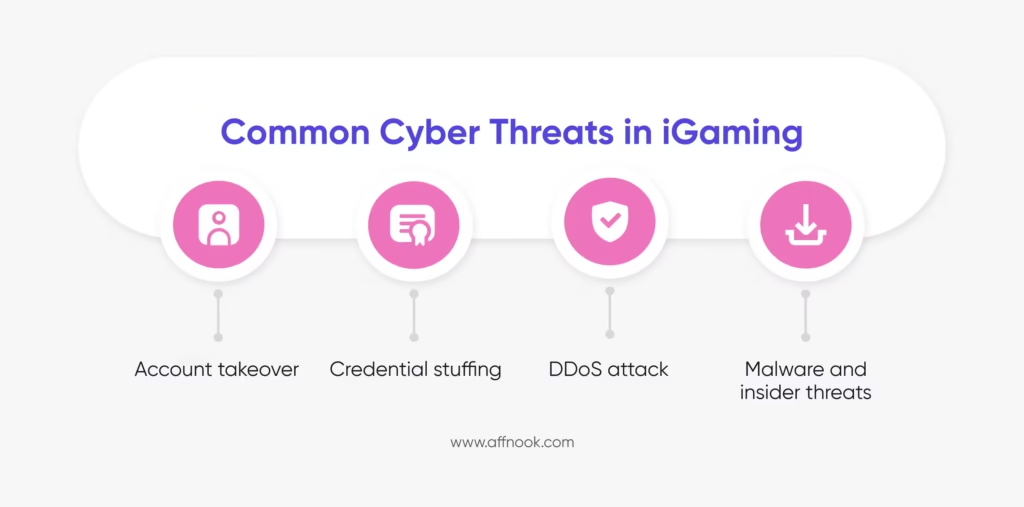
Account Takeover and Credential Stuffing
Reusing passwords and credentials for multiple platforms is a common yet unsafe practice. iGaming is no exception, as players use the same details across platforms, which makes them easily accessible to attackers.
But how do they find their way in?
Cybercriminals launch brute force attacks, which is an automated hacking method where an attacker uses multiple combinations of usernames and passwords. With the help of these methods, attackers get access to the players’ accounts.
A major example of this is when, back in 2019, millions of Fortnite player accounts were hijacked by attackers.
Once they get in, they get the authority to –
- Drain wallets
- Abuse bonuses
- Alter the withdrawal details
This can even lead to massive financial losses for the players, as it did for a Counter-Strike player who lost $2 million worth of skins.
DDoS Attacks
Distributed Denial-of-Service (DDoS) attacks aim to overwhelm the gaming servers by flooding the website with malicious traffic. There are also instances where the attackers threaten to attack the servers unless they receive a payment or ransom.
This can cause downtime during peak events like major sports matches or tournaments, something that Blizzard Entertainment faced in 2020 due to relentless attacks. In fact, in 2025, they faced similar attacks.
Repeated incidents like these highlight why cybersecurity for the iGaming industry is critical. Short-lived disruptions during peak periods can result in massive financial losses and long-term player churn.
Malware and Insider Threats
Internal systems can be compromised through malicious software, phishing attacks, and disgruntled employees. This invasion of the internal system tricks players into revealing sensitive information like login details, payment details or crypto keys.
In iGaming, insider threats become particularly dangerous because it is admin-level access that controls payouts and game configurations.
When all this happens, thousands of devices get infected while the users remain oblivious of the threats they are under. The iGaming industry, hence, must educate its players about the risks while taking relevant measures themselves, to avoid such an experience for the players.
The threats are not limited to the ones that have been discussed. The attackers keep looking for multiple unnoticeable ways to get into either the player’s system or the entire gaming system. It is the operators who are responsible for ensuring the health of the iGaming platform.
Let us now discuss those ways.
Building a Strong Foundation: Security by Design
Firstly, building a strong foundation is the key. Cybersecurity for the iGaming industry is not just another add-on, and this is what operators often fail to understand. In fact, security should be built into the architecture of the platform from the first day.
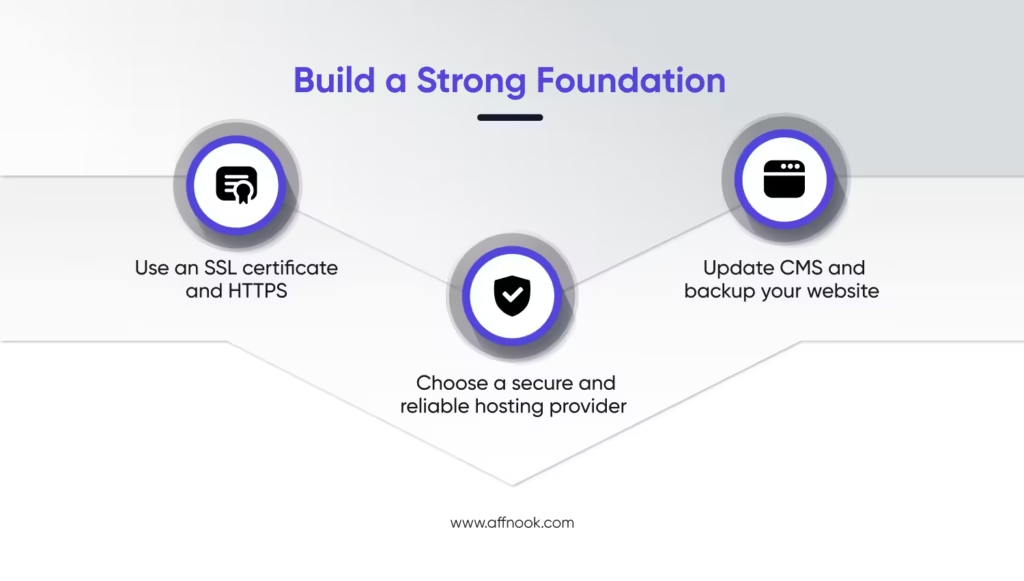
Start With the Basics
- Choose a secure and reliable hosting provider – The most basic and necessary elements of a web platform are the hosting services. Choose a secure hosting provider that offers protection against DDoS attacks, modern firewall systems, and automatic backups to prevent data loss.
- Use an SSL certificate and HTTPS – Every iGaming platform must operate on HTTPS and should also have a valid SSL certificate. This encrypts all the data that is exchanged between the players’ browsers and the server.
Doing this protects all the sensitive user data such as passwords, payment details and credentials.
Apart from security, HTTPS also builds a sense of trust through the browser lock icon. This is also why it is now a baseline requirement for search engines and payment service providers.
- Update CMS and back up your website – Platforms that are built on CMS frameworks like WordPress must be maintained to remain secure. Outdated plugins and files are prone to cyber attacks. This is because attackers look for old websites with vulnerable software. Being up to date ensures that newly discovered flaws are fixed promptly.
Apart from updates, maintaining dependable backups is also essential. In case of security breach occurrences, backup allows for restoring the platform quickly. When there are multiple copies stored in different locations, business continuity is ensured even during unexpected incidents.
Secure Infrastructure and Network Segmentation
Operators must segment networks by isolating critical systems such as –
- Payment processing
- Gaming servers
- Admin dashboards
By doing this, even if one component is compromised, getting access to the rest of the components through the affected one becomes difficult for the attackers.
Additionally, when cloud-based infrastructure is configured correctly, it can offer enhanced security through controlled access, encryption, and redundancy. It must be noted that regular audits are essential here.
Account Security
After ensuring that the foundation is strong, the other priority is to make sure that the user account is secure. This is because it is the user account that holds real-world value. Hence, some best practices for cybersecurity for the iGaming industry are-
Strong Authentication
Having a “strong password” is not enough and does not guarantee the safety of your account. Multi-factor authentication or two-factor authentication is a necessary step to ensure cybersecurity for the iGaming industry.
Implementing 2FA for player logins and admin panels adds a crucial layer of protection to the system. Even if credentials get stolen, it will be difficult for the attacker to take over the account because unauthorized access is significantly harder to attain.
Bot Management
- Stops credential stuffing and account takeovers – Advanced bot management solutions analyze behavior and device signals to block automated login attacks before they reach player accounts.
For example, after implementing rate limiting and behaviour-based bot blocking, an iGaming operator saw credential-stuffing attacks drop to zero, protecting user accounts and reducing support overhead. - Limits bonus abuse and fake accounts – Fraudsters often use bot accounts and create multiple accounts to exploit sign-up bonuses. By identifying repeat devices and suspicious registration behaviour, bot management helps operators prevent promotional abuse at scale.
- Reduces DDoS and traffic-based disruptions – Attackers often cause DDoS surges with the help of bots, which can further degrade the service. With the help of modern bot management tools, abnormal traffic spikes can be detected.
With the help of these tools, industry-leading platforms can detect such activities as they use real-time behavioural scoring, which reacts instantly without any manual intervention.
Platforms like Affnook come with built-in features that limit fraud at the acquisition level in real time. Such platforms ensure that only genuine data gets recorded.
Protecting Player and Payment Data
Trust is the currency of iGaming. Mishandling of data ruins the player’s experience and can lead to massive losses, as discussed.
End-to-End Encryption
Whether the sensitive data is at rest or in transit, it must always be encrypted in accordance with the industry standard protocols. This data includes-
- Login credentials
- Payment details
- KYC documents
- Communication between services and APIs
Transport Layer Security (TLS) helps ensure that even if the data is seized, it remains unreadable.
Secure Payment Gateways
Operators need to work with trusted and compliant payment providers that strictly follow the security standards, like PCI DSS. Complying with this standard means that the data of the cardholder is protected.
Modern payment security relies on multiple layers of protection, some of which are discussed below.
Tokenisation: It limits the damage of data exposure by masking payment data with randomly generated tokens. This reduces the risk of payment data theft and lowers the exposure during breaches
Secure APIs: Secure APIs prevent unauthorized system access as they use authentication, encryption and strict access controls to ensure that only trusted systems are able to communicate with each other. This prevents attackers from manipulating balances, placing fraudulent bets and extracting sensitive data.
Real-time monitoring of transactions: It helps in analysing deposits, withdrawals and betting activities for abnormal patterns. These patterns can be-
- Rapid deposit withdrawal cycles
- Unusually high-value bets
- Repeated failed payment attempts
Real Time Monitoring and Fraud Detection
Cybersecurity for the iGaming industry is not just about defence, but also early fraud detection. Something Affnook also helps fulfill.
Behavioural Analysis
Certain repetitive behaviours become identifiers of suspicious patterns, and modern platforms help in identifying them. These patterns can be-
- Rapid bet placement
- Multiple logins from different locations
- Multiple failed withdrawal attempts
These activities are signals for operators, which then help them intervene before real damage occurs.
IP and Device Monitoring
Tracking IP addresses, device fingerprints, and geolocation data helps operators in –
- Detecting abnormal access attempts
- Imposing jurisdictional compliance
- Identifying bot attacks
Using Smart Traffic Defence to Protect Platform Availability
We have discussed downtime caused by cyberattacks, and downtime means dollars lost. To avoid this, practice –
- Real-time DDoS reduction – Advanced traffic analytics tools can be used to differentiate the flood of malicious traffic from genuine traffic spikes. This diverts threats without affecting the legitimate users
- Network Behaviour Oddity Detection – Using a network security system like a firewall with anomaly detection looks out for unusual flows and activities. An example of such unusual flows could be sudden spikes from specific regions or replicas of a source pattern.
Being able to absorb and intelligently filter attacks is crucial during big events or tournament launches.
Incident Response: Planning for the Inevitable
Even if a platform claims to be the most secure, zero incidents cannot be guaranteed. What matters is how quickly and efficiently they are responded to.
Incident Response Plans
iGaming operators should have a documented plan that outlines –
- How incidents are detected
- Who is responsible for the action
- How players and regulators are informed
- How the system is restored
Having better planning ensures a fast and transparent response. This significantly reduces long term damage.
Regular Testing and Audits
Security testing, penetration testing, and simulated attacks help in identifying weaknesses before real attackers do.
- Security audits review a platform’s infrastructure, configurations, access controls and data flows. It helps identify gaps in the existing setups. For iGaming operators, this reveals issues like over-privileged admin access, exposed APIs, weak encryption practices, or misconfigured servers that could be exploited.
- Penetration testing is a way of deliberately attempting to exploit vulnerabilities in a controlled environment. Real attacks are simulated by ethical hackers, and this helps in identifying vulnerabilities and the extent to which attackers can cause damage. These fragile points can then be worked upon.
- Similar to this is the tactic of simulated attacks, a test response. These attacks focus on how well teams can respond under pressure. They are like mock drills that test detection systems, alert accuracy, internal communication and incident response workflows.
This could be a DDoS attack during a high-traffic event or an attempt to go on an account takeover spree to check the speed and efficiency of teams and systems.
Conclusion
Players know nothing about the security systems, but they can evidently feel the impact. Platforms that-
- Protect player funds
- Prevent fraud
- Maintain uptime
- Respond transparently to issues
build a long-term trust and loyalty with their players.
When the market is so crowded, having strong cybersecurity for the iGaming industry is not just about risk management, but it also differentiates you from the crowd.
At the end of the day, cybersecurity is not a one-time investment. Instead, it is an ongoing commitment to players, partners and regulators. In iGaming, this sense of commitment makes all the difference.
Help Centre
What are the biggest cybersecurity risks in the iGaming industry today?
The biggest risk in cybersecurity for the iGaming industry includes account takeovers, credential stuffing, bonus abuse, DDoS attacks, and data breaches. These threats target platforms handling real money and personal data, making proactive cybersecurity practices essential to protect players, ensure uptime, and maintain regulatory compliance.
Why is cybersecurity for the iGaming industry important for operators handling real-money transactions?
Cybersecurity for the iGaming industry is critical because operators manage sensitive financial data, player identities, and payment systems. A single breach can result in financial losses, regulatory penalties, and loss of player trust. Strong security safeguards help prevent fraud, protect funds, and ensure uninterrupted platform operations.
How does two-factor authentication improve iGaming account security?
Two-factor authentication adds an extra verification step beyond passwords, such as a one-time code or biometric check. This significantly reduces the risk of account takeovers, even if login credentials are stolen, making it a core best practice in cybersecurity for the iGaming industry.
How does bot management help prevent fraud in iGaming platforms?
Bot management helps detect and block automated attacks such as credential stuffing, fake account creation, bonus abuse, and odds scraping. By analyzing behaviour patterns and device signals, iGaming operators can protect user accounts, maintain fair play, and reduce fraud-driven revenue losses.
What cybersecurity measures help iGaming operators maintain player trust?
Encryption, secure payment processing, real-time threat monitoring, and transparent incident response all play a role in maintaining player trust. When players feel confident their data and funds are protected, strong cybersecurity for the iGaming industry becomes a long-term trust and retention driver.