Once you start gambling and win a huge sum, you yearn for more. Winning in gambling is about chance and luck, and not just skill.
You win, you bet more. You lose, and you bet until you don’t. The cycle is never-ending, and the player is oblivious to how this source of entertainment is slowly turning into a gambling addiction.
Gambling to a certain extreme pushes you to sacrifice something that you value with the hope of getting something of greater value in return. For players, there are multiple platforms to bet on, be it in the casino, on the track or online through –
- Sports betting
- Roulette
- Poker
- Slots
Being addicted to gambling through these various means can –
- Strain your relationships
- Affect your work
- Lead to major financial losses
In the iGaming sector, having an awareness of gambling addiction is not just essential for players, but also for operators, affiliates and platforms that promote such games.
What Makes Gambling Addictive
According to the World Health Organisation, gambling addiction statistics show that 1.2% of the world’s adult population has a gambling disorder. People who gamble at harmful levels generate around 60% of losses.
Gambling addiction shouldn’t be taken as lightly as it often is; in fact, it is considered to be a kind of disorder in today’s time. It is a pattern of compulsive gambling behaviour where the player continues to gamble irrespective of the consequences.
Gambling is designed to engage its users. However, some players get a bit “too engaged” and are unable to keep control of their urge to bet. This could be due to neurological and psychological triggers.
It is the brain’s reward system that sits at the core of gambling addiction.
Unpredictable wins lead to a release of dopamine, which boosts motivation and a sense of pleasure. To chase the feeling caused by wins, the player keeps betting even when the odds are clearly stacked against them.
Some of the factors that can increase the risk of addiction are –
- Easy access to online gambling platforms
- Games with a fast pace that provide instant results
- A near miss that feels like “almost winning”
- Emotional triggers such as financial pressure, stress and even boredom
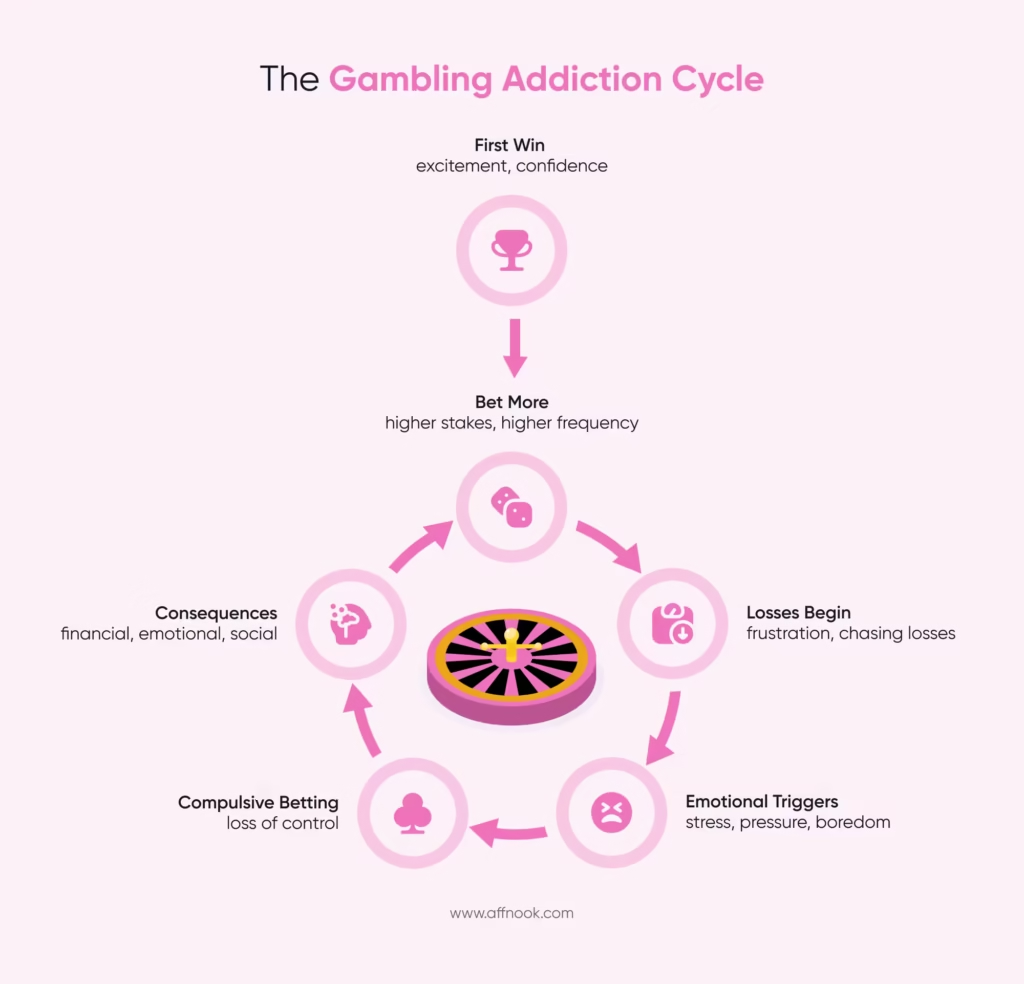
While for some, it is about money, for others, gambling is a way to cope and escape, unless control is lost.
Strong links are made between gambling harm and mental health challenges. This does not just affect the person who gambles but also the people they are surrounded by.
Commercialisation
Commercialisation further amplifies the issue of gambling. This is because it is very commonly embedded into the social environments through –
- Sports sponsorships
- Promotions that are tied to entertainment and lifestyle content
- Aggressive online and social media advertising
These associations do not just encourage participation but also normalise gambling as a routine and low-risk activity, even when their actions suggest otherwise.
Gambling Addiction vs Problem Gambling
The two terms are often used interchangeably, but they differ subtly.
- Problem Gambling – It is a gambling behaviour that starts causing negative effects. It is situational and occasional.
For example, someone might spend more than they planned during a sports betting season, feel stressed about the losses, and argue with family members about money. They may still be able to stop or reduce their gambling if they recognise the issue early.
- Gambling Addiction – This condition is more severe and chronic and is even recognised by the medical and psychological institutions. It is the point when gambling feels like a compulsion
A person with gambling addiction may continue betting despite serious debt, damaged relationships, or professional consequences. Even after promising to stop, they find themselves returning to gambling repeatedly. The behaviour pertains regardless of the harm it causes.
While problem gambling is a warning sign, if it remains unresolved, it will turn into gambling addiction, which then requires intervention.
It is important to understand this difference because awareness can prevent long-term harm.
What are the Symptoms of Gambling Addiction?
Gambling addiction develops gradually. It often hides behind behaviour that may look normal on the surface level.
However, one must be wary of the common warning signs that include –
- Spending too much time and money on gambling than what was originally planned
- Chasing losses to win back the money
- Keeping valuables at stake
- Resorting to borrowing money to gamble
- Continuing to gamble despite experiencing the consequences of it
- Strained relationships due to gambling
When it starts to affect someone’s lifestyle, and they can’t stop even if they want to, that means the situation has slipped out of their hands. This is when gambling is not a choice anymore; it is a compulsion.
Financial, Emotional and Social Impact
The consequences of gambling addiction include, but are not limited to –
Financial Consequences
- Mounting debt
- Missed bills and loans
- Bankruptcy or legal trouble
Emotional Consequences
- Anxiety and depression
- Guilt and shame
- Loss of self-esteem
Social Consequences
- Strained relationships
- Isolation from friends and family
- Loss of trust in personal and professional circles
All these consequences often push the player to gamble even more as they eventually enter a difficult-to-exit loop.
Regulatory Gaps in Online Gambling
No matter how regularly you use the geofencing techniques for regulatory purposes, the internet will remain borderless. Loopholes are always there, which gives unlicensed providers a way to operate beyond borders.
Platforms that fall outside national oversight offer unregulated products with limited consumer protection.
When this happens, enforcement becomes difficult, and exposure to harm increases, especially in regions with weaker regulatory frameworks.
Addressing these gaps requires –
- Coordinated regulations
- Better data sharing
- Strong control over who can offer gambling services
Responsible Gambling and Prevention
Prevention plays an important role in reducing gambling-related harm for both players and operators, and affiliates. Some practices that should be taken into consideration will be further emphasised on.
For Players
Some responsible gambling practices that players should keep in mind include –
- Clear spending and time limits should be set on betting
- Gambling should be viewed strictly as a source of entertainment, and not income
- Taking regular breaks
- Avoiding gambling during emotional distress
For Operators and Affiliates
Operators and affiliates also have some duties to fulfil towards their players. They should –
- Promote transparency and fair play
- Offer self-exclusion and limit-setting tools
- Avoid misleading and aggressive marketing
- Provide access to support sources
As the iGaming environment is regulated, responsible gambling is not just a necessity but also a shared responsibility for both sides.
From the perspective of affiliates, responsible gambling also means responsible promotion. Clear attribution, verified traffic sources, and transparent payout systems help reduce harmful or misleading incentives.
Affiliate management platforms such as Affnook are used to bring structure and accountability, this supports a more sustainable iGaming environment.
Why Gambling Addiction Matters in the iGaming Industry
In the iGaming industry, compulsive gambling is not just a personal issue but a structured one.
Lasting growth depends on –
- Player trust
- Regulatory compliance
- Long-term engagement rather than short-term exploitation
If affiliates, platforms, and operators prioritise ethical practices, they help build a healthier system. A system where entertainment does not come at the cost of well-being.
Understanding gambling addiction allows the industry to-
- Design better safeguards
- Communicate more responsibly
- Contribute to a safer gambling environment.
Conclusion
Gambling addiction is complex, deeply personal, and often misunderstood. It’s not about lack of discipline or poor decision-making; instead, it’s about how human psychology interacts with risk, reward, and emotion.
By talking about gambling addiction openly and responsibly, the industry can move toward awareness rather than stigma, prevention rather than damage control, and long-term value rather than short-term gain.
Help Centre
Can gambling addiction affect people who don’t gamble regularly?
Yes. Gambling addiction is not defined by frequency alone. Even infrequent gambling can become harmful if it involves loss of control, emotional dependence, or financial risk-taking. Stressful life events or easy access to online platforms can accelerate addiction unexpectedly.
Is online gambling more addictive than land-based gambling?
Online gambling can increase addiction risk due to constant accessibility, faster game cycles, anonymity, and instant deposits. These factors reduce natural stopping points, making it harder for some individuals to recognise losses or disengage before harmful patterns develop.
How does gambling addiction impact decision-making and risk perception?
Gambling addiction alters how the brain processes risk and reward. Over time, losses feel less significant, while near wins feel motivating. This distorted perception leads to impulsive decisions, overconfidence, and continued betting despite clear negative outcomes.
Can gambling addiction exist without major financial losses?
Yes. Gambling addiction can be present even before visible financial damage occurs. Emotional distress, compulsive thoughts, secrecy, and prioritising gambling over responsibilities are strong indicators. Financial harm often appears later, after behavioural patterns are already deeply formed.
Why is gambling addiction often misunderstood or underestimated?
Gambling addiction is frequently minimised because it lacks visible physical symptoms and is socially normalised through entertainment and advertising. This misunderstanding delays recognition and support, allowing harmful behaviours to escalate unnoticed in both personal and professional environments.