Have you ever noticed that when you are checking sports scores or reading about new games, there is a pop-up ad for an online casino? That’s perfect timing, which is not random — it is technology called real-time bidding.
Real-time bidding is the core mechanism behind many advertisements you see online. It runs tiny digital auctions that decide in milliseconds, which ads should appear on your screen and how much they cost.
This technology is a game-changer for iGaming brands. It helps them to target players more accurately, and it also helps to reduce wasted ad spend and promotes offers exactly when players are most active.
Revenue in the in-game advertising market is expected to reach US$124.45 billion by 2025, showing how quickly programmatic and RTB ads are transforming the digital gaming world.
Let’s learn more about RTB, how it works, and why it matters in iGaming advertising.
Let’s Understand Real-Time Bidding
In simple words, RTB is a type of programmatic advertising where ad impressions are bought and sold automatically, in real-time, through instant digital auctions
When a user visits a website or opens an app, the available ad space (or impression) goes up for auction. Advertisers place automated bids through a Demand-Side Platform (DSP), and within milliseconds, the highest bidder’s ad is displayed to the user.
All this happens faster than the blink of an eye — typically under 100 milliseconds.
Think of RTB as a stock exchange for ads, where every impression is traded instantly, based on value and relevance.
How Real-Time Bidding Works in iGaming Advertising
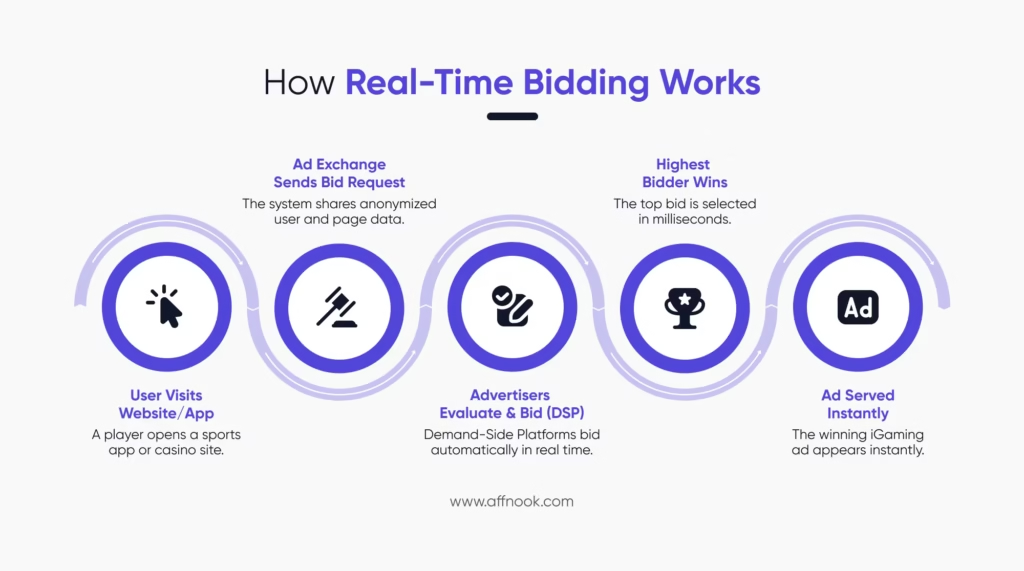
Here’s a simple step-by-step breakdown of how Real-Time Bidding fits into the iGaming advertising ecosystem:
1. User visits a site or app
It all starts when a user opens a sports blog, a casino app, or a live-score website. The moment this page loads, the system identifies that there’s an opportunity to show an ad — for example, a sportsbook ad or a casino bonus offer.
2. Ad exchange sends a bid request
The website’s Supply-Side Platform (SSP) — which helps publishers sell their ad space — sends a bid request to an ad exchange.
This request includes anonymized data about the user, such as:
- Location (for example, India, UK, or UAE)
- Device type (mobile, tablet, desktop)
- Time of visit
- Browsing patterns or previous gaming interactions
All this helps advertisers decide whether the user fits their target audience.
3. Advertisers evaluate and bid
On the other side, multiple iGaming advertisers (like online casinos, sportsbooks, or poker platforms) receive this request through their Demand-Side Platforms (DSPs).
Each advertiser’s system instantly analyzes the request and decides:
- Is this user relevant to my campaign?
- How much should I bid for this impression?
For example, a sportsbook might bid higher for users viewing cricket content right before a World Cup match.
4. Highest bidder wins
All bids are compared in real time, and the highest bid that meets the platform’s quality standards wins.
This ensures fairness and efficiency — advertisers pay only what the impression is worth to them.
5. Ad served instantly
Once the winner is decided, the ad is displayed instantly — usually within 100 milliseconds.
The user sees a personalized and timely ad, such as:
- Bet on India vs. Pakistan now!
- Get 100 free spins on your first deposit.
The whole process happens so quickly that the user never realizes an auction just took place.
This automated process helps iGaming brands reach potential players at the exact right moment — like during live sports, a trending esports event, or a casino jackpot push.
It’s this precision and speed that make Real-Time Bidding such a powerful tool in iGaming advertising — turning data into opportunity in the blink of an eye.
Why Real-Time Bidding Matters in iGaming
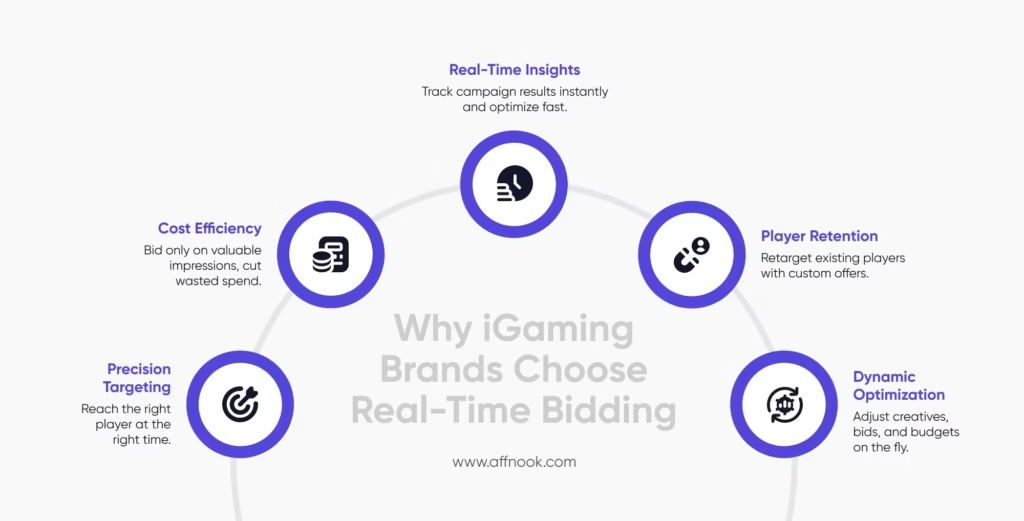
In a crowded digital arena, RTB helps iGaming advertisers cut through the noise by offering precision, flexibility, and measurable results. Let’s break it down:
1. Precision Targeting
RTB allows advertisers to reach users based on:
- Behavior: Bet history, app usage, or browsing habits.
- Location: Showing region-specific offers (e.g., IPL odds in India, Premier League offers in the UK).
- Context: Serving casino offers on entertainment blogs and sportsbook promos on sports sites.
This level of targeting ensures budget efficiency and higher player conversion rates.
2. Cost Efficiency
Unlike traditional ad buys that rely on bulk impressions, RTB lets iGaming brands:
- Pay only for relevant impressions
- Adjust bids in real-time
- Scale campaigns based on live performance metrics
In short, no wasted spend. Every ad impression counts.
3. Instant Campaign Optimization
Need to push a flash bonus during the FIFA World Cup? Or promote a weekend poker tournament?
RTB gives you the power to adjust bids, swap creatives, or pause campaigns instantly, helping you act on real-time opportunities.
4. Scalability Across Channels
RTB isn’t limited to banner ads. iGaming advertisers can run automated auctions across:
- Display
- Video
- Mobile apps
- Connected TV (CTV)
- Native and in-game placements
This allows consistent messaging across iGaming platforms where potential players are most active.
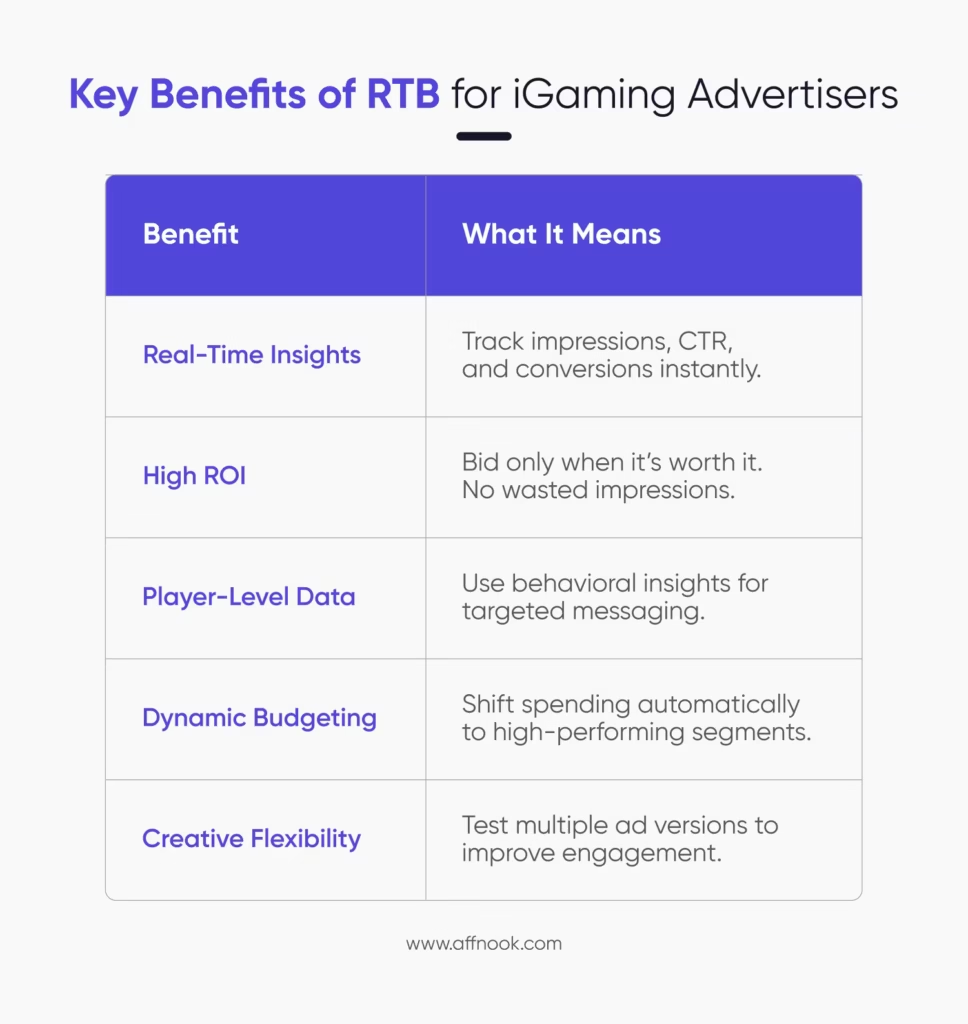
Key Benefits of Real-Time Bidding for iGaming Advertisers
The Challenges You Need to Watch
While Real-Time Bidding (RTB) brings efficiency and precision to iGaming advertising, it also comes with some challenges that marketers must handle wisely. Let’s break them down:
1. Ad Fraud and Bot Traffic
Not every click or impression comes from a real user. Sometimes, automated bots or fake traffic sources inflate ad metrics — making campaigns look successful on paper while draining real budgets.
To avoid this, iGaming brands should always work with verified DSPs and use anti-fraud software like Affnook. These tools help detect and block suspicious traffic, ensuring that your ads reach genuine players, not bots.
2. Brand Safety
In iGaming, where advertising regulations are already strict, brand safety is critical. You don’t want your casino or sportsbook ad appearing on inappropriate or illegal websites, or next to sensitive content.
To manage this, advertisers can create whitelists (approved sites) and blacklists (blocked sites) within their DSPs.This helps ensure ads appear only in brand-safe and compliant environments, protecting both reputation and regulatory integrity.
3. Privacy Compliance
With global privacy laws like GDPR (Europe) and CCPA (US), user data collection is under tighter scrutiny. RTB involves a lot of data exchange, so compliance is key.
To stay on the safe side:
- Use first-party data (collected directly from your users).
- Adopt contextual targeting — showing ads based on page content rather than personal data.
- Be transparent about how data is collected and used.
This not only ensures compliance but also builds trust with your audience.
4. Creative Relevance
Even if your ad placement is perfect, the wrong creative can ruin its impact. For example, showing casino ads on a children’s app or irrelevant game offers can harm your brand and waste ad spend.
The key is dynamic creative optimization (DCO) — which automatically adjusts ad content based on context, location, and user behavior.
For instance, showing Bet on Premier League during football season and Spin the Halloween Wheel during October keeps your messaging relevant and engaging.
5. Regulatory Restrictions
Gambling regulations vary widely across countries — and sometimes even between states. Some regions restrict real-money gambling ads, while others allow them only under strict conditions.
To handle this:
- Use geo-targeting and dynamic ad rules to show compliant ads in approved regions only.
- Stay updated on local advertising laws and work with compliance teams or legal advisors to avoid penalties.
Final Thoughts
Real-Time Bidding is more than just an ad technology; it’s the engine driving smarter iGaming marketing.
It lets advertisers deliver the right message to the right player at the right moment — automatically, efficiently, and with measurable ROI.
But success depends on balance: smart data use, creative testing, fraud protection, and compliance discipline.
As the iGaming industry grows more competitive, Real-Time Bidding offers a clear advantage — the power to outbid, outsmart, and outperform your competition in milliseconds.
Help Section
1. What is Real-Time Bidding in iGaming advertising?
Real-Time Bidding (RTB) is an automated process where ad impressions are bought and sold in real time through auctions. For iGaming brands, it helps display the right ads to the right players at the perfect moment.
2. How does Real-Time Bidding work for iGaming brands?
When a user visits a site, a quick auction happens between advertisers through ad exchanges. The highest bidder’s ad is displayed instantly — all within milliseconds — making Real-Time Bidding highly efficient for targeting potential players.
3. Why is Real-Time Bidding important in iGaming marketing?
Real-Time Bidding allows iGaming marketers to optimize ad spend, target players based on behavior or location, and improve conversion rates through precise, data-driven placements.
4. Is Real-Time Bidding safe for iGaming advertisers?
Yes, but it requires caution. To ensure safety, iGaming brands should use verified DSPs, implement fraud detection tools, and follow regional advertising regulations while using Real-Time Bidding.
5. What are the key benefits of Real-Time Bidding for iGaming?
The main advantages of Real-Time Bidding include cost efficiency, accurate player targeting, faster campaign delivery, real-time insights, and higher ROI for iGaming advertisers.