What is Negative Carryover?
When an affiliate has a net commission amount that is negative for the month. What this means is that the players that they referred to the operator have lost less money than they have won, resulting in the operator having a negative balance at the end of the month.
The amount of that negative balance carries into the next month and, therefore, the affiliate will not earn any money until prior months’ deficits are fully settled.
Here’s how it plays out in practice:
Month 1:
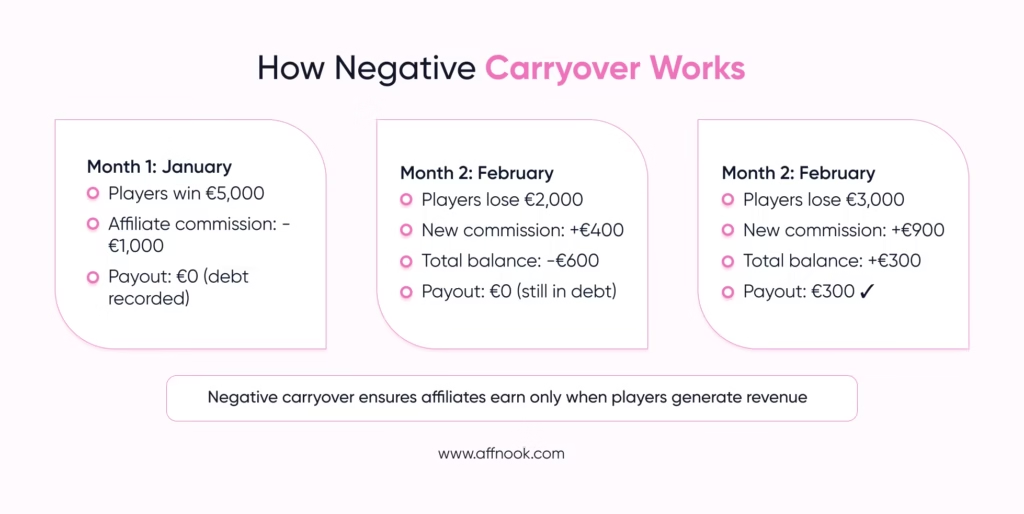
Let’s take a revenue share commission model with 20% as the affiliate’s share. An affiliate has referred 10 players. They together won a total of €5,000. The operator has lost money on that group of players, resulting in a negative commission balance of €1,000 for the affiliate.
Month 2:
The same 10 players have lost a total of €3,000. Now, the operator will have a revenue stream, earning the affiliate €600 as their commission would normally be.
Without carryover: Affiliate receives €600 this month, based on their performance this month.
With carryover: Affiliate gets €0 — the first €600 is being adjusted to clear the -€1,000 owed from Month 1, and the affiliate is now at -€400.
Why Negative Carryover Exists
This carryover setting gives the operator security from paying commissions on affiliates whose referred players have net profit, for example, winning against the house, not providing any revenues.
With the global online gambling market projected to surpass $153 billion by 2030, the financial stakes of mismanaged affiliate commissions have never been higher for operators.
Security for Operators
Without carryover, the operator would pay a commission if a player referred by an affiliate were to win more than they lose. This creates a loss for the operator on both the player side and the affiliate side.
Risk Management
Certain affiliates bring bonus abusers, advantage players, or simply “lucky” high-rollers. They shouldn’t earn commissions until those players generate actual revenue for the operator.
Fair Revenue Sharing
Commissions paid to an affiliate should accurately reflect the true contribution made by the affiliate in terms of long-term sustainable player revenue, rather than simply short-term volume that costs the casino money.
How Negative Carryover Works in Practice
The Calculation Process:
At the end of each commission period (usually once a month), the operator determines the affiliate’s net commission based on the performance of the players referred by the affiliate. The affiliate will get paid if the result comes out to be positive.
However, if there is a negative net commission, the affiliate will not receive any payment and instead will have an outstanding liability that carries over into the next period.
Timeline Example:
- January: Affiliate players experience a large win. Net commission = -€2,000 (no payout, debt recorded)
- February: Players lose some back. Net Commission = +€800 (Total balance = -€1,200; still no payout)
- March: Players continue to lose. Net Commission = +€1,500 (Total Balance = +€300 and affiliate receives €300)
Key Variables That Affect Carryover:
- Carryover duration (indefinite vs. capped at a set number of months)
- Affiliate risk tier (trusted vs. unproven partners)
- Commission structure (Revshare vs. CPA vs. Hybrid models)
When Operators Apply Negative Carryover
Common Use Cases:
New, Unproven Affiliates:
There is much more risk when working with someone who has no proven track record of providing high-quality traffic. Therefore, operators will have a carryover setting until that individual is able to provide quality, revenue-producing traffic consistently over time.
Affiliates Targeting Bonus Hunters:
Some affiliates usually acquire players chasing welcome bonuses. These players deposit the minimum required amount, claim the offer and withdraw quickly. Since these types of players provide very little long-term value, carryover is necessary to ensure that the operator does not have to pay commission on unprofitable traffic.
High-Volatility Markets:
Sports affiliate programs generate significant profits through large commissions from high-volume sports events, such as the World Cup or Champions League Finals. Because of negative carry, operators will not have to incur losses on winnings during streaks of luck that eventually turn back into losses over time.
Revshare Commission Models:
Revenue share commission models tie the payout of affiliates’ commission directly to net gaming revenue, as opposed to the CPA, which are based on a fixed amount for any active player they produce. Negative carryover is standard here — affiliates earn only when their players lose, not when they win.
When NOT to Apply
Established Partners with Proven Track Records:
Quality affiliates that frequently refer other high-quality players are likely to negotiate ‘zero negative carryover’ deals. Their worth as a long-term affiliate partner outweighs any immediate risk.
Pure CPA Deals:
The fixed payment structures (e.g., €100 per FTD) usually do not allow carryover. The operator pays a fixed amount for each conversion, regardless of what happens to the player after that conversion.
Strategic or Exclusive Partnerships:
Affiliates that have high-value, exclusive traffic sources may be able to negotiate no carryover as a condition of the partnership. Retaining these partners is worth absorbing occasional negative months.
The Challenge: Managing Negative Carryover at Scale
Most affiliate platforms view this carryover as a global setting, with a yes-or-no option for all users.
The Problem:
If you turn it on globally, then you protect your revenue but cause your trusted affiliates to become frustrated because they are treated as if they are high-risk partners. If you turn it off globally, you expose yourself to large amounts of risk due to unproven or underperforming affiliates
The Reality:
Growing affiliate programs need granular, affiliate-level control. If a new affiliate introduces bonus hunters to your program, that affiliate should be made to retain their balances indefinitely. A proven partner driving consistent revenue for two years shouldn’t be penalized for one bad month.
With advanced systems such as Affnook, operators can set the carryovers for each affiliate. This allows for a full carryover for high-risk affiliates and fresh resets on a monthly basis for proven affiliates with consistent revenue history. This approach reduces program risk without damaging valuable partnerships.
Best Practices for Deficit Carryforward Management
Negative carryover is only effective if it’s applied with intention. Simply applying a blanket policy to every iGaming affiliate equally creates two issues: a risk management gap and a relationship management failure.
Set Clear Policies Upfront
Clearly define your negative balance carryover policy in your affiliate contracts before anyone begins sending players to you. It shouldn’t be that affiliates discover a negative balance on the payout day. Transparency here isn’t just good practice — it directly affects whether serious affiliates choose your program over a competitor’s.
Tier Your Affiliates
Affiliate risk profiles can vary greatly from one to another, so your policy on carryover for these affiliates must take this into account:
- For new affiliates, have a full negative balance carryover until the quality of traffic is established through performance.
- For mid-tier affiliates, establish a maximum carryover limit, with a reset period defined (for example, 3 months maximum).
- For proven performers, there will be no negative carryover or monthly reset for proven consistent quality traffic.
Monitor Proactively — Don’t Wait for Churn
A widespread fear among affiliates is the accumulation of negative balances when strict carryovers persist for extended periods. Affiliates with mounting negative balances often go quiet before they leave.
Identify them as soon as possible, adjust commission structure, or offer capped resets for them to retain the relationship before it evaporates. Affnook flags affiliates with growing negative balances so operators can intervene with tailored support — before a recoverable situation becomes a lost partner.
Conclusion
Negative balance carryover is an important part of risk management for revenue share affiliate programs and helps to ensure that operators will not have to pay commissions for unprofitable traffic.
The issue is not whether to implement this carryover into revenue share programs, but rather how to do this strategically across a variety of different levels of affiliates. The proper use of negative carryover will balance the protection of revenues with the maintenance of strong, long-term relationships with affiliates.
Help Centre
What is negative carryover in affiliate marketing?
Negative balance carryover occurs when an affiliate’s commission for a period is negative (players won more than they lost), and that debt carries forward to future commission cycles until cleared by positive performance.
How does deficit carryover protect iGaming operators from losses?
Negative net balance carryover prevents operators from paying commissions when affiliate-referred players are net-profitable. It ensures affiliates only earn when their traffic generates actual revenue, protecting operators from paying on losing campaigns.
Do all iGaming affiliate programs use a net negative balance?
No. Negative balance carryover is found frequently in Revshare models but not in CPA (cost per acquisition) agreements. Some operators use this carryover as a selectively chosen tool, using it with high risk affiliates while waiving it with established and trusted partners.
Can negative carryover balances be reset or capped?
Yes. Some operators cap negative balance carryover at 3-6 months or reset balances for top-performing affiliates. Modern affiliate platforms allow operators to customize carryover policies per affiliate based on their risk profile and performance history.
What’s the difference between negative carryover and negative balance in affiliate commissions?
Negative balance is the current month’s debt. This carryover happens when that debt transfers to future months. Without carryover, each period starts fresh at zero. With carryover, debts accumulate until positive commissions clear them.