The cost of user acquisition is touch the sky, and bringing in the next new player should be worth it with respect to the bottomline. In just a decade, the increase has been over 222%. If ignored, the online gambling business is going to be leaking money and soon run out of business.
When paid and performance marketing is being used to direct new players towards a platform, or bring back once engaged folks, there needs to be a justification in revenue terms. If $10 is spent, $X must come from it. That’s the universal rule of advertising. And that is what the return on ad spend or ROAS keeps in check.
Now the problem is that within iGaming affiliate marketing, a conversion is a 10-step process or a 14-30 day journey. In addition, the revenue being sought per player won’t show up in a single transaction. It emerges over time, over gameplays and bets. Unlike the traditional industries, the iGaming revenue is not generated in real-time.
ROAS is more complicated and misunderstood, as profitability will impact player retention, deposit behavior, lifetime value and market dynamics.
The average ROAS in iGaming affiliate marketing is, hence, essential in deciding on budget and setting up sustainable collaborations. Let’s understand why that is the case.
What is ROAS in iGaming Affiliate Marketing?
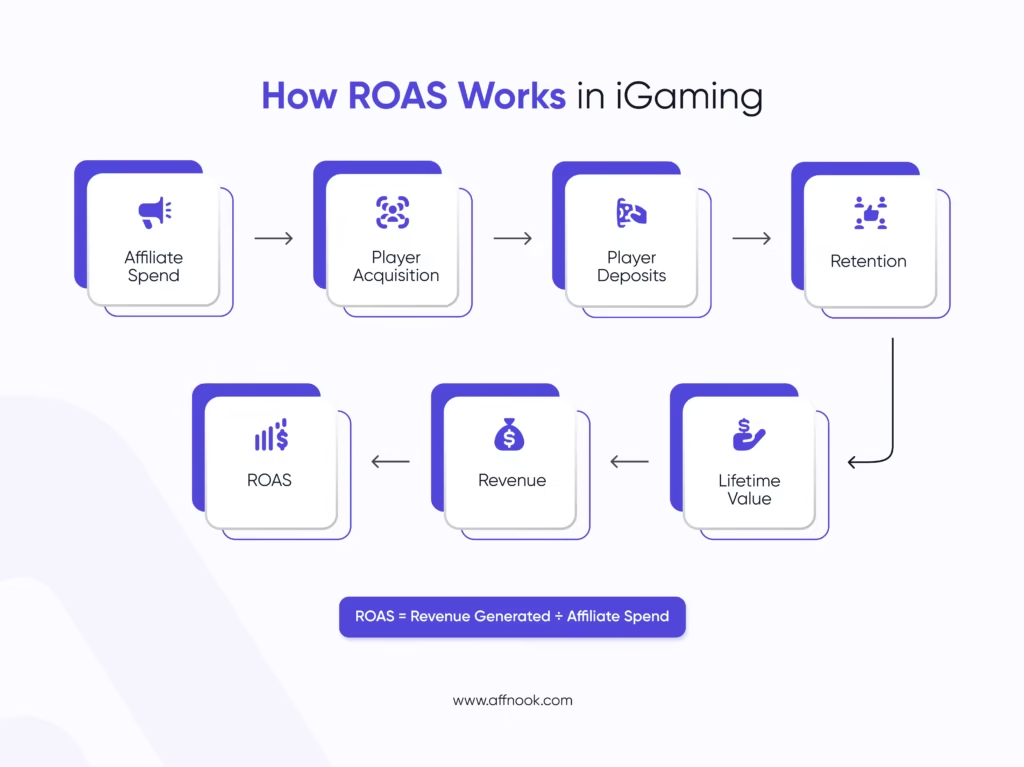
Return on Ad Spend (ROAS) is a metric that determines the amount of revenue you obtain per dollar spent on affiliate marketing. It is one of the key measures of affiliate performance and profitability in the long term in iGaming.
ROAS Formula: ROAS = Revenue Generated from Affiliate Traffic ÷ Affiliate Spend
For example:
- Affiliate spend: $50,000
- Revenue generated: $200,000
- ROAS = 4:1 (400%)
This implied that each dollar invested produced $4 in income.
Nonetheless, ROAS in iGaming is not the way it is in most industries. In contrast to e-commerce, where income is instant, iGaming profitability is built over time and is subject to player action.
The main characteristics that distinguish iGaming ROAS are:
- Player Lifetime Value (LTV): Revenue generated across a player’s lifecycle
- Net Gaming Revenue (NGR): Deposits minus winnings, bonuses, and fees
- Commission models: CPA, revenue sharing, or hybrid structures
For instance:
- Revenue sharing arrangements are usually between 25-50% of NGR.
- CPA payouts can range from $50 to $300+ per player, depending on the geo.
These variables mean that the average ROAS in iGaming affiliate marketing must be considered more in the long term. The operators must consider the long-term value of the players as well as the initial conversions in order to calculate the actual profitability.
Is ROAS in iGaming Affiliate Marketing the Same as ROI?
ROAS (Return on Ad Spend) and ROI (Return on Investment) are often confused, but they measure different aspects of marketing performance.
While ROAS is a measure of specifically how much revenue an iGaming campaign generates compared with the amount spent on advertising, ROI goes a step further by considering the overall costs involved and measuring the profit left after those costs are deducted.
Consider this example:
If an iGaming operator spends $10,000 on affiliate acquisition and generates $30,000 in attributable revenue, the campaign has a ROAS of 3x, or 300%.
However, this does not mean the operator achieved a 200% ROI. Once affiliate commissions, player bonuses, payment processing, taxes and other acquisition or operating costs are included, the actual profit may be considerably lower.
This distinction is particularly relevant to iGaming affiliate marketing because affiliate agreements can use different payment structures. Under a CPA model, an operator pays an agreed amount for qualifying players, while revenue-share arrangements give affiliates a percentage of the revenue generated by referred players. Hybrid agreements combine elements of both models.
Because these costs and commercial structures vary, there is no universal ROAS benchmark for every iGaming affiliate campaign. A campaign may generate a high ROAS but still deliver limited profitability if acquisition costs are high. Conversely, a campaign with a lower initial ROAS could become more profitable over time if the acquired players have strong retention and high lifetime value.
For this reason, operators should not use ROAS by itself to evaluate affiliate performance. ROAS is useful for measuring revenue efficiency, while ROI provides a clearer view of profitability. Metrics such as CPA, first-time depositors, net gaming revenue, player lifetime value, retention and payback period can provide additional context when assessing the true value of affiliate traffic.
How to Calculate ROAS in iGaming Affiliate Marketing
The ROAS of iGaming affiliate marketing is not simply a ratio of revenues to costs. Given that the player value is accumulated over time, operators need to focus on lifetime performance and not short-term conversion. However, its original formula is quite straightforward:
Basic ROAS Formula
ROAS = Revenue from Affiliate Traffic ÷ Affiliate Cost
To illustrate, when you invest $60,000 on affiliate partnerships and get $180,000 revenue, your ROAS is 3:1. This implies that you make three dollars on every dollar.
However, iGaming operators often rely on a more advanced calculation that incorporates player lifetime value (LTV):
Advanced ROAS Formula
ROAS = (Player LTV × Number of Players) ÷ Total Affiliate Cost
Consider this example:
- 500 first-time depositors (FTDs)
- Average LTV: $450
- Total revenue: $225,000
- Affiliate spend: $60,000
ROAS = 3.75:1
This will give a better picture of the long-term profitability and enable the average ROAS in iGaming affiliate marketing to be more accurately established.
To calculate ROAS effectively, operators should track:
- Player lifetime value (LTV)
- Cost per acquisition (CPA)
- First-time deposit rate (FTD)
- Conversion rates
- Retention rates
LTV is the most important of them. Increased retention and active player use also bring much more revenue in the long term, which will ultimately enhance average ROAS for iGaming affiliates, and allow for more confident scaling decisions.
Average ROAS in iGaming Affiliate Marketing (Industry Benchmarks)
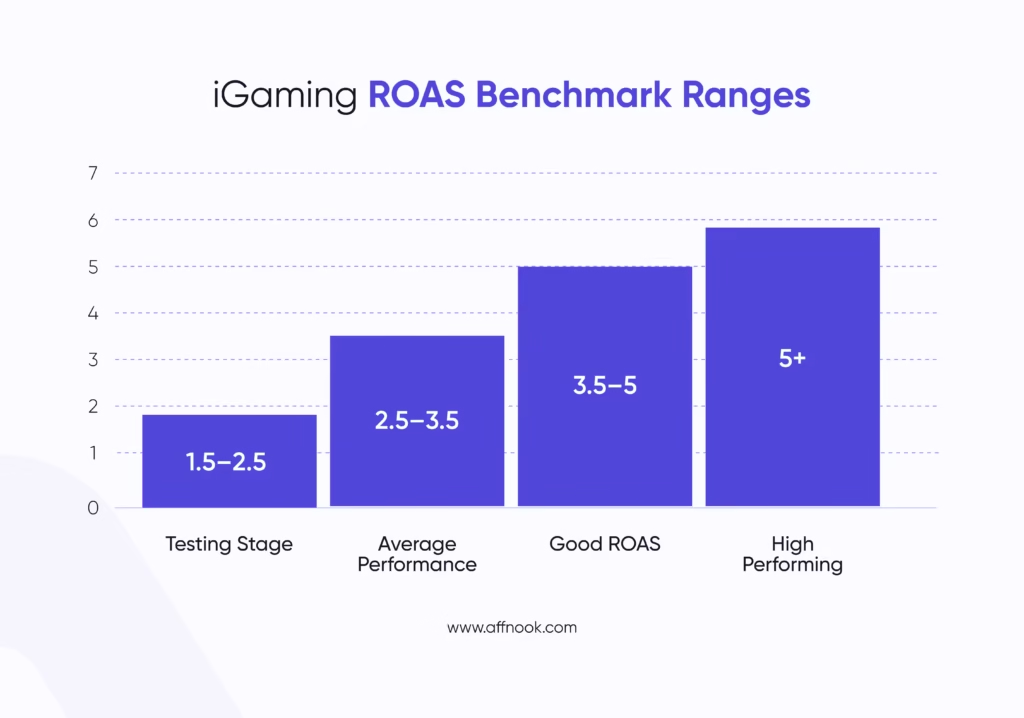
The ROAS benchmarks for iGaming affiliates should be known to know their performance in terms of growth for the online casino. Even though ROAS varies depending on strategy and market, the following performance metrics are commonly used in affiliate marketing:
- 3:1 ROAS — Acceptable performance
- 4:1 ROAS — Strong, sustainable growth
- 5–6:1 ROAS — Excellent, scalable performance
Nevertheless, the iGaming sector is not like most of the industries. The player deposits, retention, and ongoing engagement are the cash stream that achieves a long-term outcome in the form of a source of revenue. This makes short-term ROAS insignificant and shifts focus towards long-term profitability. Therefore, iGaming benchmarking is more player lifetime value and inclusive.
There are several reasons why iGaming ROAS may fluctuate:
- Lifecycle and repeat revenue of long players
- High-value VIP players
- Market-specific acquisition costs
- Compliance and regulatory requirements
Commission structures also play an important role. CPA transactions can be carried out in a lesser period, hence suited to the acquisition goals that are short-term. Revenue-sharing models tend to offer low startup payoff but greater profitability over time based on recurring player earnings. Hybrid models are inclined to reach a compromise between the two approaches.
Because of these dynamics, a long-term view would be necessary to calculate the average ROAS of iGaming affiliate marketing.
Operators focusing on player quality, retention, and strategic affiliate relationships will tend to achieve a superior and more sustainable ROAS, and thus, long-term measurement is important to the precision of performance measurement.
What Determines ROAS in iGaming Affiliate Marketing?
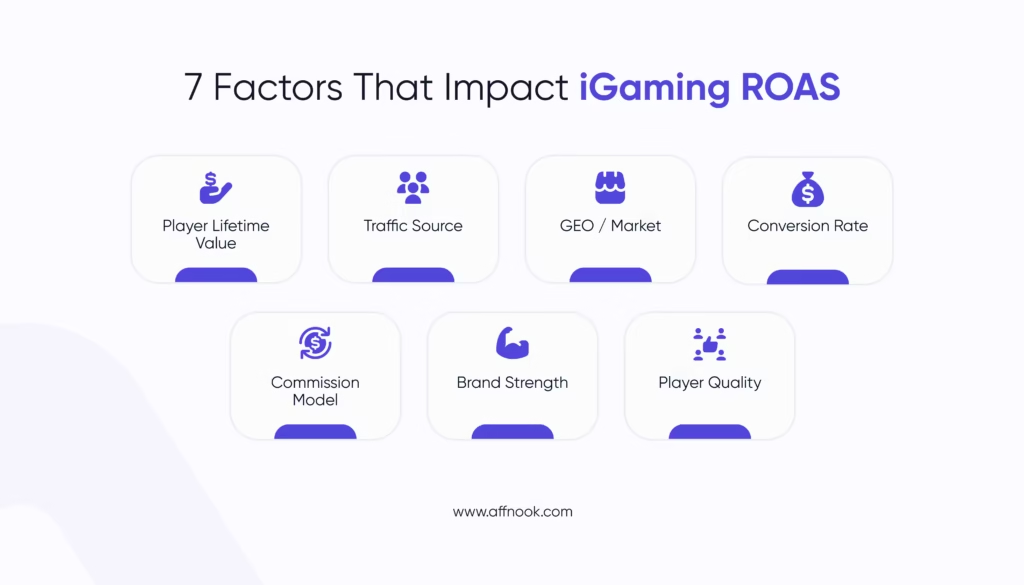
One of the factors that influences ROAS in iGaming affiliate marketing is a complex of several factors working together. This is unlike other industries where conversion cost is the principal performance determinant.
The profitability of iGaming depends on the long-run behavior of players. Understanding these variables will help operators benchmark the performance more accurately and improve the average ROAS of iGaming affiliate marketing.
1. Player Lifetime Value (LTV)
The ROAS depends on the player lifetime value more than any other drivers. Because iGaming money is built on recurring deposits and interaction, the higher the retention, the more the profitability.
LTV typically depends on:
- Average deposit size
- Deposit frequency
- Player lifespan
As an illustration, two affiliates can bring an identical quantity of players, yet the affiliate that attracts players of higher value will create much greater ROAS.
2. Traffic Source
Various traffic sources generate different quality and conversion rates of players. Some of the most frequent ones are:
- SEO affiliates: Generally provide better-intent users and better ROAS in the long term.
- Paid media affiliates: Facilitate quicker player acquisition with display, native, and search advertisements. Nevertheless, expenses may escalate, particularly in the competitive casino advertising environments, affecting the total ROAS.
- Influencers and streamers: Unpredictable performance in response to audience trust.
In competitive markets, traffic quality is often more important than volume.
3. GEO and Market Dynamics
Geographic targeting has a strong influence on the ROAS because the cost of acquisition varies, and there is a variation in the value of players.
For example:
- Tier 1 markets usually feature higher CPAs and better player LTV.
- Emerging markets are cheaper to acquire, but less valuable in the long term.
Typical CPA ranges include:
- Tier 1 markets: $150–$300+
- Tier 3 markets: $25–$100
Such differences can have a drastic impact on profitability and scaling choices.
4. Conversion Rate
Conversion rates define the effectiveness of the traffic in depositing players. Performance depends on several factors:
- Landing page experience
- Brand credibility
- Bonus structure and promotions
The slightest gains in conversion rates can bring great improvement to ROAS in the long run.
5. Commission Model
Profitability is directly influenced by affiliate commission structures. The most popular models are:
- CPA (Cost per Acquisition)
- Revenue Share
- Hybrid deals
CPA has predictable expenses, whereas revenue sharing tends to have better long-term payoffs. The balance between risk and growth is achieved using hybrid models.
6. Brand Strength
Trust, recognition, and credibility generally translate to better conversion by established operators. Well-known or ‘strong’ brands tend to receive higher deposit rates and enhanced retention, which enhances ROAS throughout affiliate campaigns.
7. Player Quality
Not all players generate equal value. Players of high value will deposit more and stay longer.
Key indicators of player quality include:
- Retention rate
- Deposit frequency
- VIP player ratio
The most effective way of increasing long-term ROAS is often to focus on the quality of players, not on the volume of their acquisition.
What is a Good ROAS in iGaming Affiliate Marketing?
A good ROAS in iGaming affiliate marketing is dependent on the maturity of a campaign, operator goals, and player lifetime value. Unlike short-cycle industries, the performance of iGaming continues to grow due to the different deposits and participation that players make. This means that campaign expectations concerning ROAS would vary by campaign maturity.
For New Campaigns
At the initial levels, the operators continue to experiment with affiliates, geos, and commission models. A smaller ROAS is anticipated at this point since optimization is still in progress.
Typical benchmark:
- The healthy ROAS is 2.5-3 on early-stage campaigns.
This spectrum enables operators to get performance data as they approach profitability.
For Scaling Campaigns
ROAS usually increases once campaigns are optimized and the behavior of the players becomes predictable. Operators start to focus on prosperous affiliates and realign commission arrangements.
Typical benchmark:
- Scaling campaigns have a good ROAS of 3-5.
The critical driver of growth at this stage is the enhancement of retention and quality of players.
For Mature Affiliate Programs
Established affiliate programs tend to have greater ROAS with honed targeting, brand loyalty, and streamlined partnerships. Good brand recognition is also a major factor as trusted operators are better to convert and keep players longer, which is significant when establishing a successful sports betting brand.
Typical benchmark:
- 4–6+ ROAS indicates highly efficient and scalable performance.
Such programs are usually directed towards long-term player value and sustainable growth.
By Operator Type
The expectation of ROAS also differs according to business maturity:
- Startups: 2-3 ROAS during acquisition strategy testing.
- Mid-size operators: 3-4 ROAS using optimized campaigns.
- Enterprise operators: 4-6+ ROAS through brand strength.
Finally, average ROAS in iGaming affiliate marketing increases due to the emphasis of operators on retention, quality of players, and long-term affiliate relations.
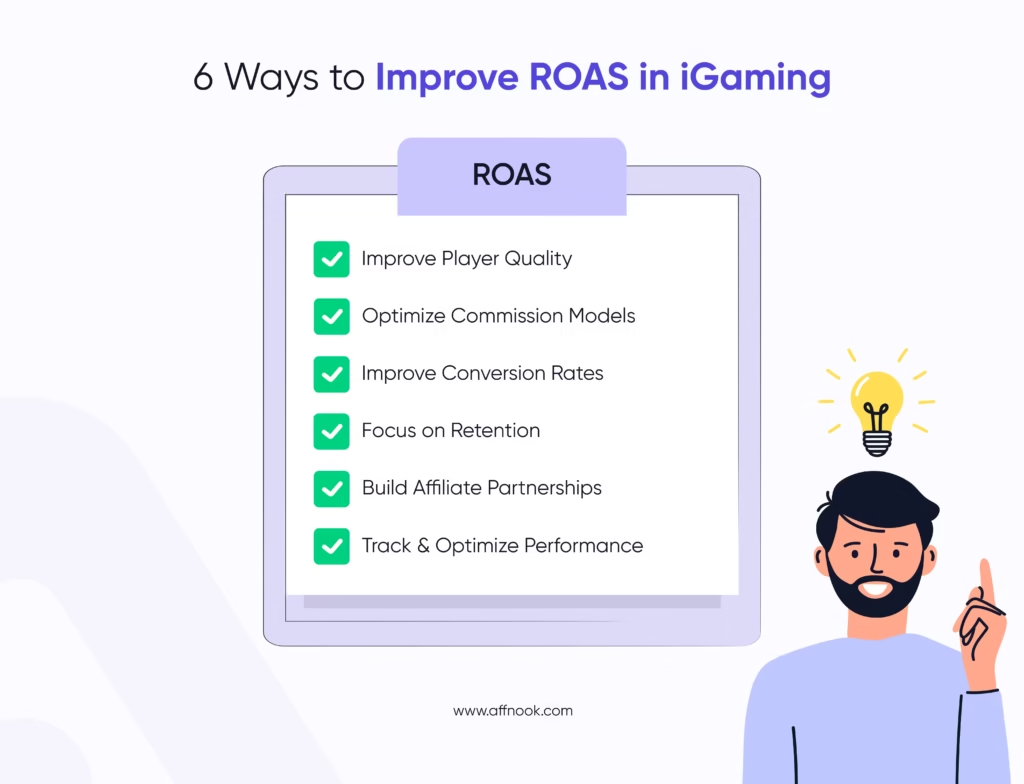
How to Improve ROAS in iGaming Affiliate Marketing
To increase ROAS in iGaming affiliate marketing, it is important to have a strategic emphasis on quality of players, retention, and long-term profitability.
In contrast to short-term acquisition channels, affiliate performance is increased when operators optimize partnerships, refine targeting, and improve player experiences. These strategies can provide a quantifiable influence in case your objective is to achieve above-average ROAS in iGaming affiliate marketing.
1. Improve Player Quality
Not every traffic is of equal value. The best players make better deposits, have longer retention, and produce better returns. To enhance the quality of players:
- Collaborate with niche affiliates that appeal to certain audiences.
- Focus on high-value geos that have higher LTV.
- Target affiliates who have good retention performance.
Sustainable ROAS growth can often be a result of quality-driven acquisition.
2. Optimize Commission Models
Profitability is directly impacted by commission structures. The selection of an appropriate model may go a long way in enhancing ROAS.
Consider:
- Hybrid deals to balance risk and growth.
- Tiered revenue sharing to encourage performance.
- Bonuses based on the performance of the best affiliates.
Easy commission plans motivate affiliates to produce more valuable players.
3. Improve Conversion Rates
Greater conversion levels lessen the cost of acquisition and enhance returns. The smallest changes can have a great effect on ROAS.
Key optimization areas include:
- Landing page optimization
- Competitive bonuses and promotions
- Improved onboarding and UX
The easier user experience enhances the rates of deposits and long-term value.
4. Focus on Retention
One of the largest iGaming ROAS drivers is retention. Active players give repeat revenue in the long term.
Retention strategies include:
- CRM campaigns and re-engagement emails
- VIP and loyalty programs
- Personalized promotions
Enhancing retention can frequently provide better ROI than enhancing acquisition.
5. Build Strong Affiliate Partnerships
Extended partnerships with the leading affiliates enhance stability and performance.
Focus on:
- Exclusive deals
- Co-marketing opportunities
- Transparent communication
Good partnerships help affiliates to promote your brand first.
6. Track and Optimize Performance
ROAS requires precise tracking to enhance it.
Operators should monitor:
- Attribution models
- Multi-touch tracking
- Player-level performance data
Affiliate data can also be centralized on platforms such as Affnook, which are able to track the performance of campaigns and high-value traffic sources with more efficiency. Having a more accurate view of the behaviour of players and affiliate performance, operators will be able to make more prudent optimization choices and always optimize returns.
Improved monitoring facilitates intelligent decision-making and long-term development.
Common ROAS Mistakes in iGaming Affiliate Marketing
The performance of the affiliate profitability can be miscalculated even by experienced operators. The key to sustaining growth and surpassing the average ROAS in iGaming affiliate marketing is to avoid making typical errors.
Measuring Short-Term ROAS
Early evaluation of ROAS is one of the largest errors. iGaming revenue is cumulative, and initial performance is hardly a long-term indicator of profitability. Players can keep on depositing for months, which implies that short-term evaluations can result in premature campaign termination.
Ignoring Player Lifetime Value (LTV)
Taking the acquisition costs as the sole measure of performance without considering player worth may distort performance insights. Two campaigns that share the same CPAs can give radically different outcomes in the case of different retention of players. When calculating ROAS, LTV should always be taken into consideration.
Using the Wrong Revenue Metric (GGR vs NGR)
The other most frequent error is that of computing ROAS with the incorrect revenue measure. Gross Gaming Revenue (GGR) represents total losses incurred by players, whereas Net Gaming Revenue (NGR) includes bonuses, taxes, and operational expenses.
As affiliate commissions are usually determined by NGR, GGR can greatly overstate perceived performance and cause inaccurate ROAS calculations. To assess the real profitability, it is important to understand the difference between NGR and GGR.
Not Segmenting Geos
The results of different markets vary. Not dividing performance by geography will lead to wrong conclusions. For example:
- Tier 1 markets tend to have slow initial ROAS but high value in the long-term.
- Emerging markets can provide quicker returns but reduce lifetime earnings.
Overpaying Affiliates
High CPA transactions that do not involve monitoring performance can easily make profitability dwindle. The operators need to frequently revisit affiliate agreements and modify commission structures according to the quality of players.
Ignoring Churn
Churn of players has a direct effect on long-term revenue. High churn rates lower LTV and undermine ROAS, which makes retention strategies critical to the continued performance of affiliates.
Key Metrics to Track Alongside ROAS
ROAS by itself doesn’t tell you everything about how an affiliate is doing in iGaming. To work out true profit and do better than average with iGaming affiliate marketing, iGaming brands should look at stats that demonstrate player quality and long-term worth. These metrics allow identification of affiliates who are making money, improvements to customer acquisition, and superior choices in general:
- Cost per acquisition (CPA)
- Player lifetime value (LTV)
- First-time deposit rate (FTD)
- Retention rate
- Revenue per player
When you look at these metrics alongside ROAS, you’ll get a much clearer idea of how to grow in a smarter way, ensure profits continue for the future, and foster good affiliate relationships over time. This will work across many different markets and kinds of promotions and will ultimately deliver lasting improvements in performance.
Conclusion
ROAS of iGaming affiliate marketing is not a universal metric. How well things do depends on what players actually do, the commission structures, and how the market is working. Operators who only want quick profits won’t particularly appreciate really good affiliates or the money they can bring in over a long period of time.
A few key takeaways:
- ROAS is diverse in geos, traffic sources, and commission structures.
- The largest profitability driver is player lifetime value (LTV).
- An ROAS between 3-5 is usually regarded as good, sustainable growth.
- Better decision-making is always achieved through long-term measurement.
And to improve average ROAS in iGaming affiliate marketing, you need a carefully planned approach based on facts. By breaking down how they work with affiliates, managing those relationships, and keeping an eye on related stats, operators can build affiliate programs that will consistently make money and can expand.
Successful companies don’t just chase quick wins. They concentrate on how good the players are and the benefits over many years, which leads to growth that will last and stronger bonds with their affiliates.
This sensible approach turns money spent on getting customers into reliable profits for both the operator and their affiliate partners, all over the world.
Help Centre
What is considered a good average ROAS in iGaming affiliate marketing?
A good average ROAS in iGaming affiliate marketing typically ranges between 3:1 and 5:1, depending on player lifetime value, GEO performance, and affiliate traffic quality.
How long does it take to measure ROAS in iGaming affiliate campaigns?
ROAS in iGaming should be measured over several months, as player deposits accumulate gradually. Short-term performance rarely reflects true profitability or long-term affiliate value.
Does player lifetime value impact the average ROAS in iGaming affiliate marketing?
Yes, higher player lifetime value significantly improves the average ROAS in iGaming affiliate marketing by increasing long-term revenue from retained and high-value players.
Which traffic sources typically deliver the best ROAS in iGaming affiliate marketing?
SEO affiliates and niche content partners often deliver stronger long-term ROAS, while paid media affiliates provide faster acquisition but may require optimization to improve profitability.
How can iGaming operators improve ROAS from affiliate partnerships?
Operators can improve ROAS by focusing on player retention, optimizing commission structures, targeting high-value GEOs, and prioritizing affiliates delivering consistent, high-quality traffic.