Affiliate marketing has become one of the most essential growth channels for iGaming brands and iGaming operators. It helps them to acquire new players, enter new markets, and generate more revenue through performance – based partnerships.
So, launching an affiliate program is not enough.
As your program grows, challenges also grow side by side, like tracking issues, fraud, inactive iGaming affiliates, inefficient commission issues, risk, and compliance issues, which can quickly drain your profits. If you ignore these types of problems in your affiliate program, you can lose efficiency over time.
That is why conducting an affiliate audit program is essential.
The auditing process acts as a health checker of your affiliate ecosystem, and it helps igaming operators and brands to evaluate performance, identify gaps, and optimize every aspect of your iGaming program to maximize ROI.
In this article, you will understand more about the step-by-step process to conduct an affiliate program audit and why it is important in the iGaming affiliate ecosystem.
What is an Affiliate Program Audit?
An audit program is a deep analysis of your affiliate marketing program to determine whether it is delivering profitable results and sustainable growth.
Rather than focusing only on clicks or registrations, an audit evaluates:
- Affiliate performance
- Traffic quality
- Tracking accuracy
- Commission structures
- Fraud Risks
- Reporting systems
- Compliance requirements
- Affiliate relationships
The purpose of an audit is to uncover hidden inefficiencies and identify opportunities for optimization.
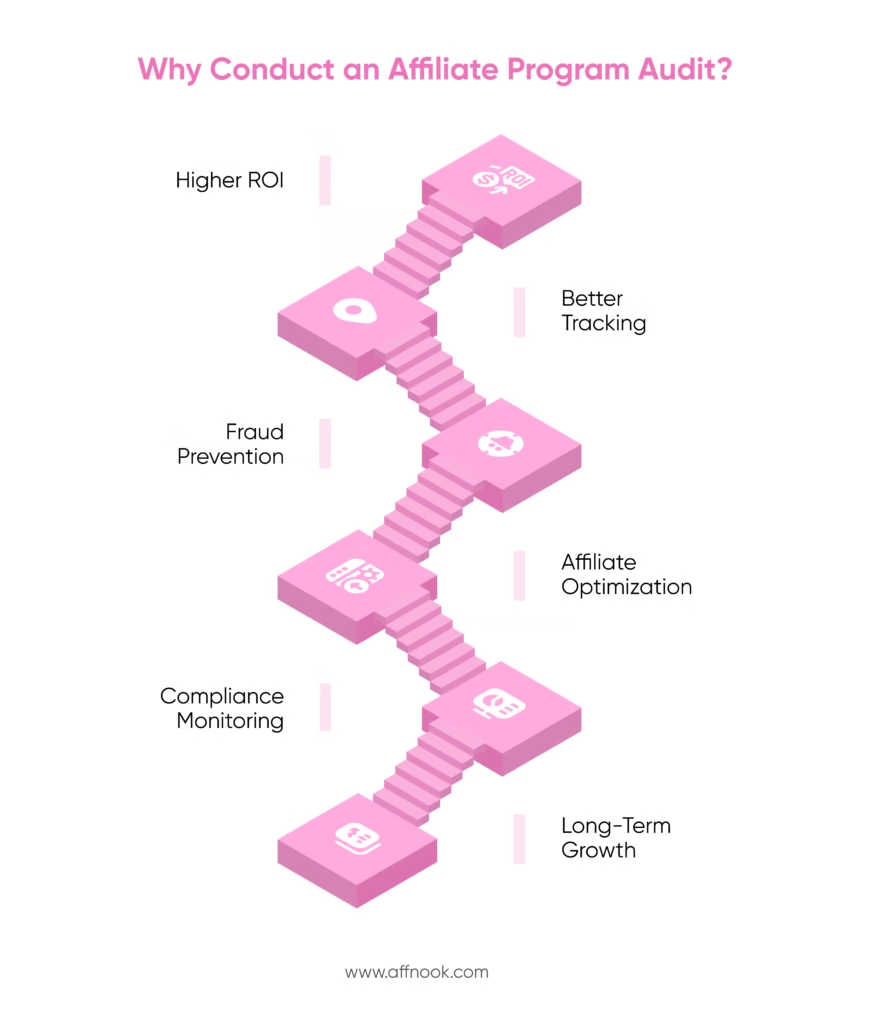
Why is an Affiliate Program Audit Important?
As your affiliate program grows, operations become more complex. New affiliates join, campaigns expand into new regions, and commission models evolve. Without regular reviews, small problems can turn into expensive mistakes.
A regular Affiliate Program Audit helps operators:
1. Improve ROI.
In iGaming, not every affiliate delivers profitable results. A regular audit helps you to identify which partners are generating real value and which ones are draining your marketing budget.
2. Detect Fraud Early
Fraudulent or bot traffic, fake registrations, and bonus abuse fraud can significantly affect your revenue. Regular audits help you to detect suspicious patterns before they become series problem for your program.
3. Verify Tracking Accuracy
If conversions are not tracked properly, commissions may be paid incorrectly. Auditing ensures clicks, registrations, and deposits are attributed accurately.
4. Optimize Commission Structures
The commission model that worked last year may not be suitable today. Audits help determine whether CPA, RevShare, or hybrid models are producing the best results.
5. Improve Affiliate Relationships
Understanding partner performance allows affiliate managers to reward top-performing affiliates and provide support to promising partners.
When Should You Run an Affiliate Program Audit?
An Affiliate program audit should not be treated as a one-time practice or something that you only do when you are facing an issue. Regular audits help operators maintain profitability, improve partnerships, and ensure their affiliate ecosystem remains efficient as the business grows.
While many operators conduct a full audit every six months, certain situations should trigger an immediate review.
Acquisition Costs Start Increasing
If your cost of acquiring new players is increasing while your revenue is still the same, it is a sign that something needs attention. There are many reasons, like poor traffic quality, ineffective commission model, or declining conversion rates, that can reduce the profitability of your program. An Affiliate program audit helps you to identify these kinds of issues when you are spending money but getting zero ROI.
Affiliate Performance Starts Declining
If you are facing a drop in clicks, registrations, First-Time Deposits (FTDs), or Net Gaming Revenue (NGR), it can indicate issues with traffic quality, tracking, or partner engagement. Reviewing performance metrics can help uncover the root cause before it affects revenue further.
Expanding Into New Markets
Entering new markets can create new opportunities, but it also introduces different regulations, player behaviors, and competitive landscapes. Conducting an audit before launching in a new region ensures your affiliate program is equipped to scale successfully.
Introducing New Commission Models
Whether you are switching from CPA to RevShare, launching a hybrid model, or adjusting payout tiers, every change should be followed by an audit. This helps determine whether the new structure is profitable and whether affiliates are responding positively.
Adding New Integrations or Platforms
Integrating a new casino platform, CRM, payment gateway, or analytics solution can affect tracking and reporting. Running an audit after implementation ensures data is flowing correctly and conversions are being attributed accurately.
Regulatory Requirements Change
The iGaming industry is constantly evolving, and regulations vary across jurisdictions. Changes in advertising rules, responsible gambling requirements, or compliance standards should prompt an audit to ensure affiliates and campaigns remain compliant.
Conducting Periodic Health Checks
Even if everything appears to be running smoothly, regular audits are still recommended. Quarterly reviews and comprehensive six-month audits help operators uncover hidden inefficiencies, optimize performance, and prevent small issues from turning into major problems.
What Should You Review During an Affiliate Program Audit?
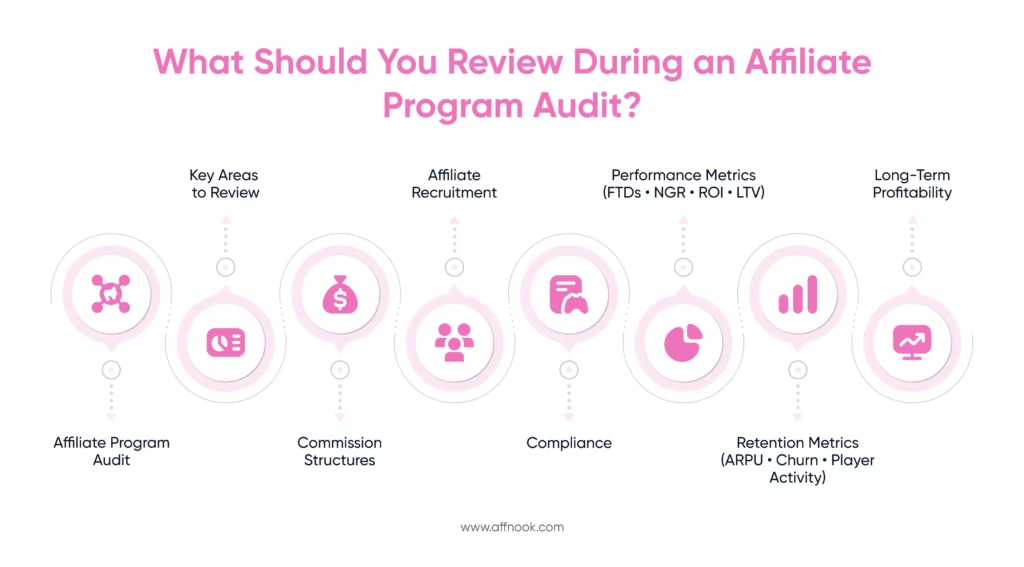
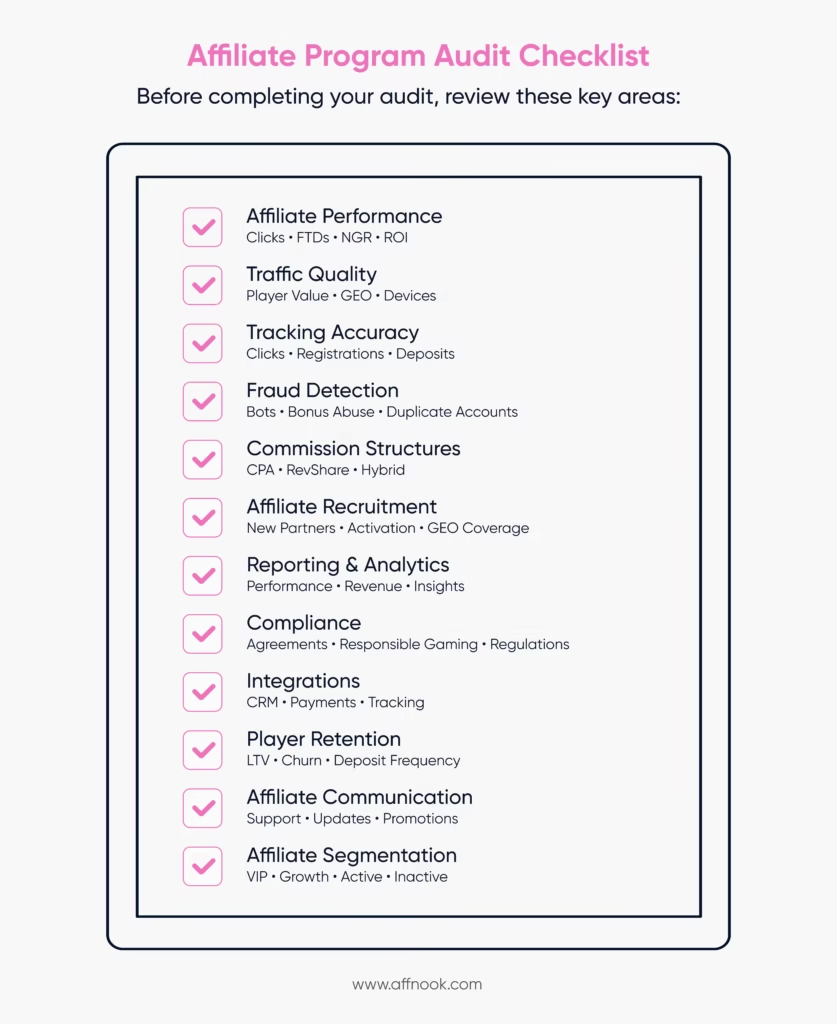
A successful Affiliate Program Audit goes far beyond checking revenue numbers. To understand the true health of your affiliate ecosystem, you need to review multiple areas that influence profitability, partner satisfaction, and long-term growth.
From commission structures and recruitment strategies to compliance and player retention, each component plays a crucial role in the overall performance of your program.
Here are the key areas every operator should evaluate during an Affiliate Program Audit.
Review Commission Structures
Commission models directly impact both profitability and affiliate relationships. An overly generous payout model can reduce margins, while an unattractive structure may drive top affiliates to competitors.
During your audit, ask yourself:
- Are your CPA rates competitive within the market?
- Is your RevShare model sustainable in the long term?
- Are top-performing affiliates being rewarded appropriately?
- Are you overpaying affiliates that bring low-value players?
- Do your commission structures align with player lifetime value?
Regularly reviewing commissions helps maintain healthy partnerships and ensures your acquisition costs remain under control.
Review Affiliate Recruitment
Growing your affiliate program requires more than managing existing partners. A steady pipeline of quality affiliates is essential for long-term scalability.
Analyze:
- How many new affiliates have joined recently?
- Which channels are bringing in the most valuable partners?
- Are newly onboarded affiliates becoming active?
- Are there untapped GEOs or traffic sources worth exploring?
- Is your recruitment process attracting the right type of affiliates?
Strong recruitment strategies reduce dependency on a handful of top partners and create a more balanced affiliate ecosystem.
Review Compliance
Compliance is becoming increasingly important as iGaming regulations continue to evolve across different markets.
Review areas such as:
- Affiliate agreements and contractual obligations.
- Responsible gambling messages and disclaimers.
- GEO restrictions and licensing requirements.
- Promotional claims used by affiliates.
- Creative approvals and marketing materials.
- Payment records and documentation.
Regular compliance reviews help protect your brand reputation, minimize regulatory risks, and ensure affiliates follow the standards required in each jurisdiction.
Review Performance Metrics
Traffic volume alone doesn’t determine success. A successful Affiliate Program Audit focuses on the quality and profitability of acquired players.
Pay close attention to the following metrics:
- First-Time Deposits (FTDs)
FTDs show how many registered users become depositing players. This metric helps measure the quality of affiliate traffic and the effectiveness of acquisition campaigns.
- Net Gaming Revenue (NGR)
NGR helps identify which affiliates contribute the most revenue rather than simply generating traffic.
- Conversion Rates
Analyzing click-to-registration and registration-to-deposit rates can reveal issues with targeting, traffic quality, or landing page performance.
- Player Lifetime Value (LTV)
High-LTV players generate more revenue over time and justify higher acquisition costs. Affiliates delivering loyal players are often more valuable than those producing large volumes of low-quality traffic.
- Return on Investment (ROI)
ROI provides a complete picture of campaign profitability by comparing acquisition costs with generated revenue.
Looking at these metrics together provides a clearer understanding of affiliate performance and profitability.
- Deposit Frequency
Players who deposit regularly are often more valuable than one-time depositors.
- Average Revenue Per User (ARPU)
Measuring the revenue generated by individual players helps determine their long-term value and supports better commission decisions.
- Retention Rates
Affiliates that consistently bring players who stay active over time often generate more value than affiliates delivering high volumes of short-lived traffic.
Focusing on retention metrics allows operators to prioritize player quality over quantity and build a more profitable affiliate program.
How Often Should You Conduct an Affiliate Program Audit?
An Affiliate Program Audit shouldn’t be a one-time exercise. As your affiliate ecosystem grows, regular reviews become essential for maintaining performance, controlling costs, and ensuring compliance.
Different areas of your program require different review frequencies. While some metrics should be monitored continuously, others can be evaluated quarterly or semi-annually.
Here’s a recommended audit schedule for iGaming operators:
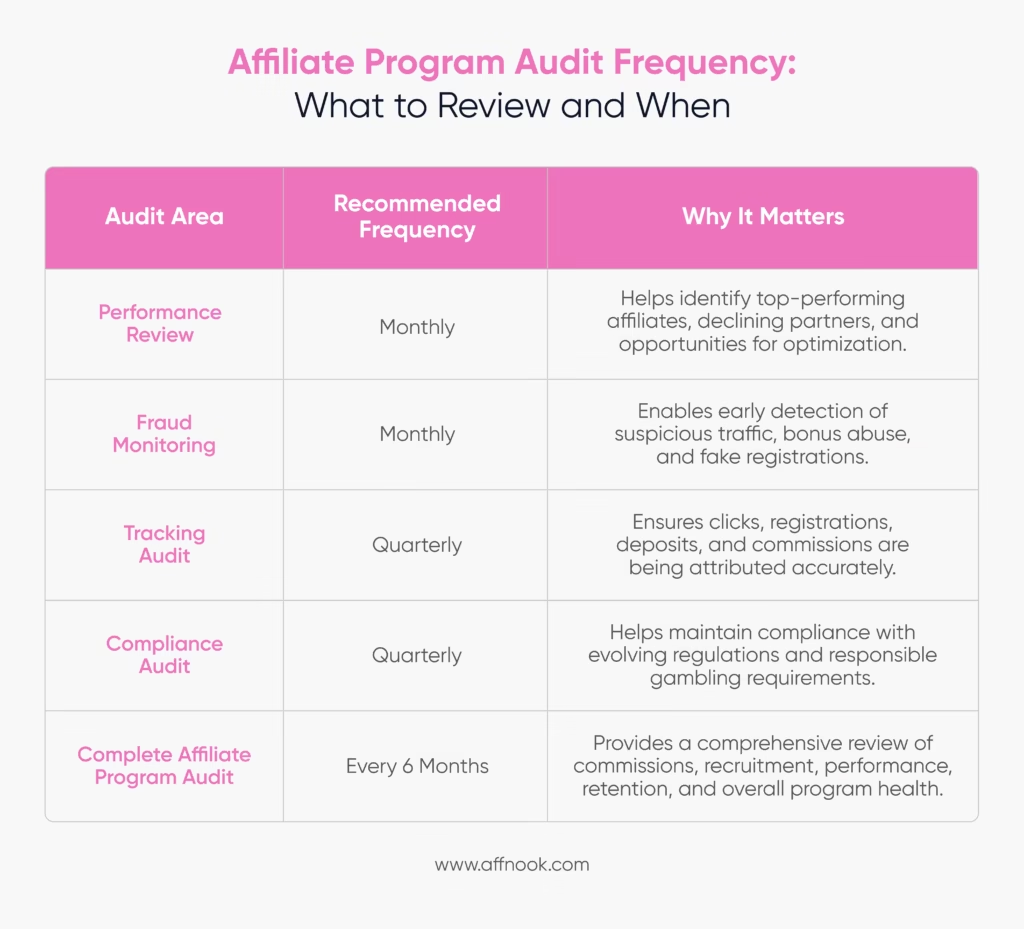
Large operators managing hundreds of affiliates often conduct performance and fraud reviews more frequently. In highly competitive markets, some teams monitor these metrics weekly or even daily to quickly identify issues and optimize campaigns.
Even if your program appears to be performing well, periodic audits are still important. Small problems such as tracking discrepancies, declining player quality, or outdated commission structures can gradually impact profitability if left unchecked.
Step-by-Step Process to Conduct an Affiliate Program Audit
Now that you know what an Affiliate Program Audit involves and when it should be conducted, it’s time to understand how to perform one effectively.
A structured audit helps you identify performance gaps, eliminate inefficiencies, and make data-driven decisions that improve your affiliate program over time.
Step 1: Review Affiliate Performance
The first step in an Affiliate Program Audit is to evaluate the performance of every affiliate in your program. Instead of looking only at the number of clicks or registrations, focus on the quality and profitability of the traffic each partner delivers.
Analyze key metrics such as:
- Clicks
- Registrations
- First-Time Deposits (FTDs)
- Net Gaming Revenue (NGR)
- Gross Gaming Revenue (GGR)
- Conversion Rate
- Player Lifetime Value (LTV)
- Return on Investment (ROI)
This analysis helps answer important questions:
- Which affiliates generate the highest revenue?
- Which affiliates are consistently delivering quality players?
- Which partners have become inactive?
- Are there affiliates with high traffic but poor conversion rates?
Once you’ve identified your top-performing affiliates, consider rewarding them with better commission plans or exclusive campaigns. Similarly, review underperforming affiliates to determine whether they need optimization or should be removed from the program.
Step 2: Audit Your Tracking System
Affiliate marketing depends entirely on accurate tracking. If clicks, registrations, or deposits aren’t tracked correctly, your reports become unreliable, and commissions may be paid incorrectly.
During your tracking audit, verify:
- Affiliate tracking links
- Postback URLs
- Conversion pixels
- Registration tracking
- Deposit tracking
- Revenue attribution
- Cookie duration
- Attribution windows
Perform test conversions to ensure every stage of the customer journey is recorded accurately.
Tracking errors can lead to disputes with affiliates, inaccurate reporting, and lost revenue, making this one of the most important steps in an Affiliate Program Audit.
Step 3: Evaluate Traffic Quality
High traffic numbers don’t always translate into profitable players.
Instead of measuring volume alone, focus on player quality.
Review:
- Deposit frequency
- Average wager amount
- Session duration
- Retention rate
- Bonus usage
- Player lifetime value
- Device performance
- GEO performance
For example, one affiliate may generate fewer registrations than another but produce players with significantly higher lifetime value. That affiliate contributes more to your business and should receive greater attention.
Step 4: Detect Fraud and Suspicious Activity
Affiliate fraud continues to be one of the biggest challenges in iGaming.
During your audit, investigate unusual patterns such as:
- Fake registrations
- Bot traffic
- Duplicate accounts
- VPN or proxy traffic
- Click spamming
- Cookie stuffing
- Incentivized traffic
- Bonus abuse
Compare historical performance with current activity. Sudden spikes in clicks or conversions often indicate suspicious behavior.
Using fraud detection tools can help identify these patterns before they impact your profitability.
Step 5: Review Commission Structures
Your commission plan should reward quality rather than quantity.
Evaluate every commission model currently used.
This includes:
- CPA
- Revenue Share
- Hybrid Commission
- Tiered Commission
- Custom Payouts
Ask yourself:
- Are commissions aligned with player value?
- Are affiliates receiving fair payouts?
- Are commission costs affecting profitability?
- Do high-performing affiliates need better incentives?
Sometimes a small adjustment in commission structures can significantly improve affiliate motivation while maintaining healthy margins.
Step 6: Review Affiliate Communication
Strong affiliate relationships contribute directly to long-term success.
During your audit, evaluate how effectively you communicate with partners.
Review:
- Affiliate onboarding process
- Response time
- Availability of marketing creatives
- Promotional support
- Campaign updates
- Performance feedback
Affiliates who feel supported are more likely to remain active and promote your brand consistently.
Step 7: Check Compliance Requirements
Compliance should never be overlooked during an Affiliate Program Audit.
Review whether affiliates follow your marketing guidelines and regulatory requirements.
Verify:
- Responsible gambling messaging
- Advertising compliance
- Brand guidelines
- Promotional claims
- GEO restrictions
- Affiliate agreements
- Payment documentation
Maintaining proper documentation also makes future audits much easier.
Step 8: Review Integrations
Affiliate programs rely on multiple systems working together.
Audit integrations with:
- Casino platforms
- CRM software
- Payment gateways
- BI tools
- Analytics platforms
- Fraud detection systems
Poor integrations often create reporting discrepancies and manual work.
Make sure all systems are synchronized and sharing data accurately.
Step 10: Segment Your Affiliates
Group affiliates based on their performance and contribution to your program. This helps you prioritize support and build more effective engagement strategies.
Common affiliate segments include:
- VIP Affiliates: Top-performing partners driving the highest revenue.
- Growth Affiliates: Partners with strong potential to scale.
- Active Affiliates: Affiliates consistently generating traffic and conversions.
- New Affiliates: Recently onboarded partners are building momentum.
- Inactive Affiliates: Partners who need re-engagement or offboarding.
Segmenting affiliates helps you deliver the right support, optimize commissions, and improve long-term program performance.
Conclusion
An Affiliate Program Audit is not just a routine review; it’s a strategic process that helps iGaming operators maximize profitability, strengthen affiliate partnerships, and maintain long-term program health.
By regularly auditing your affiliate performance, tracking systems, commission models, compliance, fraud prevention, and player retention, you can uncover hidden inefficiencies before they impact your business.
The most successful affiliate programs aren’t necessarily the ones with the largest networks. They’re the ones who continuously analyze data, optimize performance, and adapt to changing market conditions.
Make Affiliate Program Audits a regular part of your growth strategy, and you’ll build a more efficient, transparent, and profitable affiliate program that delivers sustainable results over the long term
Help Section
An Affiliate Program Audit is a comprehensive review of your affiliate marketing program to evaluate performance, tracking accuracy, commission structures, fraud risks, compliance, and overall profitability.
Most iGaming operators should conduct a full Affiliate Program Audit every six months, with monthly reviews of performance and fraud, and quarterly reviews of tracking and compliance.
Key metrics include clicks, registrations, First-Time Deposits (FTDs), Net Gaming Revenue (NGR), Gross Gaming Revenue (GGR), conversion rate, player lifetime value (LTV), ROI, retention rate, and churn rate.
Accurate tracking ensures that clicks, registrations, deposits, and commissions are correctly attributed, preventing reporting errors, payment disputes, and revenue loss.
Affnook simplifies Affiliate Program Audits with real-time reporting, advanced tracking, fraud detection, flexible commission management, automated payments, and detailed analytics, enabling operators to monitor and optimize their affiliate programs more efficiently.