Finished creating a user-friendly betting site with great features? That’s fantastic.
It can help you stand out in a highly competitive online gambling industry that will cross $133 billion by 2029.
However, merely having a functional betting website isn’t enough. You must ensure everything complies with iGaming legal compliance standards to build a successful online betting business.
That’s when obtaining a valid online gambling license becomes crucial.
Operating without one can lead to serious repercussions, including legal action, hefty fines, and even shutting down the site. What’s more? You can lose the trust of your players and partners, which can impact your brand’s reputation and long-term revenue.
In this post, we’ll explain how to get a gambling license for your betting site and run your business without hassles.
What Is an Online Gambling License?
An online gambling license is an official permit issued by a regulatory authority that allows a gambling business to legally offer online gambling services and produce and collect commissions from players.
The license ensures that the company complies with the relevant laws and regulations of the jurisdiction in which it operates. For instance, a site offering casino games like slots should get an online casino gambling license to ensure compliance with industry standards. A licensed online casino is proof that the operator adheres to fair and transparent policies.
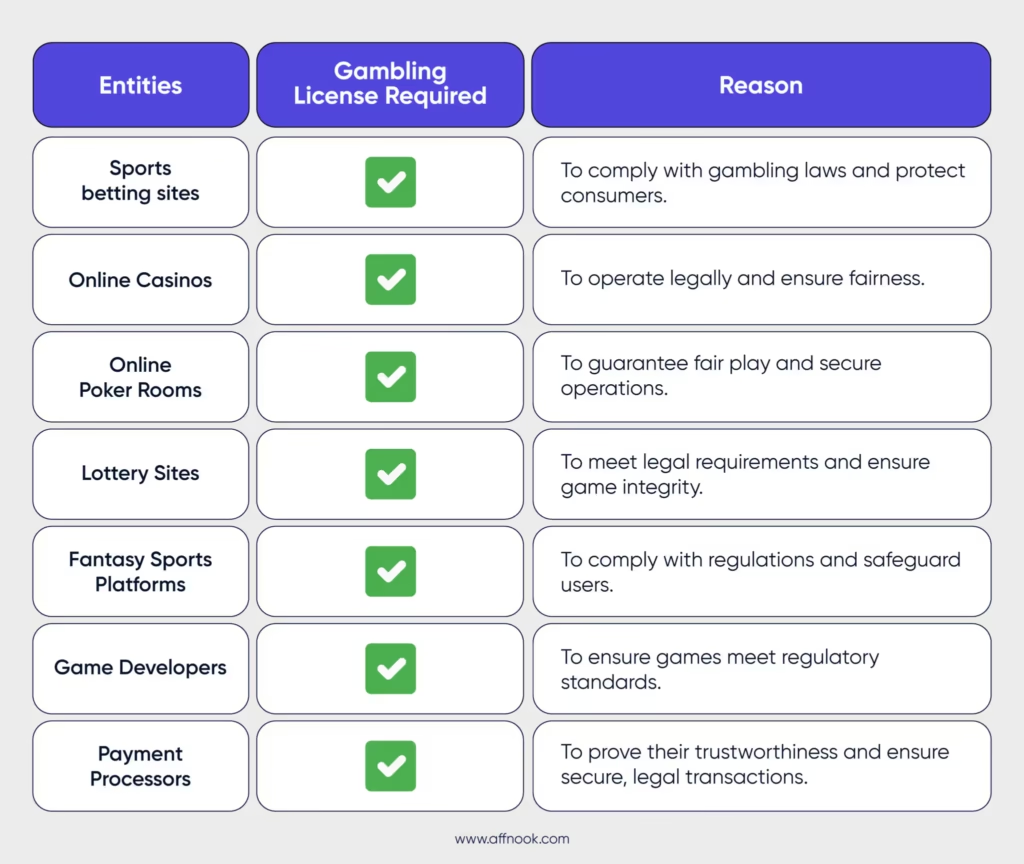
Who Needs an Online Gambling License?
Here are the key types of entities involved in online gambling activities that require a license to operate legally.
Key Advantages of Having an Online Gambling License
Here are the key advantages of having an online gambling license:
- Ensures Business Legitimacy: An online gambling license legitimizes your business. It validates that your betting site operates within the legal framework. This can help safeguard your site from legal issues and penalties.
- Helps Build a Positive Reputation: An online gambling license ensures financial security and fairness of the game. This can boost player confidence in your site, thus building a positive reputation and attracting and retaining real-time players.
- Offers Access to Wider Markets: Licensed online betting sites can legally offer services to a global audience in distinct regulated markets, thus increasing their potential customer base and market share.
- Increases Partnership Opportunities: A legitimate license can help you form partnerships with other licensed entities in the industry, such as payment providers, game developers, and more.
Online Gambling License Prerequisites
Before discussing how to get a gambling license, let’s understand the requirements for obtaining it. As an iGaming operator, you must meet specific online gaming license conditions. This can help avoid gaming license disqualifications and ensure a smooth application process.
Here’s what you need –
Technical Infrastructure:
Build a betting website with features such as user-friendly navigation, secure payment systems, firewalls, SSL or TLS encryption, user age verification tools, anti-fraud mechanisms, and more. Test and update the technical infrastructure frequently to minimize downtime and adapt to industry standards.
Responsible Gambling Measures:
Licensing authorities require comprehensive responsible gaming frameworks. Implement essential tools, including:
- Self-exclusion programmes: Integration with multi-operator schemes like GamStop (UK), ROFUS (Sweden), or jurisdiction-specific databases.
- Deposit and wagering limits: Allow for player-controlled limits and require a cooling-off period (for example: 24 hours to 72 hours) before a limit may be increased.
- Reality checks: Providing players with alerts to session length activity, which would also include a summary of activity.
- Age verification: Use of robust document checks and third-party verification to ensure no underage gambling takes place.
- Player tracking: Data-based analytical tools to track players who exhibit risk patterns related to gambling.
- Support access: Prominent links to organisations like GamCare, Gamblers Anonymous, and BeGambleAware.
Additionally, publish educational content about responsible gambling habits and display clear information about RTP percentages and game odds. Regulators like the UKGC and MGA conduct thorough audits of these measures during the process of obtaining a gambling license.
Data Privacy Compliance:
Ensure compliance with data privacy regulations like GDPR to communicate how user data is collected, stored, and processed.
Customer Support:
Develop a dedicated and multilingual customer support team to address user queries and complaints. Regulatory bodies often require evidence of reliable user support as part of licensing.
Moreover, multilingual support can help you cater to a diverse user base. For instance, in the US alone, people speak between 350 and 430 languages. So, offering multilingual support can allow your brand to cater to various language preferences and ensure effective communication.
Common Reasons for License Application Rejection
Understanding why applications fail can help you avoid costly mistakes. Here are the most frequent rejection reasons:
Insufficient Financial Documentation
Regulators demand transparent evidence of funding sources. Applications are denied if operators cannot provide:
- Legitimate sources of capital with full auditing and documentation
- Adequate reserves for operations for a minimum of 6 to 12 months of expenses as projected
- Clean credit histories for each of the directors and significant shareholders of the operator
Weak Technical Infrastructure
Your platform must meet strict technical standards. Common gambling license failures include:
- Inadequate security protocols (missing SSL or TLS encryption, weak firewalls)
- Unreliable payment processing systems
- Poor data protection measures that don’t comply with GDPR or local privacy laws
- Lack of independent third-party testing certificates for RNG (Random Number Generator) fairness
Incomplete KYC and AML Policies
Insufficient frameworks for Anti-money Laundering will result in being denied an application by jurisdictions. Make sure you have:
- Documented customer verification procedures
- Transaction monitoring systems that were created to help locate suspicious activity
- Clearly documented processes for reporting to the authorities
- Staff training programs for complying with AML laws
Criminal Records or Adverse Background Checks
Regulators conduct thorough background checks on all key personnel. Even minor undisclosed infractions can trigger rejection. Be transparent about:
- Any prior legal issues involving directors or beneficial owners
- Previous gambling-related violations or penalties
- Business associations with high-risk entities
Unclear Business Model or Market Strategy
Vaguely prepared applications show how poor the preparation was. The following details should be provided:
- Detailed revenue projections based on reasonable assumptions
- Comprehensive target market analysis
- Clear marketing and player acquisition plan(s)
- Risk mitigation strategies for market fluctuations
By addressing these matters in a timely manner, you will save yourself months of delays and thousands of dollars in re-application fees.
How to Get a Gambling License
Here’s how to get a gambling license for your betting site.
Step 1: Choose a Jurisdiction
Distinct jurisdictions have unique requirements and conditions. For instance, Malta, Curacao, Gibraltar, and the UK each have different gambling license requirements, benefits, costs, and regulatory frameworks. So, deciding the jurisdiction in which you want to obtain a gambling license is the first step. Your site must be compliant with at least one jurisdiction. Carefully research your options and identify the one that aligns with your betting site requirements.
Step 2: Register Your Business
Most licensing entities require you to set up your online gambling business in the chosen jurisdiction. So, ensure your business structure is compliant with the local laws, including appointing key personnel like directors or compliance officers as mandated.
Step 3: Prepare All Documents
Collect all the necessary documentation, including a realistic business plan, financial statements, proof of identity for stakeholders, source and verification of funds, and more. The gambling license application may also require detailed descriptions of your website’s operational processes and responsible gambling measures.
Step 4: Develop Anti-Money Laundering and Risk Policies
You must implement anti-money laundering (AML) and risk management policies that comply with the jurisdiction’s regulations. Besides, measures should be developed to prevent underage participation.
Step 5: Apply for the License
Submit your gambling application to the regulatory authority of your chosen jurisdiction. This involves the cost of a gambling license, background checks, and waiting for approval. The online gambling license cost and approval time will vary across jurisdictions.
The Next Steps
Now that you have understood how to get a gambling license, follow these steps to boost player acquisition and retention.
1. Display Your Licensing Information on the Website
Showcase your online gambling license on your betting site. This can assure real-time players that your site complies with legal standards, thus reinforcing your brand credibility. For instance, you can add the license details in the “About Us” section or create a dedicated landing page to highlight it.
After all, trust is a crucial aspect of the competitive iGaming industry.
2. Invest in Effective Marketing Strategies
Your work only begins once you’ve solved the question of how to get a gambling license. Once you have the online gambling license, the next step is to drive traffic and increase the visibility of your betting site through marketing efforts.
Here are a few crucial marketing strategies to follow.
- SEO Optimization: Optimize your betting site to achieve top rankings on search engines like Google and attract organic traffic. Leverage SEO strategies like incorporating targeted keywords, improving your site page load speed (within 3 seconds), and publishing high-quality, valuable content. This can increase the chances of your betting site getting top rankings in search engine results pages (SERPs).
- Paid Ads: Invest in pay-per-click (PPC) advertising to gain instant visibility and reach potential players effectively. For instance, leverage platforms like Google Ads or Bing Ads and create targeted campaigns based on user demographics, interests, and behavior. Create engaging content and add high-performing keywords to attract users actively searching for the best online betting websites.
- Social Media Marketing: Leverage platforms like Facebook, Twitter, Snapchat and Instagram to engage and build a loyal user community. For instance, post compelling content with imagery, videos, and more and interact with followers to enhance brand visibility and trust with your marketing efforts. This builds authority and helps in obtaining a gambling license.
- Affiliate Marketing: Partner with affiliates through state-of-the-art iGaming affiliate management software like Affnook to tap into niche audiences. The software can help you manage affiliates, drive traffic and conversions, and boost player retention.
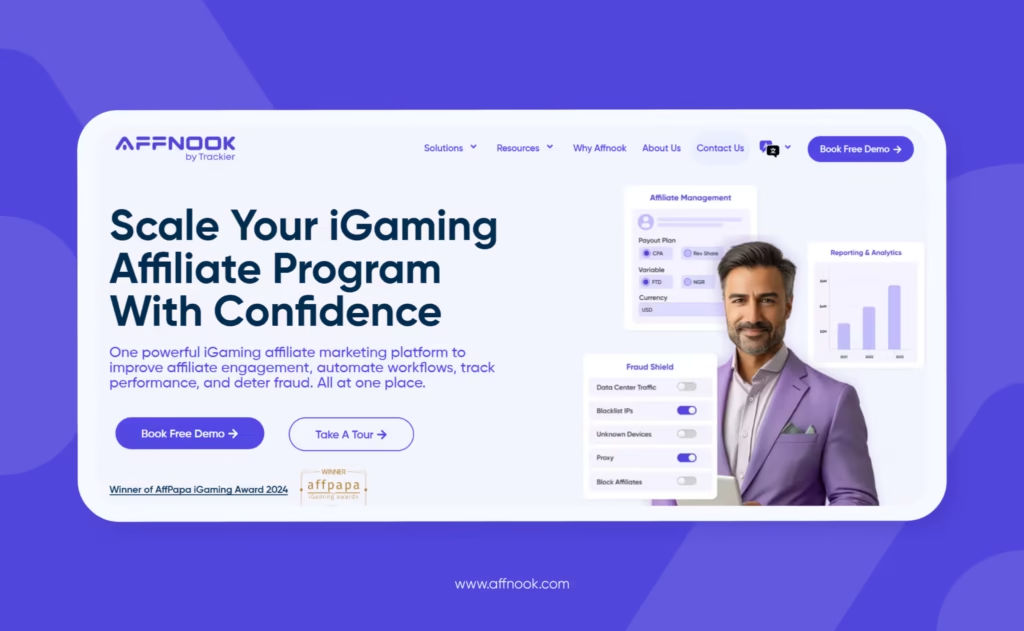
With Affnook, you can:
- Track and identify top-performing affiliates.
- Access real-time reports for campaign insights.
- Build custom iGaming affiliate Campaigns with flexible commission structures.
- Streamline affiliate payments with fast, automated transactions.
- Detect and prevent iGaming fraud.
3. Offer Promotions and Bonuses
Bonuses and promotions can multiply user engagement within no time and help build a loyal community. So, provide generous bonuses to new players to increase registrations and first-time deposits (FTDs). Besides, roll out limited-time promotions to imbibe a sense of urgency and increase registrations.
What’s more? Create loyalty programs and reward loyal users with exclusive offers or cashback deals to keep engagement intact and boost retention rates.
Summing Up
Getting an online gambling license is not just a nice-to-have; it’s a must-have to build credibility for your betting site. Solving the problem of how to get a gambling license is the first step in setting up your online gambling business.
It helps you acquire, convert, and retain real-time players while gaining an edge in the competitive iGaming industry. Moreover, once you get a gambling license, you must make efforts to get your betting site noticed. The tips shared in this post can help you achieve that.
If you’re considering iGaming affiliate marketing, Affnook can be your reliable partner. Connect with our team to make your journey hassle-free.
Help Centre
What are the first steps to legally obtain an online gambling license?
To get a gambling license, first choose your target market, select a reputable jurisdiction, register a legal business entity, prepare compliance documents, and submit your application to the relevant gaming authority.
What legal requirements must online gambling operators meet for licensing?
When considering how to get a gambling license, you need to meet the strong AML/KYC policies, prove financial stability, provide business plans, ensure responsible gaming tools, and complete background checks to satisfy regulatory authorities.
Can I operate in multiple countries with one gambling license?
It is possible, but this is not always the case. A single license may allow operations in many regions, but you must check each country’s rules to ensure you’re always legally in the clear.
Is a gambling license necessary to offer real-money gambling?
There are several countries that have completely banned real-money gambling. The places where it is allowed, there are usually regulations in place such as licensing requirements or advertising laws. Therefore, yes, it is essential to get a license to offer gambling.
What happens if my gambling license application is rejected?
The rejection reasons usually include issues such as weak AML or KYC policies, poor documentation, or technical gaps. Operators can reapply after addressing deficiencies, but delays and added costs make pre-submission compliance reviews highly valuable.
How long does it take to get a gambling license approved?
Licensing timelines range from 6–8 weeks in jurisdictions like Curacao or Anjouan to 6–12+ months in stricter markets such as the UK or Gibraltar. Delays are commonly caused by incomplete documentation, complex ownership structures, or unresolved compliance and technical issues.