Back in 2020, the UK Gambling Commission noted that younger people chose to gamble on mobile phones the most. It was the popular way of engaging in iGaming.
In younger cohorts (18-34 years of age), this behavior was noted in 3/4ths of users. In those at 65 and over, this was not absent either. 14% of this cohort was also engaging through mobile phones. While not traditionally seen as such, this entire combined cohort is mobile-first when it comes to iGaming.
This is just one regulated market, several years ago. We are increasingly seeing mobile phone and 5G adoption rates globally. Such transformations are sure to reflect in the engagement behavior of individuals across the world’s regulated markets.
It’s a critical juncture for businesses acquiring customers. Casino ads (and other acquisition strategies) need to be visible to audiences adapting to this new way of gaming.
Understanding Mobile Casino User Behavior
The users on mobile are quite different from those on desktop. The device of choice is, of course, one of the key variations. But notable ones include:
- Shorter, frequent bursts of activity vs long durations of play
- Impulse-driven actions vs deliberate, measured engagement
The reason is quite obvious: since mobile-first users are on-the-go, they are prone to quick, immediate gratification. That’s also why their engagement is driven by impulse and the desire for quick returns. This is a crucial factor when we consider their decision-making journey from being a prospect to a player.
When crafting iGaming advertising for such users, the following are important considerations:
- The use of clear, understandable and direct messaging
Since the engagement style relies on speed, the marketing messages should be easy to comprehend quickly.
- Emphasis on creating micro-moments
The scroll-heavy behaviour of mobile-first users gives you few opportunities to interrupt — through either a compelling call-to-action or a unique visual cue. If it misses, the user is as good as gone.
- The creation of friction-free experiences
Younger, mobile-first users want simple and pain-free experiences. This means mobile web responsiveness, load times and UI/UX are valuable in acquiring more players on mobile.
- Focus on emerging online gambling markets
Aspects like affordability, accessibility and cheap internet at fast speeds means the prime mobile gambling markets are now emerging ones.
Designing Attention-driving Creatives for Mobile-first Users
Let’s understand how online mobile gambling can be marketed to users who use on-the-go engagement as their primary means to gaming.
Visual Hierarchy for Small Screens
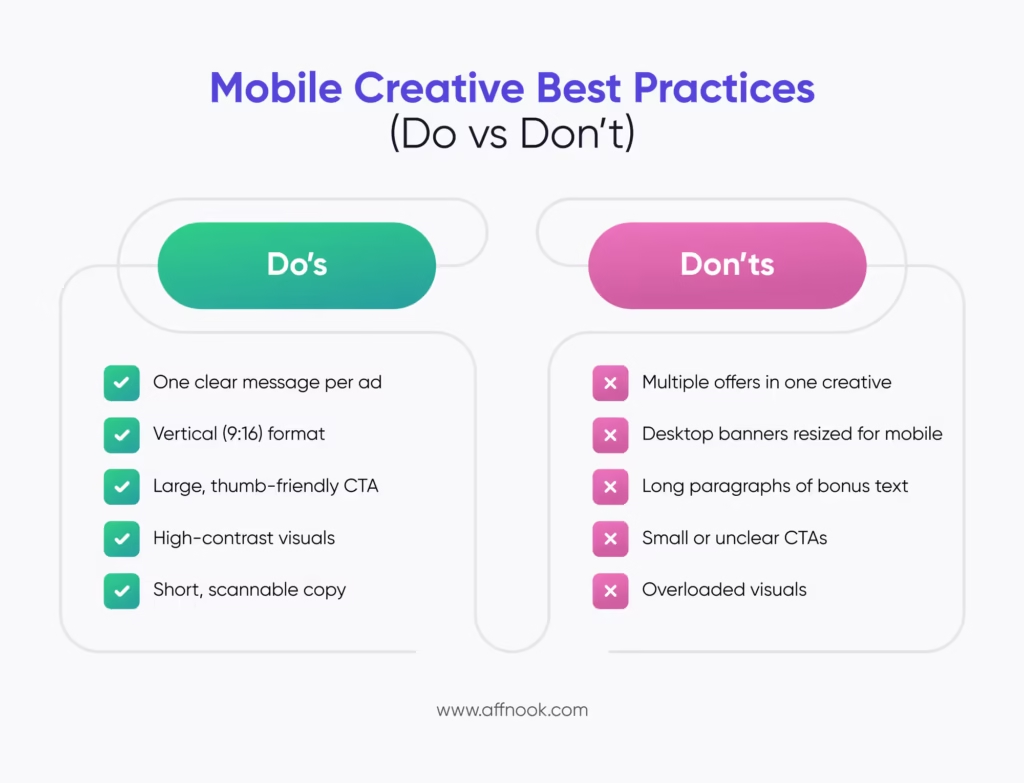
- One creative, one message
Don’t stuff too much in a single post. You users give you two seconds. Use them well.
- Vertical-first and thumb-friendly
Most smartphones have a clear 16:9 aspect ratio. Design graphics accordingly.
- Lead with a visual cue
Whether it is bonus, jackpots or gameplay snippets — visuals are a major scroll-stopper.
Copywriting for Mobile Casino Ads
- Short copy with one call-to-action
Keep your copy to a minimum word count. For most screens, messaging under 6-7 words is recommended.
- Compliance aspects
Don’t ignore regulatory inputs. Ensure warning labels like “18+ only”, license particulars and more are present on the creative and landing page.
- Localization
Since mobile-first users are younger, they prefer when you communicate with them through local terms and references.
Format Selection by Platform
Consider video versus static creatives, and choose the platform accordingly.
Since most of the users who are playing through smartphones are also present on certain social media platforms, such as Instagram, Tiktok and Snapchat, casino ads must be created keeping in mind the rules of these platforms.
For instance, on Tiktok running ads means operators have to submit paperwork proving their legal status. Similarly, when you’re planning ads for Snapchat, you need to first check if your ads are going to be running in permitted regions.
But if you’re only going for traditional meta and google ads, then the format could vary between static and dynamic, in various sizes and formations. You will need to run regular A/B tests to figure out exactly which permutations are working out best for your online casino.
Where do Conversions Get Lost on Mobile?
First, mobile app flows are critical conversion points, where many of the drop-offs actually happen. Even campaigns with strong click-through rates often fail to convert because users encounter friction immediately after clicking an ad.
There could be two main concerns here: slow page speed or poor performance of Web Core Vitals. Users expect quick load times, with every increased second leading to a bounce.
That’s why it is important to create simple pages — often by reducing visual or element load — prioritizing the overall experience, i.e. ‘the feel’ rather than focusing only on ‘the look’.
Lengthy sign-up forms are another pain point for mobile-first users. Enabling autofill can improve conversion rates.
Small screens make it hard to see clearly and be sure. This is why many may approach mobile gambling apps or web content more cautiously, even when there’s no explicit warning signs. Having clear trust markers such as visible gaming licenses, secure payment icons, and app store ratings helps ward off this shortcoming.
AEO and Event-Based Optimization for Mobile Casino Campaigns
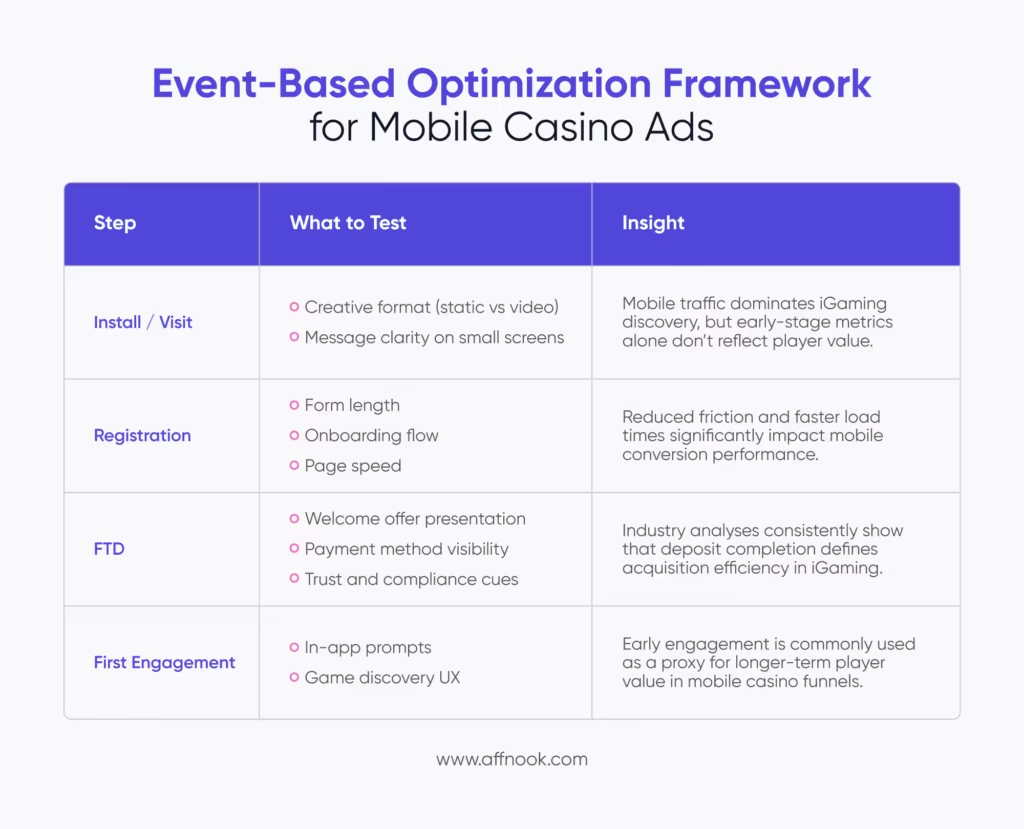
Clicks are easy to get. But what happens after is the basis of actual ROI or returns for any online casino app or website.
High mobile CTRs often mask low-quality traffic. This is why action or event-based optimization is essential in mobile-first campaigns.
The focus moves from clicks or even registrations to downstream events that actually add value. That’s the FTD or the first bet. Data from platforms like Google and Meta consistently shows that campaigns optimized for deeper funnel events deliver lower cost per action and higher LTV. This happens despite lower top-funnel traffic as well.
You filter out impulse clickers, and focus on intent-heavy players instead.
Platform nuances also matter. Meta favors rich in-app event signals, Google relies more on post-install actions and Apple’s search ads benefit from precise event mapping tied to intent-based keywords.
Practical Takeaways for Operators and Brands
To be successful with mobile-first users, operators and brands need a mobile-first mindset across creatives, funnels and measurement.
Ads should be built for small screens with clear value propositions, fast load times, and minimal friction from click to first bet. Monitoring CTR for relevance, CPE for event quality and CPA at the time of FTD is vital.
Like everything in iGaming, there is no fixed playbook. Evolution is the only natural state, and the same applies to devices, platforms and user behavior across them. Only those running continuous A/B tests will continue to secure the right outcomes at a consistent pace.