The iGaming industry runs on partnerships. Operators need players, affiliates need commissions, and both sides grow when campaigns perform well.
But one question is searched for more than anything else across Google, Reddit, and affiliate forums:
How do iGaming affiliates actually get paid?
This Ask Affnook article breaks it down in the simplest, most practical way — payment models, timelines, tracking, deductions, and the full lifecycle of how money moves from operator to affiliate.
If you’re planning to enter the industry or want to understand whether a partner is paying you fairly, this guide is for you.
What are iGaming Affiliates?
Before understanding payouts, it helps to understand the role of iGaming affiliates. These are marketers who promote online casinos, sports betting platforms, poker rooms, or other iGaming brands. They earn commissions when players sign up, deposit, or generate revenue through the operator.
Affiliates can be:
- Bloggers and content creators
- SEO websites
- Tipsters
- Influencers
- Casino review sites
- Media buying teams
- Streamers
Their main job is to drive quality, depositing players to an operator.
And that’s where payments start.
How the iGaming Affiliate Payout Journey Works
Understanding exactly how money flows from an operator to an affiliate removes a lot of confusion for newcomers. Here’s a simple breakdown of the full payout journey that every iGaming affiliate goes through:
- Affiliate drives traffic
A user clicks on the affiliate’s unique tracking link through a blog, ad, review site, or social media channel. - Player signs up and gets tagged
The tracking system assigns the player to the affiliate. This ensures all future activity is correctly attributed. - Player deposits or places bets
Once the player starts depositing, wagering, or completing the required action, they begin generating measurable value for the operator. - The operator evaluates the player value
The system calculates metrics like FTD (First-Time Deposit), NGR (Net Gaming Revenue), or qualifying actions depending on the payout model. - Commissions appear in the affiliate dashboard
The earned commission is automatically reflected inside the affiliate panel, giving clear visibility into conversions, deposits, and revenue. - The operator releases the payment as per the schedule
At the end of the billing cycle (weekly, bi-weekly, or monthly), the operator processes the affiliate’s payout based on the selected payment method.
This entire lifecycle varies by operator and payout model, which is why many affiliates get confused without a proper breakdown. Once you understand this flow, it becomes much easier to track performance and verify earnings accurately.
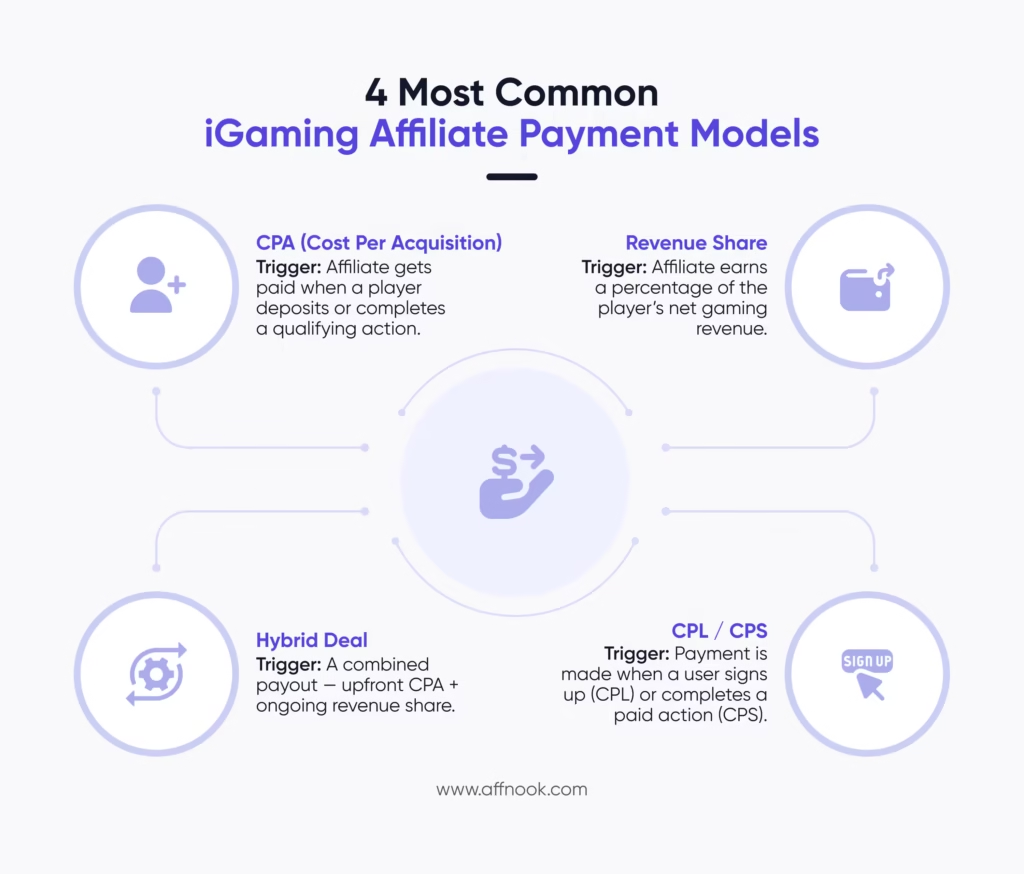
Affiliate Payment Models Used in the iGaming Industry
1. CPA (Cost Per Acquisition)
Under this model, the affiliate gets a fixed amount for every player who completes a specific action.
Example actions:
- Registers + makes a minimum deposit
- Places their first bet
- Completes KYC
Typical CPA payouts range between $50 to $350, depending on the region and brand.
CPA is popular because:
- It’s instant value
- Easy to forecast earnings
- Good for affiliates who run paid ads
2. Revenue Share (RevShare)
This is the most classic iGaming affiliate model.
You earn a percentage of the net gaming revenue (NGR) generated by the player each month.
Typical RevShare ranges:
- 25%
- 30%
- 35%
- 45%+ for premium affiliates
Advantages:
- Long-term, passive earnings
- High lifetime value
- More profitable if players stay active
Challenges:
- Earnings fluctuate
- Negative carryover may apply (some operators push losses to next month)
- Takes time to scale
3. Hybrid Deals
A hybrid combines CPA + RevShare.
Example:
$60 CPA + 20% Revenue Share.
Ideal for:
- Affiliates with consistent traffic
- Those who want the security of upfront money plus lifetime earnings
This is one of the most widely used models in iGaming today.
4. CPL / CPS (Less common but growing)
Some operators use:
- CPL (Cost Per Lead) → Paid for a signup only, no deposit.
- CPS (Cost Per Sale) → Paid when a player completes a paid action.
Useful for top-of-funnel affiliates with large traffic.
How Do Operators Track Affiliate Traffic and Sales?
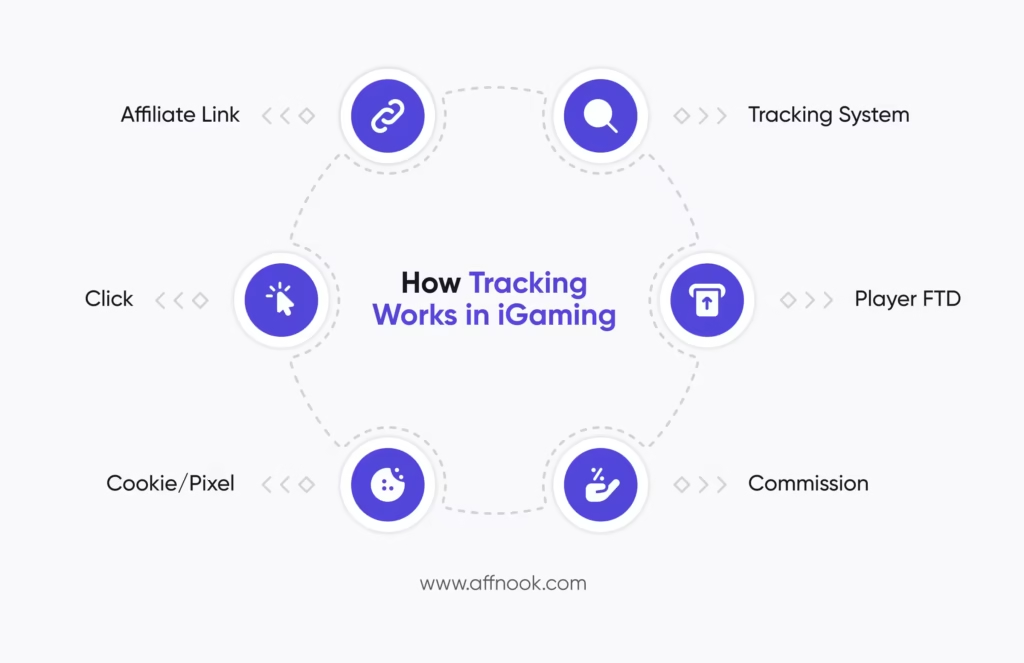
iGaming affiliate payouts rely completely on accurate tracking, because a player must be correctly mapped to the affiliate.
Tracking methods include:
1. Unique Tracking Links
Every affiliate gets a unique link. When users click it, the operator knows where the traffic came from.
2. Cookies
Cookies store user activity. If a player signs up later, the affiliate is still credited.
3. Server-to-Server Tracking (S2S)
A more advanced method used for:
- Paid ads
- Direct tracking
- Reducing fraud
- Better accuracy
4. Pixel Tracking
Common in display ads and influencer campaigns.
If tracking isn’t strong, payouts get affected — so this is critical.
When Do iGaming Affiliates Get Their Payments?
Payment timelines vary by operator, but are mostly:
- Monthly (most common)
- Bi-weekly (for CPA-heavy affiliates)
- Weekly (in high-volume markets)
- On-demand (rare but offered by some wallet-based programs)
Most affiliates receive payments between the 1st and the 10th of every month after final reporting is done.
Common Payment Methods for iGaming Affiliates
1. Bank Transfer
Useful for large payouts, but slow and may include fees.
2. Crypto (BTC, USDT, ETH)
Extremely popular because:
- Instant transfers
- Lower fees
- Accepted globally
3. E-wallets (Skrill, Neteller, PayPal in some regions)
Fast and widely used.
4. In-platform wallets
Some iGaming platforms hold funds inside a wallet so affiliates can withdraw anytime.
5. Local Payment Methods
Depending on the region:
- Paytm / UPI (India)
- M-Pesa (Africa)
- Revolut (EU)
- Payoneer
Affiliates love flexibility, and operators offering multiple payment options usually attract more partners
What Reduces an Affiliate’s Final Payout?
Many affiliates expect to earn exactly what they see in their dashboard, but that’s rarely the case. Before the final amount reaches the affiliate’s wallet, operators apply several deductions based on industry-standard calculations, especially when using the Revenue Share model.
Here are the major factors that influence your final payout:
1. Bonus Costs
Whenever a player uses incentives like free spins, deposit matches, cashback, or risk-free bets, the cost of those bonuses is subtracted from the revenue generated. Since these incentives come from the operator’s marketing budget, they impact the affiliate’s commission.
2. Fraudulent or Invalid Activity
Operators monitor traffic quality. If they detect fake signups, duplicated accounts, bot-triggered deposits, or manipulated actions, those conversions are removed before payout. This protects the ecosystem from unethical activities.
3. Chargebacks
If a player claims a fraudulent transaction, requests a reversal, or their bank pulls back a payment, the operator removes that amount from the revenue. Chargebacks directly reduce affiliate earnings because the operator incurs a loss.
4. Negative Carryover
If a player wins a large amount, that reduces the Net Gaming Revenue for the month. Some operators reset negative balances to zero (no negative carryover), while others push it to the next month. Affiliates must always check this clause in the contract.
5. Taxes and Regulatory Costs
Depending on the market, operators may deduct taxes, licensing fees, or regulatory costs before calculating commissions. Each country has its own rules, so earnings can vary across GEOs.
These deductions often come as a surprise to new affiliates, which is why reading the payout terms and understanding how NGR is calculated is essential before signing any deal.
What Should Affiliates Check Before Accepting an iGaming Deal?
Before joining an affiliate program, affiliates should look beyond the headline CPA or RevShare percentage. The actual value of a deal depends on the terms behind the payout.
- Commission structure: CPA, RevShare, or Hybrid
- NGR calculation: Understand exactly what gets deducted
- Negative carryover: Check whether monthly losses are carried forward
- Payment threshold: Know the minimum amount required for withdrawal
- Payment schedule: Confirm when commissions are approved and paid
- Tracking window: Check how long referrals remain attributed
- GEO restrictions: Some offers pay differently by country
- Fraud and chargeback rules: Understand when commissions can be reversed
A higher commission rate does not always mean a better deal. Affiliates should compare the effective payout, payment terms, and player value before choosing an operator.
How Much Do iGaming Affiliates Earn?
Affiliate earnings vary depending on:
- Traffic volume
- GEO (Tier 1 vs Tier 2 markets)
- Player value
- Deal type (CPA/RevShare/Hybrid)
- Niche (sports, casino, poker)
A general realistic range:
- Small affiliates: $300 – $1,000 per month
- Mid-level: $3,000 – $10,000 per month
- Top affiliates: $20,000 – $100,000+ per month
- Big media buyers/casino content giants: $300,000+ per month
iGaming is one of the highest-paying affiliate industries globally — if you send high-quality depositing players.
What Happens If an iGaming Affiliate Disagrees With a Payout?
Sometimes, the amount an affiliate expects and the final payout may not match. This can happen because of chargebacks, rejected conversions, bonus deductions, fraud checks, or NGR calculations.
If something looks off, affiliates should:
- Check the dashboard for approved and rejected conversions.
- Review the commission and deduction terms.
- Compare the numbers with their own tracking data.
- Ask the affiliate manager to explain any differences.
- Keep payment records to spot recurring issues.
Clear reporting makes it easier to understand where the money went and ensures affiliates are paid according to the agreed terms.
Final Answer: How Do iGaming Affiliates Get Paid?
iGaming affiliates get paid based on the traffic and depositing players they deliver. The payment can be CPA, RevShare, hybrid, or CPL, and payouts generally happen monthly through bank transfer, crypto, or e-wallets.
The most important part is accurate tracking, transparent reporting, and clear commission terms.
When you understand how payouts work, you can negotiate better deals and protect your earnings as you scale.