In 2026, the United Kingdom is still one of the most regulated markets worldwide, contributing £16–£17 billion of revenue each year, and 46% of revenue comes from online channels.
A gambling license in UK is not simply a requirement; it represents a set of processes for how iGaming operators acquire users, marketing strategies, and how they can scale their business while following regulations.
After obtaining the UKGC license, the biggest challenge that operators face will be maintaining their licensing terms through oversight of marketing strategies and affiliate operations.
Most compliance violations occur post-launch through online gambling affiliate marketing rather than at the time the operators receive their licenses from the UKGC. Consequently, oversight of affiliates should be considered an essential business function for operators and not simply a marketing function.
Platforms like Affnook help iGaming operators to centralize tracking, monitoring, and enforcing compliance, as well as providing real-time visibility of all activities associated with their affiliates.
This blog will summarize the cost of obtaining a gambling license in UK, the types and requirements of the licenses, and the compliance obligations with respect to affiliates for the year 2026.
What does it mean to have a Gambling License in UK
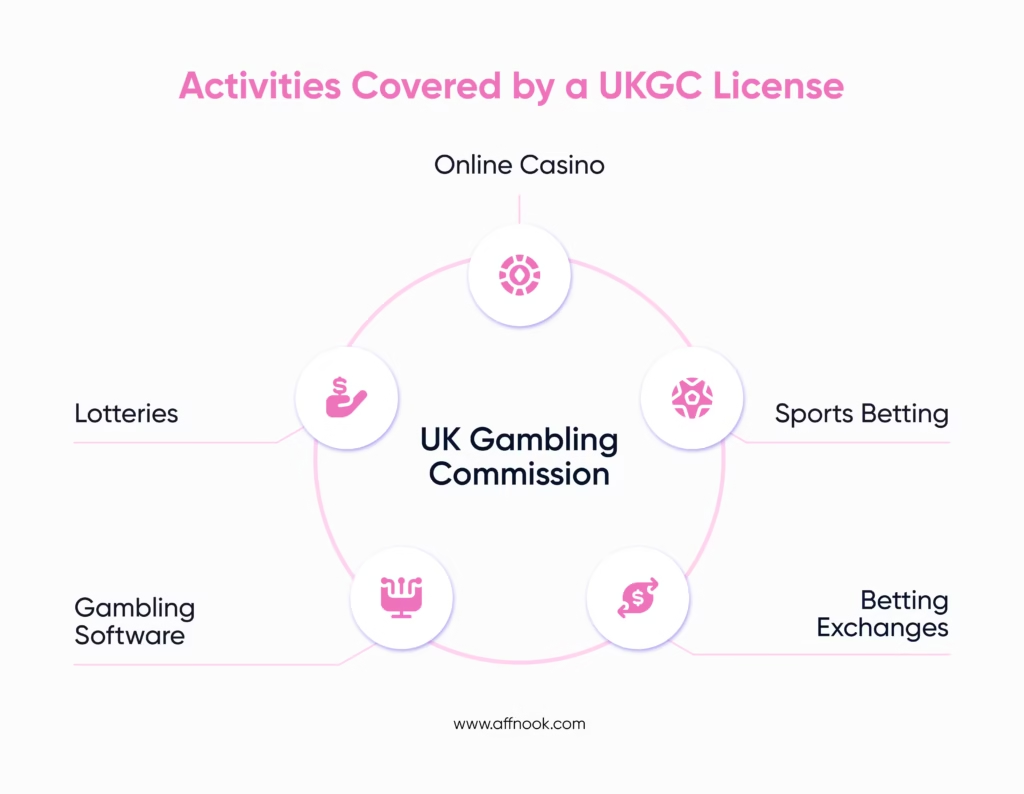
The Gambling Commission in UK is responsible for regulating all forms of commercial gambling in Great Britain, including remote gaming and betting, casinos, lotteries, and the distribution of iGaming software.
A license issued by the UK Gambling Commission is required for any iGaming operator that offers gambling services to customers located in the UK, regardless of whether the operator is physically located in the UK or outside it.
In general, a UK Gambling Commission License covers the following: remote gaming and betting operations; casino products based on random number generators (RNG); betting exchanges and sportsbook operations; and providing gambling-related software.
However, the primary role of the UKGC is much broader than simply approving an online gambling business license. It is designed to ensure operations are conducted in accordance with:
- consumer protection laws
- crime prevention (AML) laws
- fairness and transparency laws
- enforcement of responsible gambling practices
Types of UK Gambling licenses
The UK Gambling Commission (UKGC) issues different types of gambling licenses depending on how and where gambling services are delivered.
For an iGaming operator who is planning to launch digital gaming products, they need to have an online casino license UK.
All businesses that plan to offer slot games, table games, or live dealer games must acquire an appropriate online casino license UK prior to accepting players from Great Britain.
These can also be classified as remote, non-remote, and ancillary licenses, with most companies requiring multiple licenses depending on their specific business model as per their respective product lines.
1. Remote licenses
Remote licenses cover all forms of online gambling, and the Gambling License in UK is the most important license for iGaming companies.
It includes:
- Remote casino License (Casinoplatinum)
- Remote licensing (Sports, Event)
- Remote Bingo License (Bingo Masters)
- Remote intermediary licensing (e.g., managing a betting exchange)
- Remote lottery License (live)
2. Non-remote licenses
You can apply for a non-live gambling License for your own private gambling operation, including:
- Casino premises licenses
- Retail betting shop licenses
- Bingo Hall licenses
- Gaming machine operation licenses
3. Ancillary or gambling equipment and technology licensing
B2B gaming tech service providers, including software vendors and web hosting companies, are issued ancillary licenses. Companies that hold these licenses can legally provide iGaming software and physical hardware to companies based in the UK.
Ancillary licenses include:
- Gambling technology supplier license
- Hosting infrastructure license
- Gaming machine technical license
Fee for Gambling License in UK
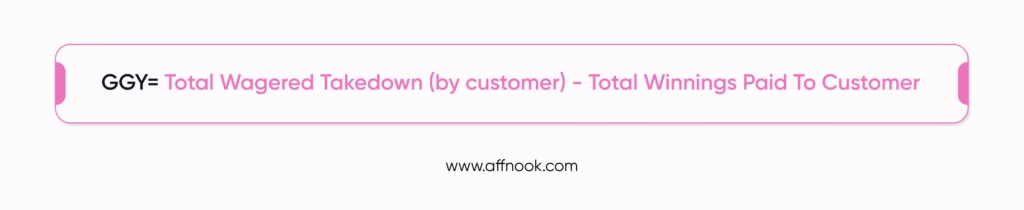
The total cost of getting a gambling license in UK depends on many factors, including projected gross gambling yield, product types, etc.
All fees imposed by the Gambling Commission are based on each operator’s gross gaming revenue – that is, the total amount of money placed on wager by customers or clients minus the total amount of money returned to the customers or clients in terms of winnings.
Upfront application fees
There is an up-front application fee, which is paid to the regulator when submitting an application.
This fee is non-refundable and must be paid in full before an application is reviewed; this typically takes approximately 16 weeks. The application fee is based on the operator’s predicted GGY:
- Small start-ups – Operators with an annual Gross Gambling Yield (GGY) of less than £550,000 pay an application fee of £4,224. Businesses with a GGY between £550,000 and £5.5 million pay £10,323.
- Medium-sized – Businesses with a GGY between £5.5 million and £100 million pay application fees ranging from £16,235 to £23,834, depending on their revenue band.
- Large operators – Operators generating £100 million or more in annual GGY face application fees ranging from £38,363 to £91,686. The highest application fee of £91,686 applies to operators with a GGY of £550 million or more.
Recurring fee for annual maintenance
You have to pay recurring regulatory maintenance costs once the license has been granted. The first annual maintenance fee is due within 1 month of the License being issued, and then every 12 months thereafter.
- Medium-sized Gambling Operators – The Annual Licence (Maintenance) Fee for Operators that generate from £5.5 million to £100 million in Goods Gambling Yield (GGY) annually is £20,626- £55,089, depending on their total earnings.
- Large Gambling Operators – There is a large increase in the Annual Licence Fee as an Operator’s GGY increases; those that generate an annual GGY between £100 million and £550 million are assessed an annual licence fee ranging from £105,626 to £211,505; those that generate GGY of £550 Million to £1 Billion are assessed an Annual Fee of £599,979; and those that generate over £1 Billion of GGY are assessed an annual fee of £793,729, with an additional fee of £125,000 per yearly increase for the first 1 billion GGY in GGY.
Regulatory taxes and costs
Operators must consider tax and regulatory expenses (in addition to their application permits and yearly fees to operate) when positioning themselves to do business in the UK.
For remote gaming duty (RGD), you will be charged a flat tax of 21% on your remote gaming products (online casino games, slots, etc.) at the point of consumption (P.O.C.) for customers in the UK.
Requirements for a Gambling License in UK: corporate approval and operational standards
Meeting UK gambling license requirements involves more than submitting an application; you will need to show that you are financially stable as well as ready to operate at the time of your application.
In addition, all operators must also show that they are committed to responsible gambling standards, principles, and a clear corporate commitment to mitigating gambling addiction.
1. Transparency in the corporate structure and ownership
All corporate business structures should be fully disclosed to the UKGC, such as every ownership up to the ultimate beneficial owners (UBOs) and shareholders who have more than 10% shares.
It is important that UBO’s and qualifying shareholders complete identity verification, source-of-wealth checks, and disclosure of any supporting documentation.
2. Personal management licenses (PMLs)
For each senior position (e.g., compliance, finance, operations, etc.), there is a requirement that an individual in that role hold a PML.
The purpose of having a PML is to ensure that there is senior management accountability for how the organization carries out its business operations.
To apply for a PML, an applicant must pay a non-refundable fee of £370, which provides a minimum level of administrative accountability within the organization.
3. Sufficient financial resources and protection of player funds
Operators must provide audited financial forecasts, business plans, and updated bank statements for their operation.
They also must define the ways in which they will protect player funds using segregation (e.g., either basic separation or by using high-trust methods that will fully protect the value of player balances.
All operators will have to keep updated records of all of their operational and customer transactions.
4. Operational blueprint
All operators will be bound by the License conditions and codes of practice (LCCP). This means all operators will follow AML processes, KYC requirements, customer due diligence (CDD), and ongoing monitoring of their operators to be able to verify compliance at all times.
Operators will typically use automated identity verification and risk screening, as well as screening of sanctions and PEP lists, and have systems to identify financial risk.
Many operators carry out regular internal audits to determine if they are still complying and to identify any possible gaps in their ability to meet UK gambling license requirements.
What is required for the UKGC regulation of affiliate operating activity
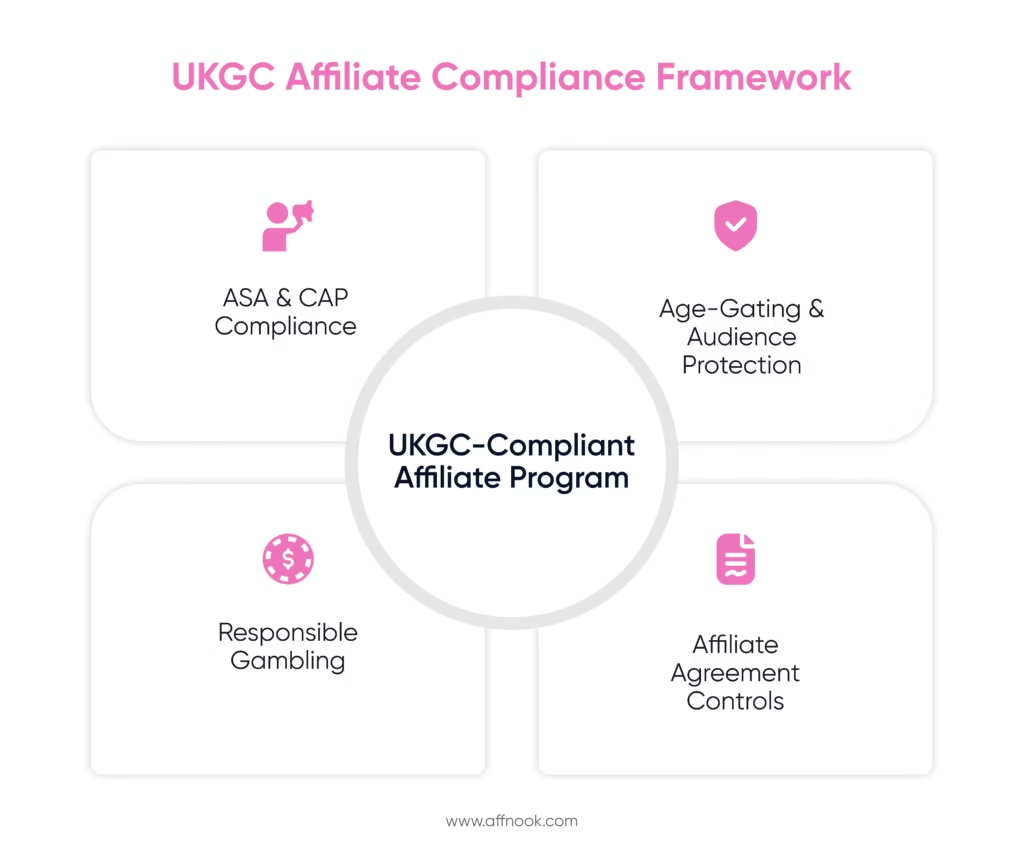
The UKGC views affiliates as an extension of your company’s marketing team; hence, any compliance guidelines created internally must be mirrored externally across all affiliate partners.
To reduce the risk of incurring significant amounts of regulatory fines or facing regulatory suspension proceedings, the operator must review four primary areas where iGaming affiliates operate in compliance with the regulations.
I. ASA compliance and CAP code regulations
All affiliate advertising must comply with both ASA and CAP codes. The UKGC has zero tolerance towards the practice of concealing terms and conditions when promoting bonuses, free spins, and sign-up incentives.
All material conditions, i.e., wagering requirements, minimum deposits, and restrictions on the use of certain games, must be stated prominently within the marketing materials and be accessible to the user in one click’s time from the promotion being viewed. The general terms and conditions text does not satisfy the legal requirement under these codes.
Additionally, all references to gambling should be presented in an ethical manner; gambling cannot be portrayed as a means of financial investment or as a means of solving debt issues or providing an alternative source of income from gambling.
The ASA has said that only 57% of influencer advertisements on Instagram and TikTok comply with advertising regulations regarding disclosure, whereas 34% lack any form of disclosure whatsoever. In addition, more than half of the influencer advertisements within the fashion category, as well as the travel category, have either been or have not been adequately disclosed.
II. Age-gating, audience verification, and the “under-25” rule
To keep minors safe, all affiliate marketing by operators must comply with strict demographic protections as laid out by the UKGC. 80% of gambling-related affiliates are still not compliant with the regulations from the UKGC regarding age verification.
To help prevent users without a verified age from viewing the ads, affiliates running paid media or social campaigns must filter users by age, ensuring those under the age of 18 are completely excluded from receiving any advertisements.
Each affiliate site landing page, affiliate review site, or social media bio must have an “18+” prominently displayed along with an extremely clear indication of the warning for underage users.
To prevent any affiliate marketing materials from appealing to minors, all content creators (models or influencers or etc.) used in any affiliate marketing materials must either be at least 25 years of age or look less than 25 years of age.
III. Messaging for responsible gambling and isolation of landing pages
Clear responsible gambling messages must be provided by affiliates next to active links to all independent support services related to gambling, such as BeGambleAware.org, Gam Stop (the National Self-Exclusion Scheme), and the National Gambling Helpline.
In fact, in the UK, 1% of adults have self-excluded from licensed gambling websites, and the structure of the website of the affiliate must maintain a strict separation between:
- Commercial pages, which may contain reviews of gambling websites, comparisons of websites, and clickable links that generate revenue for an affiliate on a commission basis.
- An official “responsible gambling” page, which must remain completely clean with no trackable links and must not contain any marketing pixels or promotional CTAs. The “responsible gambling” page shall serve as an unbiased source of information for consumers to promote a safe gaming environment.
IV. Affiliate agreement’s legal framework
The UKGC’s succession planning regulations enhance affiliates’ marketing standards through the affiliate agreement in such a way that the operator has sufficient legal authority to challenge marketing practices that violate the UKGC’s succession planning regulations.
The affiliate only has to comply with the following five provisions in the affiliate contract:
- Regulatory compliance obligations: Accurately outline the UKGC’s regulations, the ASA’s guidelines, and the CAP Code to which the affiliate must adhere with all forms of promotion and affiliate marketing.
- Creative pre-approval: Prior to going live, the affiliate cannot use any creative material primarily belonging to the operator unless they have obtained written approval from the operator. This includes any custom reviews of operator landing pages, bonus code copies, or other creatives.
- Audit and monitoring rights: The operator has unlimited access to the affiliate’s historical (and real-time) site structure for verification of its compliance with the UKGC’s succession planning regulations (including crawlers) and assessment of the affiliate’s performance overall.
- Immediate content removal: Operator’s legal right to demand removal or modification of non-compliant content within 24-48 hours of receipt of the operator’s notice of non-compliance.
- Suspension and termination of agreement: Provides for operator-imposed penalties as a result of the affiliate breaching the affiliate agreement, such as:
- (i) immediate suspension from receiving traffic,
- (ii) withholding of commission for minor violations, and
- (iii) immediate termination of the affiliate agreement due to serious rule violations (e.g., players who self-exclude or are underage).
Building a scalable affiliate compliance framework
As an iGaming program grows from only a few partners to many more, it becomes almost impossible to continue performing manual compliance checks for affiliates.
Operators require specialized iGaming affiliate software to create a defined process to track each of the affiliates to ensure compliance with the strict requirements set forth by the UK Gambling Commission (UKGC).
Creating a strong compliance framework includes managing and documenting the following six pillars of compliance for affiliates:
1. Standardized partner onboarding: Complete background research prior to allowing affiliate partners to launch. Since 74% of online gaming operators utilize affiliate marketing as their primary source of new customers, it is critical that partners are thoroughly verified from day one.
2. Well-defined policies: Documented policies that define acceptable methods of marketing, what language cannot be used, and what the local or online gambling laws regarding marketing allow.
3. Creative approvals: There should be a mandatory compliance process for any modified banners and creative materials.
4. Continuous monitoring: Regular audit and compliance checks for all active affiliate websites and landing pages. The number of programs using AI-assisted tools for managing their affiliates has grown exponentially, changing the overall economics of mid-sized operators across all types of industries.
5. Centralized documentation: There must be a singular place to document any past compliance issues and what was done to resolve them.
6. Enforcement procedures: Compliance breaches must have defined escalation processes for management and termination of contracts.
In the end, regulators not only want to see written policy, but they also need proof that an operator is actively governed. This change puts pressure on operators to move from fragmented spreadsheets to centralized and dedicated affiliate management software.
Affnook solves this issue by integrating onboarding, tracking, and governance into one platform, providing the operator with centralized functionalities that enable them to maintain the UKGC’s audit-ready transparency while providing scalability for future growth.
Building the compliance ecosystem: monitoring and audit trails
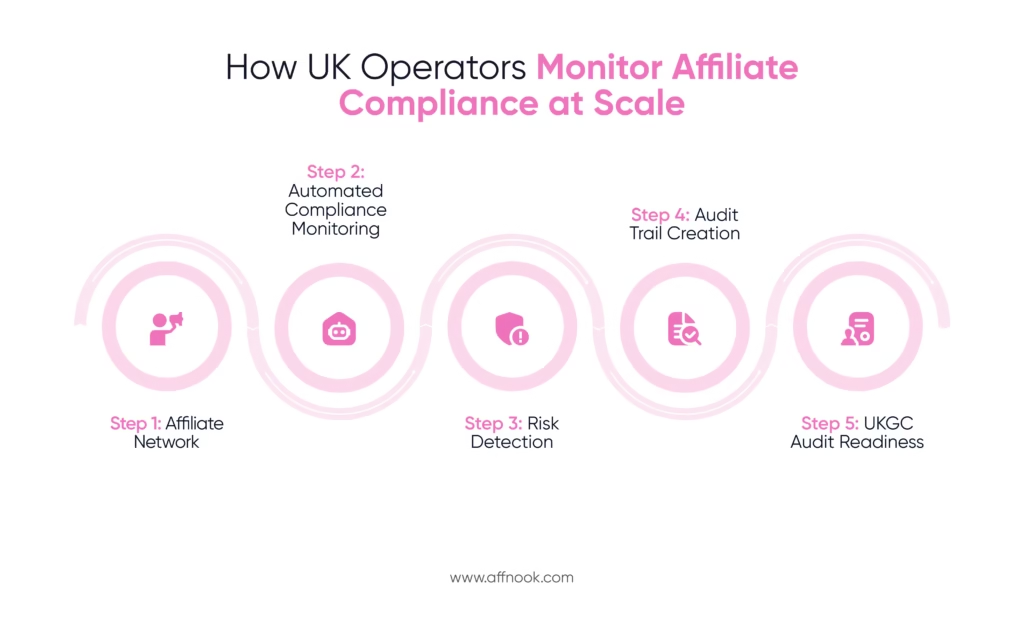
Operators must have continuous insight into the activity of their affiliates, even when there are defined frameworks for compliance.
Capable of managing affiliates at scale through manual review for compliance issues, but will not successfully identify all compliance issues across an extensive network of affiliates.
In Great Britain, the use of automated compliance monitoring tools is providing operators with continual monitoring of the online universe focused on affiliate brand activity that includes the use of unique identifiers for tracking purposes.
These compliance tools employ continuous crawling technology to identify potential compliance risks, such as:
- Outdated or misleading promotions
- Failure to include 18+ responsible gaming messaging
- Failure to include safer gambling statements
- Non-compliant gambling landing pages or engagement in non-compliant keyword context
Upon detecting any potential compliance violations, compliance tools will log the detected item into an automated compliance iGaming affiliate management system until the issue is resolved.
Information captured by the automated compliance system can include: timestamp, source, type of violation, and status of the resolution.
An operator can, at any time, show evidence of their proactive compliance program with regard to audits by the UKGC, evidenced by properly maintained audit logs that can assist in the decision of how serious a compliance breach occurred with respect to an affiliate.
Summary
When acquiring a gambling license in UK, operators will have the ability to receive entry into one of the world’s most reliable regulated gaming jurisdictions. Nevertheless, staying compliant needs constant adherence to UK gambling license requirements, good governance of affiliates, and proper operational controls.
In all cases of both online casinos in UK and some other remote gaming licensing, compliance must be treated as an ongoing strategic focus, instead of a regulatory requirement that you perform only once.
By treating the affiliate network as an integral, natural extension of the internal corporate compliance team, through well-defined contracts, proactive automated monitoring systems, and an unwavering commitment to safer gambling policies, operators will be able to both protect their licensing, create a secure environment for consumers, and create a high-value acquisition channel in one of the world’s leading regulated marketplaces.
To explore how structured affiliate governance and compliance visibility can be operationalized at scale, book a free demo and see how modern operators are managing affiliate ecosystems with greater control and transparency.
Help Centre
1. Can UK gambling license operate in Germany?
A UK Gambling Commission (UKGC) licence only permits operators to offer gambling services to customers in Great Britain. It does not automatically authorize operations in Germany. Operators must get a separate German licence under Germany’s Interstate Gambling Treaty to legally operate in the German market.
2. Is gambling legal in the UK?
Yes, gambling is legal in the UK and regulated by the UK Gambling Commission. Operators must hold a valid UKGC licence and comply with strict rules on consumer protection, advertising standards, AML controls, and responsible gambling practices to legally offer services in the market.
3. Why are audit trails important for UKGC compliance?
Audit trails provide documented evidence of how compliance issues are identified, investigated, and resolved. Maintaining detailed records of affiliate monitoring activities, violations, and corrective actions helps operators demonstrate proactive compliance management during regulatory reviews or investigations.
4. What is the UKGC’s Under-25 Rule?
The UKGC and advertising guidance require gambling marketing materials to avoid featuring individuals who are under 25 or who appear to be under 25. The objective is to reduce gambling advertising appealing to children and young adults.
5. Are operators responsible for affiliate marketing compliance?
Yes. The UKGC considers affiliates an extension of an operator’s marketing function. Operators remain responsible for ensuring affiliate promotions comply with UKGC regulations, ASA advertising standards, and CAP Code requirements, even when content is created and published by third-party partners.