An app install used to be a win.
In iGaming today, it means almost nothing.
You can drive thousands of installs in a day, celebrate low CPIs, and still end the month with negative ROI. Why? Because app marketing for iGaming is not about volume, it is about value.
Unlike gaming, fintech, or eCommerce apps, iGaming apps operate in a high-risk, high-reward environment. Marketing budgets are large, regulations are strict, and player value varies wildly. That is why iGaming marketers obsess over outcomes, not surface-level metrics.
And if we talk about market growth, it is projected to reach $781.70 billion by 2029, with a 7.25% CAGR, fueled by 237+ billion downloads.
In this blog, you will learn how iGaming marketers measure real outcomes in app marketing using Mobile Measurement Partners (MMPs). You will understand how campaigns are tied to deposits, wagering activity, retention, and lifetime value instead of being judged only by installs.
Whether you work in growth, user acquisition, or performance marketing, this guide will help you rethink how success is measured in iGaming app marketing.
What Measuring Outcomes Really Means in App Marketing for iGaming
In traditional app marketing, outcomes often stop at installs or basic engagement. But in iGaming, outcomes extend across the entire player lifecycle.
Measuring outcomes means tracking:
- Who installs the app
- Who registers
- Who deposits
- Who wagers
- Who stays active
- Who generates long-term revenue
The goal is simple: identify which campaigns, channels, and partners deliver profitable players, not just traffic.
The iGaming App Marketing Funnel
Before diving into metrics and dashboards, it is important to understand how value flows through the iGaming app funnel.
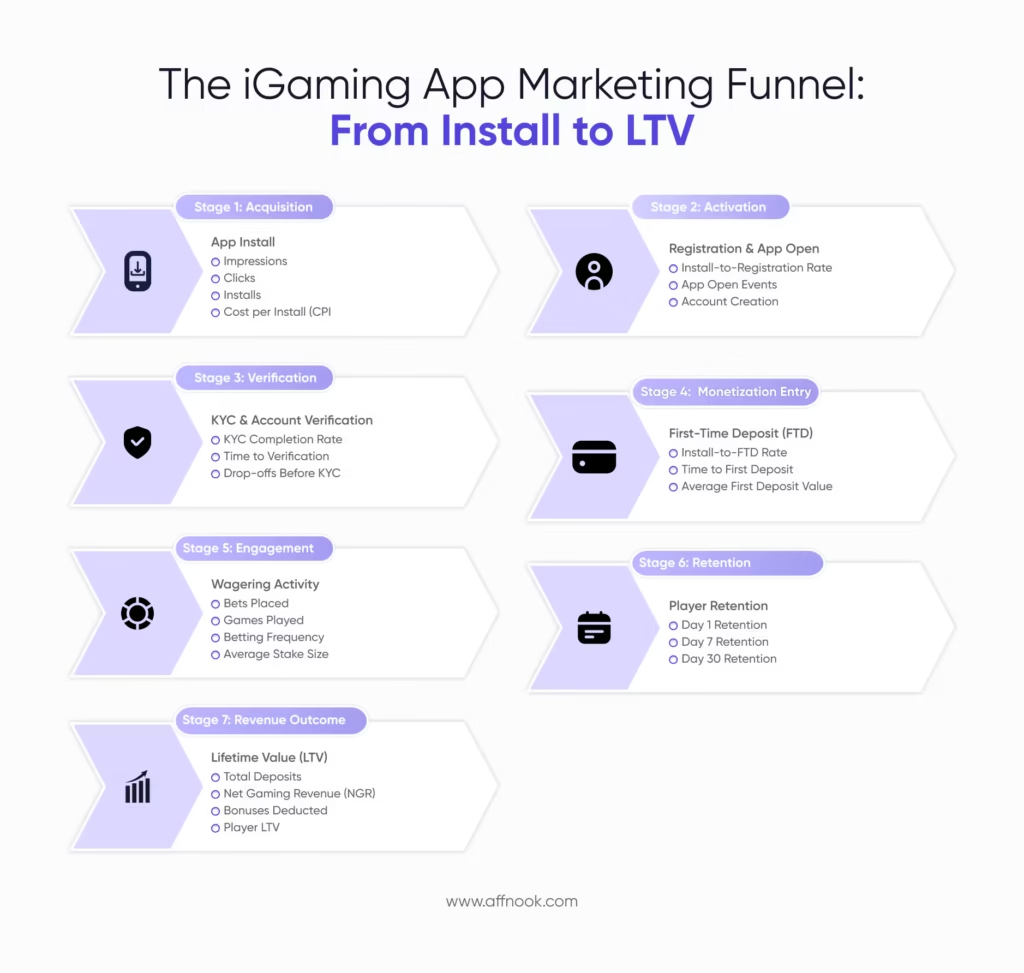
An iGaming player journey does not end at an install. It moves through a series of critical stages, each shaping revenue potential:
- Ad impression
- App install
- Registration
- First-time deposit (FTD)
- Wagering activity
- Retention
- Lifetime value (LTV)
At every step, a portion of users drops off. Some never register, some register but never deposit, and others deposit once and disappear.
This is why measuring outcomes in app marketing for iGaming is about identifying where value is created and where it leaks. The brands that win are not the ones that attract the most installs, but the ones that understand which stages convert attention into deposits, wagers, and long-term revenue.
Role of Mobile Measurement Partners (MMPs) in iGaming
Mobile Measurement Partners (MMPs) play a central role in measuring outcomes in iGaming app marketing.
MMPs function as the single source of truth for mobile performance, bridging the gap between ad networks, iGaming affiliates, app stores, and internal data systems. In an ecosystem where traffic comes from multiple paid, organic, and partner-driven sources, MMPs ensure that every install and post-install action is attributed accurately.
Their role goes far beyond counting installs. MMPs help iGaming marketers understand which campaigns actually drive revenue, not just traffic.
At a practical level, MMPs are responsible for:
- Accurately attributing installs to the correct ad network, affiliate, or campaign
- Tracking critical post-install events such as registration, deposits, and wagering activity
- Detecting and blocking fraudulent traffic before it distorts performance data
- Sending clean, validated data into CRM, analytics, and finance systems for deeper analysis
This view shows how marketing spend turns into player actions and revenue.
Without an MMP, iGaming app marketing quickly becomes messy. It becomes hard to know where installs come from, fake traffic slips through, and decisions are made using partial or inaccurate data.
As marketing budgets grow and more channels are added, it becomes almost impossible to track real results without a reliable MMP in place.
Core Metrics That Define Outcomes in App Marketing for iGaming
In app marketing for iGaming, performance is not measured by a single metric. True success is defined by how users progress through the funnel and how much value they generate over time. Each metric plays a specific role in evaluating campaign quality and profitability.
1. Installs
Installs remain an important reference point, but they are diagnostic rather than decisive.
iGaming marketers analyze installs to understand:
- Install volume by channel and campaign
- Cost per install (CPI)
- Geographic and device-level distribution
These insights help validate reach, targeting, and technical delivery. However, installs alone reveal nothing about player intent or revenue potential. A high install count with poor downstream performance often signals low-quality or incentivized traffic.
2. Post-Install Events That Matter
Post-install events mark the point where outcome measurement truly begins.
Key post-install events tracked in app marketing for iGaming include:
- App opens
- Registration completion
- KYC verification
- Bonus claims
- First deposit
- First wager
These events show how quickly and effectively users move from install to meaningful engagement. Instead of optimizing campaigns purely for installs, iGaming marketers optimize for event depth and progression.
A campaign that drives fewer installs but stronger registration-to-deposit conversion will consistently outperform high-volume traffic that fails to convert.
3. First-Time Deposits (FTDs): The True North Metric
FTDs represent the first point at which marketing spend turns into real revenue.
Because of this, FTDs are one of the most closely monitored metrics in app marketing for iGaming. Marketers track:
- Install-to-FTD conversion rate
- Time taken from install to first deposit
- First deposit amount
- Bonus dependency and usage
MMPs make it possible to attribute every FTD back to:
- The originating campaign
- Ad creative
- Affiliate or publisher
- Geography and operating system
This level of attribution helps teams identify which sources are driving genuine paying users rather than surface-level engagement.
4. Wagering Activity and Player Engagement
A deposit alone does not guarantee profitability.
Outcome-driven app marketing for iGaming looks deeper into how players behave after depositing, tracking:
- Number of bets placed
- Betting frequency
- Game types or sports markets played
- Average stake size
This data reveals clear player patterns, such as:
- Casual or bonus-driven users
- Short-term, low-engagement players
- High-value, long-term bettors
When MMP event data is combined with backend wagering and gameplay data, marketers gain a complete and reliable view of player quality.
5. Retention Metrics That Predict Revenue
Retention is where app marketing for iGaming clearly separates high-performing campaigns from wasted spend.
Key retention metrics include:
- Day 1 retention
- Day 7 retention
- Day 30 retention
- Active days per month
Strong retention indicates that users find ongoing value in the app, leading to higher lifetime value. Poor retention often points to traffic quality issues, bonus abuse, or friction in onboarding and gameplay.
Retention analysis helps marketers refine targeting, creative strategy, and player incentives.
6. Lifetime Value (LTV): The Ultimate Outcome
LTV measures the total net revenue a player generates over time.
In iGaming, LTV includes:
- Total deposits
- Total wagers
- Net gaming revenue (NGR)
- Bonuses and incentives deducted
- Payment and operational costs
MMPs help model LTV by cohort, enabling marketers to answer one crucial question:
Is this campaign profitable after 30, 60, or 90 days?
Attribution Accuracy: Why It is Non-Negotiable
Attribution defines who receives credit for installs, deposits, and revenue. In app marketing for iGaming, where budgets are high and margins are tightly managed, inaccurate attribution quickly turns into wasted spend.
When attribution is flawed, the impact is immediate and costly. Marketers end up:
- Overpaying affiliates and traffic sources that did not drive real value
- Scaling channels that generate installs but fail to convert into paying players
- Underfunding high-performing campaigns that actually deliver long-term revenue
Mobile Measurement Partners play a critical role by enforcing consistent and transparent attribution rules across all acquisition channels.
MMPs support multiple attribution models, including:
- Last-click attribution is commonly used for simplicity and reporting consistency
- Multi-touch attribution, which accounts for multiple interactions across the user journey
- View-through attribution, where impressions influence conversions without a direct click
By applying the right attribution model, iGaming marketers gain a realistic view of how campaigns contribute at each stage of the funnel.
Accurate attribution ensures that every marketing dollar is judged against real outcomes, not assumptions. It allows teams to invest confidently, optimize at scale, and align acquisition strategy with revenue-driven performance.
SKAN and Privacy Challenges in iGaming App Marketing
Apple’s SKAdNetwork (SKAN) has fundamentally changed how outcomes are measured on iOS, placing strict limits on user-level tracking and attribution. For iGaming marketers, this shift has made outcome measurement more complex, but also more strategic.
SKAN introduces several challenges, including:
- Delayed postbacks, which slow down performance analysis and optimization
- Limited event visibility, restricting how many in-app actions can be tracked
- Aggregated conversion data, which removes user-level detail
- No individual user tracking, making granular attribution impossible
As a result, app marketing for iGaming on iOS now operates with reduced transparency. Marketers must work with:
- Fewer granular insights at the user level
- Greater dependence on probabilistic and modeled attribution
- Increased reliance on Android performance data to validate trends and assumptions
Modern MMPs help bridge this measurement gap by combining SKAN postbacks with modeled insights, statistical analysis, and cohort-level performance tracking. While SKAN limits precision, it does not eliminate accountability. With the right MMP setup, iGaming teams can still evaluate campaign effectiveness, forecast revenue, and make informed scaling decisions within a privacy-first framework.
Fraud Detection: Protecting Outcomes From Fake Traffic
Fraud remains one of the biggest hidden risks in app marketing for iGaming. Because acquisition budgets are high and payouts are often tied to events like installs, registrations, or deposits, iGaming apps are a prime target for sophisticated fraud schemes.
Common fraud types faced by iGaming marketers include:
- Click flooding, where fake clicks steal attribution from genuine sources
- Install hijacking, in which fraudulent actors claim credit at the last moment
- Emulator farms, generating non-human installs at scale
- Incentivized traffic, which inflates installs without delivering real player value
Left unchecked, this activity distorts performance data and causes marketers to optimize toward traffic that never produces revenue.
This is where Mobile Measurement Partners play a critical role. MMPs protect outcome measurement by:
- Flagging abnormal install-to-event time patterns
- Identifying device, IP, and behavioral anomalies
- Blocking or blacklisting suspicious publishers and affiliates
- Providing real-time fraud alerts before budgets are wasted
Platforms like Affnook strengthen this protection by combining attribution intelligence with advanced fraud detection and traffic quality monitoring. By analyzing event consistency, source behavior, and conversion patterns, Affnook helps iGaming teams identify low-quality or manipulated traffic early, before it impacts deposits, wagering activity, or retention metrics.
Without effective fraud detection, outcome metrics become unreliable. Campaigns appear to perform well on the surface, while revenue tells a very different story. Strong fraud prevention ensures that app marketing for iGaming is optimized around real players, real engagement, and real revenue, not artificial performance.
Connecting MMP Data to Revenue Systems
Outcome measurement does not stop at the MMP dashboard.
Advanced iGaming teams connect MMP data with:
- CRM platforms
- Payment systems
- Game provider data
- BI tools
This allows marketers to:
- Match campaigns to net revenue
- Track cohort profitability
- Forecast LTV accurately
- Adjust spend dynamically
This is where app marketing for iGaming becomes a revenue science, not just media buying.
Why Measuring Outcomes Defines Winning iGaming Brands
In app marketing for iGaming, traffic alone does not determine success. Measurement maturity does.
High-performing iGaming brands do not judge campaigns by how many users install an app. They judge them by how many users deposit, stay active, and generate long-term value.
When outcome measurement is done right, brands gain the ability to:
Scale with confidence
Budgets grow alongside profitability, not guesswork.
Eliminate wasted spend
Low-quality and fraudulent traffic is identified early and removed.
Attract higher-value players
Acquisition strategies shift toward users who deposit, wager, and return.
Stay resilient in a privacy-first world
Teams adapt faster to regulatory changes and evolving attribution limits.
Brands that ignore outcome measurement follow a different path. They chase install volume, optimize for surface-level metrics, and trust dashboards that do not reflect real revenue. Over time, performance weakens, costs rise, and growth becomes unsustainable.
In iGaming, the strongest brands treat outcome measurement as a competitive advantage, aligning every marketing decision with revenue, retention, and long-term growth.
Conclusion
App marketing for iGaming is no longer about driving installs at scale. It is about measuring what truly matters.
From post-install events and first-time deposits to retention and lifetime value, outcome-driven measurement helps marketers understand which campaigns generate real revenue. Mobile Measurement Partners play a critical role by ensuring accurate attribution, fraud protection, and reliable performance insights, even as privacy frameworks like SKAN reshape the data landscape.
iGaming brands that focus on outcomes, not vanity metrics, are better positioned to scale profitably, attract higher-value players, and adapt to ongoing regulatory and privacy changes. In today’s competitive market, measuring outcomes is not just a best practice; it is a requirement for sustainable growth.
Help Centre
What is app marketing for iGaming?
App marketing for iGaming focuses on acquiring, engaging, and retaining players through mobile apps while measuring real outcomes like deposits, wagering activity, retention, and lifetime value.
Why are installs not enough in app marketing for iGaming?
Installs only show reach. In app marketing for iGaming, success depends on post-install outcomes such as first-time deposits, player engagement, and long-term revenue.
How do MMPs help in app marketing for iGaming?
MMPs provide accurate attribution, track post-install events, detect fraud, and connect marketing spend to revenue, making outcome-based optimization possible.
How does SKAN impact app marketing for iGaming?
SKAN limits user-level data on iOS, forcing iGaming marketers to rely on aggregated insights, modeled attribution, and cohort-level performance analysis.
What metrics matter most in app marketing for iGaming?
Key metrics include first-time deposits (FTDs), wagering activity, retention rates, and lifetime value (LTV), as these directly reflect player quality and profitability.