Live streaming has become one of the fastest-growing channels in iGaming marketing, with global interest in iGaming increasing 8x between 2023 and 2026.
Twitch alone now has over 240 million monthly active users, making Twitch marketing a dominant strategy for gambling-related creator partnerships, community building, and real-time audience engagement.
In Twitch’s latest policy changes, they have enforced strict gambling-related content/promotions such as casino sponsorships, affiliate links, and unlicensed gambling streams. For iGaming brands, growth is no longer just about visibility; it is about staying compliant while managing affiliates, streamers, campaigns, and partnerships at scale.
iGaming marketing software becomes essential for tracking partnerships, monitoring traffic quality, preventing fraud, automating reporting, and scaling compliant campaigns efficiently across platforms like Twitch and Kick.
Why Twitch Matters for iGaming Marketing
Twitch has become one of the most important platforms for influencer marketing in iGaming because it combines live entertainment, creator influence, and highly engaged gaming communities in one platform.
Unlike traditional advertising, a well-executed Twitch marketing strategy provides an opportunity for brands that operate in the gambling and betting industry to engage with their audiences in real-time via livestreams, chat, giveaways, and creator-driven content.
The platform’s audience is incredibly sticky, with viewers consuming more than 20.8 billion hours of live content annually, with a high percentage of users within the 18-34 age group, which shows a key demographic for many betting and casino operators.
Furthermore, Twitch users spend much more time on average watching content than do users of traditional social media, making it one of the best platforms for implementing user acquisition strategies.
For iGaming brands, building a structured approach to influencer marketing on twitch, it provides an ideal environment for:
- Sponsoring creators
- Discussing sportsbooks
- Livestreaming casino games
- Providing content for esports betting
- Running affiliate campaigns
The partnerships between brands such as Stake and Roobet with popular streamers (e.g., xQc and Trainwreckstv) during the gambling-streaming craze resulted in substantial visibility for their brand and player acquisition at scale.
Twitch Marketing Models for iGaming Brands
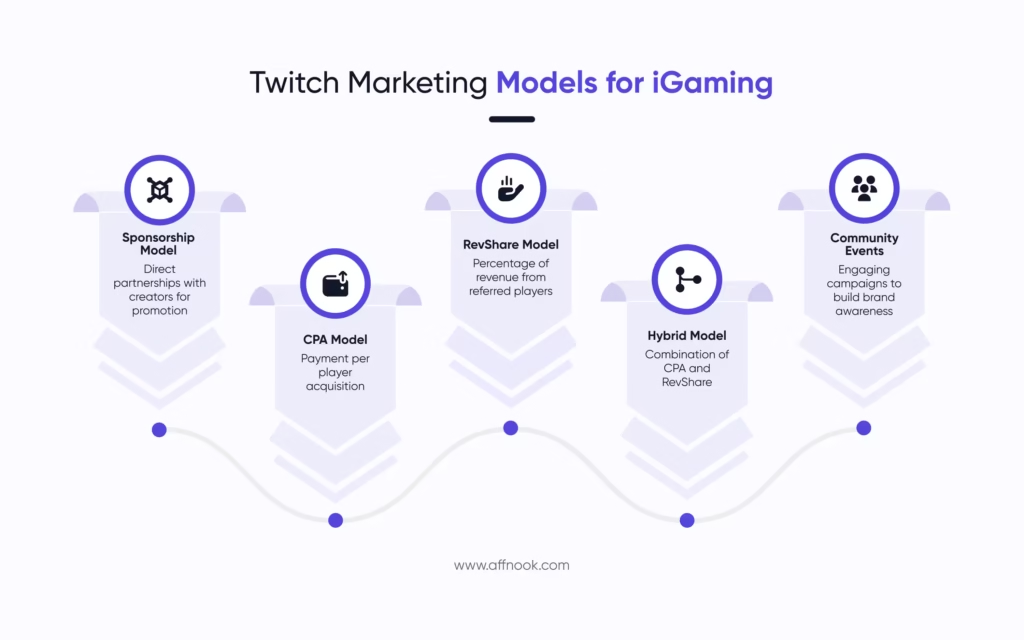
Marketing on Twitch is done via many different advertising methods, as Twitch marketing is not a one-size-fits-all solution.
Operators use multiple partnerships and monetization depending on their objectives, target geographic markets, compliance requirements, and cost to acquire customers.
Through time, the creator-led marketing on Twitch has transformed into a performance-based industry that mirrors the traditional online gambling affiliate marketing structure, broken down into five core models:
1. Sponsorship Model
This is the most common method used by iGaming brands to scale their Twitch marketing footprint. Operators enter into direct partnerships with creators to promote sportsbooks, casinos, or betting platforms by using sponsored streams. Typically, this method of advertising includes:
- Branded stream overlays
- Promo codes
- Affiliate links
- Live betting sessions
- Sponsored casino streams
Two of the most notable brands that utilized this method heavily during the rise of gambling streams on Twitch were Stake and Roobet, by partnering with such creators as xQc and Trainwreckstv. These sponsorships provided iGaming brands with high exposure to their target audience.
2. Cost Per Acquisition (CPA) Model
In the CPA model, streamers or affiliates are paid a fixed amount when each player completes a designated step defined by their account sign-up, and normally only a first-time deposit (FTD).
This performance-based approach is highly favored in modern Twitch affiliate marketing setups due to its measurable ROI. iGaming CPA rates can be in the range of €30 to €250+, depending on geographic location and the quality of traffic referred by an affiliate.
The CPA models used by Twitch creators:
- Referral links
- Custom landing pages
- Creator-specific bonus codes
3. Revenue Sharing (RevShare) Model
RevShare model pays affiliates or creators a predetermined percentage of the revenue generated by the player they referred to, as long as the referred player is active on the site.
Thus, streamers/creators earn off of ‘long-term’ player value as opposed to ‘short-term’ referred player value.
Revenue share is appealing to creators and streamers who have loyal communities, as they can earn from just one referred player who registers and deposits, as long as the referred player is still actively playing on the site.
4. Hybrid Model
There are many iGaming brands that prefer a hybrid commission structure model, combining CPA and RevShare. This allows the creator to get:
- An initial payment for acquiring the player
- Ongoing payment based on player activity
The hybrid model is lower risk for both parties and is used for most influencer-led iGaming campaigns.
5. Creator or community Event-driven Campaigns
There are operators who use Twitch to run campaigns driven by their community. This includes:
1) eSports watch parties
2) Prediction contests
3) Live tournaments
4) Creator challenges
5) Giveaways, etc.
Community-based campaigns focus less on driving direct conversion (i.e., playing the game) and more on engaging with potential players, building brand awareness, and retaining their audience.
As Twitch’s marketing continues to mature, iGaming operators are transitioning from transactional sponsorships to creating long-term partnerships with creators based on trust, entertainment value, and quantifiable player acquisition.
Twitch’s Gambling Rules and Policies
As Twitch continues to prioritize the safety of its users, along with preventing gambling addiction through aggressive sponsorship practices from crypto casinos and unregulated gambling sites, the platform has gradually moved toward stricter policies regarding gambling content in subsequent years.
Currently, there is not an outright ban on all gambling, but a restriction on high-risk gambling.
1. Prohibition of Unlicensed Gambling Sites (Slots, Roulette, Dice)
One of the biggest changes made to Twitch’s policies came in 2022 when the site announced it would no longer permit streaming gambling sites that provide slots, roulette, or dice games unless the sites are licensed by a jurisdiction with a strong track record for consumer protection (e.g., the United States of America).
This reported decision was made in response to outrage arising from gambling streams and concerns about regular viewers (especially minors) being exposed to gambling behaviour that could lead to the viewer’s risk of gambling addiction.
2. Focus on “High-Risk” Gambling Games
Twitch has focused on restricting casino-style mechanics because they carry a high risk of leading to gambling addiction. These mechanics can also make it difficult for users to recognize when they are engaging in irrational gambling behavior.
This risk is further increased because casino-style games come in many different forms and styles, each with varying levels of risk. As a result, it is not possible to directly compare one type of casino gameplay with another, since each uses very different underlying mechanics and methodologies.
Types of casino styles that are classified as high-risk gambling that Twitch specifically mentioned include:
– Unregulated online gambling slots
– Virtual roulette wheels
– Dice or probable randomness games
Many sites that would come under the new ban, including various crypto gambling sites such as Stakes, Rollbit, and Duelbits, in addition to various other crypto gambling sites.
3. What is Still Allowed on Twitch
Twitch has not put a total ban on gambling. Content categories that remain compliant for Twitch marketing initiatives include:
– Fantasy sports
– Poker
These are categorized as more “regulated” and/or skill-based forms of gambling as opposed to being based on chance and randomization (such as casino games).
4. Restrictions on Promotion and Referral Activity
Twitch’s compliance rules extend far beyond the video broadcast itself, heavily restricting typical Twitch affiliate marketing tactics. For some time, you can’t do the following:
– Share a referral link to a gambling site
– Share your affiliate code for gambling sites
– Directly tell your viewers to go to a gambling site while streaming
These restrictions address the need to decrease direct monetization incentives linked to gambling exposure and increase viewer engagement.
5. Platform Responsibility and Enforcement Approach
Twitch holds the creators of the content responsible for making sure they are complying with the gambling policies. Streamers have an obligation to:
– Do not promote a restricted gambling site
– Follow licensing requirements in their jurisdictions
– Use moderation tools to minimize or prohibit your viewers’ access to harmful content in their chats during their live streams
Additionally, Twitch reserves the right to update the list of restricted gambling sites due to the expansion of gambling services that could lead to increased risk in gambling.
6. Reasons for the Restrictions
Twitch’s gambling policies have been created primarily because:
– Gambling addiction can lead to additional financial harm
– The sponsorship of streamers influences the behavior of their audiences
– Younger viewers may be exposed to environments that will lead them to gamble before they reach the legal gambling age
– There is a lot of public and creator pushback against crypto casino sites that are operating without regulations
Examples of iGaming Brands Using Twitch Successfully
With the use of Twitch, many iGaming brands are redefining live entertainment as a method for attracting and engaging customers on a large scale.
They did this by sponsoring creators, live-streaming gambling activities, creatively integrating with esports, and creating viral clips that provided iGaming operators with large amounts of exposure among gaming audiences prior to the implementation of stricter gambling guidelines by Twitch.
1. Stake
Stake became one of the most recognizable gambling brands on Twitch by partnering with major creators such as xQc, Trainwreckstv, and Adin Ross.
Rather than relying on traditional advertising methods, Stake focused its strategy on using live-streaming entertainment, where creators can engage users through live-streaming sessions in a casino, reacting to wins in real time, and providing an interactive experience through chat features and giveaways for their audience.
This approach to marketing helped Stake create a strong presence within the gaming community on live-streaming platforms.
The Stream Hatchet report indicated that Stake accounted for approximately 60% of all iGaming-related brand activity in mention of Twitch and Kick streams at the beginning of 2026.
This demonstrates that creator-generated entertainment can effectively assist gambling brands with generating brand awareness and increasing player participation in large volumes.
2. Roobet
Roobet worked with gaming and gambling content creators to create community-focused campaigns and sponsorships for their casino streaming.
Unlike traditional casino advertisements, Roobet integrated the internet culture and memes of streaming into their casino sponsorship.
This helped connect with younger gaming audiences. Roobet merchandise and sponsorships were visible among high-traffic gaming categories where content creators were regularly streaming slots and crypto casino gameplay.
Roobet’s success showed how important content creator personalities are in all forms of marketing for modern iGaming.
3. Kick and Stake Ecosystem
When Twitch updated its gambling policy in 2022, many gambling content creators moved to Kick, a streaming platform founded by the co-founders of Stake, and continue to run their streams with less regulation and better financial incentives.
Kick had an overwhelming amount of gambling iGaming content creators migrate to their platform, creating an ecosystem surrounding gambling entertainment, sports betting conversation, and casino streaming, and producing a high percentage of sponsored iGaming livestreaming content in 2025 with Kick as the host.
This trend of gaming content creators moving to platforms offering higher financial incentives and lower restrictions than their previous platform is important for the way marketing is done within the iGaming industry.
Challenges of Twitch Marketing for iGaming
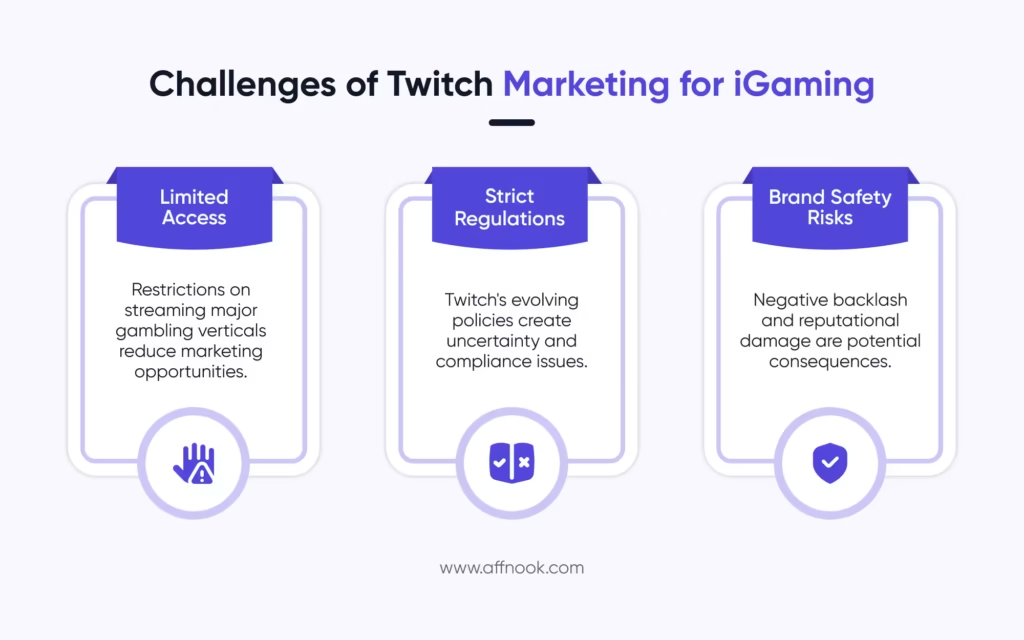
Although Twitch has the potential to provide strong engagement with users and creator-led reach for iGaming brands, running a Twitch marketing campaign is far more complex, regulated, and high-risk than traditional gambling display ads.
1. Strict and Evolving Platform Regulations
One of the primary challenges for iGaming brands is Twitch’s ever-changing gambling policy. This policy prohibits the advertising of unlicensed casinos, slots, roulette, and dice games, and prohibits links to certain operators.
As a result, many of the most popular brands have had to either cease or restructure their advertising iGaming campaigns.
Even when gambling advertisements are permitted (like sports betting or poker), they must follow strict labeling and compliance rules, including clear “Gambling” content classification.
For iGaming brands, this creates uncertainty; campaigns that work today may not be compliant tomorrow.
2. High Brand Safety and Reputation Risks
Twitch has faced significant backlash regarding gambling streaming due to addiction, financial harm, and exposure to minors.
These issues have sparked public discussions and pressure from Twitch’s community of creators, regulators, and viewers, resulting in many people calling for Twitch to restrict or prohibit gambling streams.
Because brands associated with failed campaigns may experience reputational damage if their campaigns are perceived as aggressive, misleading, or targeting vulnerable users, the potential for negative backlash exists even for the most successful campaigns.
Thus, brands need to position their gambling campaigns as entertainment-focused to avoid negative repercussions associated with it.
3. Limited Access to Major Gambling Verticals
Due to multiple factors, including tightening gambling-themed streaming policy changes by Twitch in 2022, several major crypto casinos and online gambling platforms can no longer be streamed, limiting direct marketing opportunities for brands to use Twitch for running direct advertising campaigns to their end-users.
While some forms of unique marketing still exist (e.g., sports betting, poker, and/or fantasy sports), the best potential for generating conversions as a casino in a traditional context has been significantly restricted or removed from Twitch or pushed to alternate platforms.
Conclusion
Twitch marketing is no longer just about visibility; it is about staying compliant while building long-term creator and affiliate partnerships. Brands that succeed on Twitch are the ones that:
- Understand Twitch’s gambling and sponsorship restrictions
- Work only with compliant creators and licensed platforms
- Avoid prohibited affiliate links, overlays, and promotions
- Use responsible gambling messaging and proper content labels
As Twitch continues tightening its policies around gambling content and sponsorships, operators need platforms like Affnook to manage partnerships, monitor compliance, track performance, prevent fraud, and scale campaigns efficiently.
Help Centre
1. Why are Twitch’s gambling policies important for iGaming marketers?
Twitch’s gambling rules directly affect broader Twitch influencer marketing campaigns, sponsorships, performance tracking, and brand visibility. Violating these guidelines can lead to content removal, channel suspensions, or a severely damaged brand reputation. Understanding Twitch’s restrictions helps iGaming brands create compliant campaigns while building long-term trust with viewers and creators.
2. Can streamers use affiliate links for gambling promotions?
Only for allowed gambling categories. Twitch strictly prohibits traditional Twitch affiliate marketing tactics, such as referral links, codes, banners, or promotions connected to banned, unlicensed gambling platforms. Even indirect promotion through overlays, channel bios, QR codes, or automated chat commands may trigger moderation action. Marketers should carefully review Twitch’s latest policies before launching creator partnerships.
3. Does Twitch allow sports betting and poker streams?
Yes. Twitch currently permits content focused on sports betting, fantasy sports, and poker, provided creators follow local laws, age restrictions, and community guidelines. However, brands leveraging influencer marketing on Twitch must ensure that streamers avoid misleading promotions, illegal gambling operators, or encouraging unsafe gambling behavior that could violate Twitch’s broader harmful conduct policies.
4. Which gambling websites are banned on Twitch?
Twitch currently prohibits streaming or promoting many gambling platforms, including Stake, Rollbit, Roobet, Gamdom, and similar sites featuring slots, roulette, or dice games. Sharing affiliate links, banners, referral codes, or even displaying their logos can result in account enforcement or suspension.
5. Can iGaming brands promote gambling websites on Twitch?
Yes, but with limitations. Twitch allows content related to sports betting, poker, and fantasy sports in some regions. However, promoting or streaming certain gambling websites, especially unlicensed slots, roulette, or dice platforms like Stake or Roobet, is prohibited under Twitch’s gambling policy.