In today’s time, user acquisition has become more challenging than ever before.
iGaming marketers are facing some challenges in their day-to-day activities, such as strict advertising laws, an increase in competition, and paid media becoming costly. Due to these challenges, iGaming marketers are facing issues in acquiring high-quality players while maintaining costs.
Many years ago, iGaming operators relied on paid advertising and looked for sponsorships. But today, affiliate marketing has become one of the most effective channels in the industry.
Why?
Because today’s iGaming affiliates already have the audiences according ot there niche.
Whether through casino review sites, online betting communities, content publishers, influencers, comparison portals, or streaming platforms, affiliates help operators reach highly targeted users at the exact moment they’re looking for gaming or betting opportunities.
And for many operators, affiliate marketing is not just a supporting channel. It has become a primary growth engine for them.
In this article, you will learn more about iGaming marketers, how they use affiliate marketing to acquire new players, how they choose commission models, and how they track performance.
Why Affiliate Marketing Plays an Important Role for iGaming Marketers
Affiliate marketing has become one of the most effective and reliable ways for iGaming brands to acquire users. If we talk about traditional advertising, you have to spend money and hope for better results. But affiliate marketing gives you a space in which you can spend based on your actual performance.
Affiliates only get commissions or rewards when they generate meaningful results, such as:
- New registrations
- First-time deposits
- Qualified leads
This performance-based approach helps iGaming marketers control acquisition costs while focusing on ROI.
There are several challenges that iGaming marketers face, such as restrictions on iGaming advertising policies, rising CPCs, and cookie limitations. These challenges are making player acquisition more difficult and expensive.
With the help of affiliate marketing, many of these challenges can be reduced. Instead of putting all the risk on the operator, it creates a partnership where both sides benefit from performance.
That is one of the biggest reasons why affiliate marketing has evolved from a supporting channel into a core growth strategy for modern iGaming marketers. It offers scalability, measurable results, and access to highly targeted audiences without requiring massive upfront ad spend.
What are the Benefits of Affiliate Marketing for iGaming Brands?
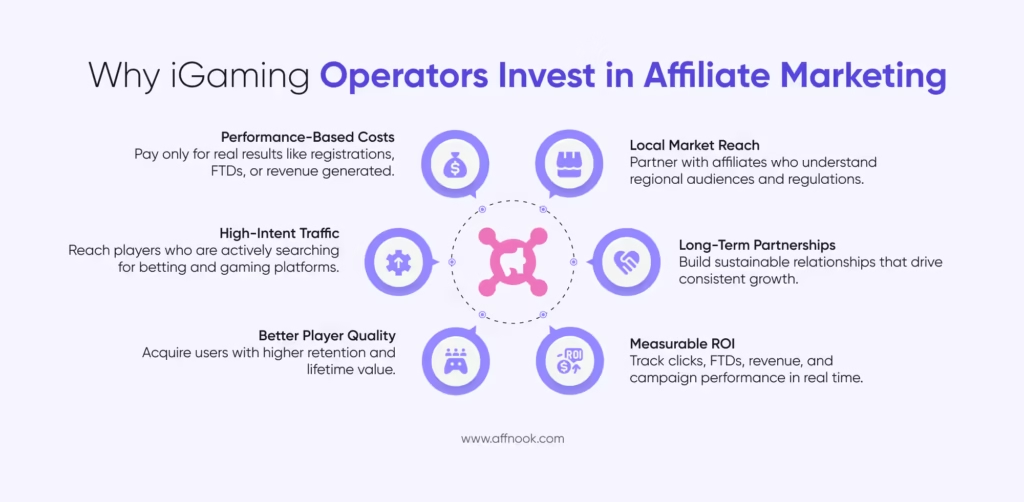
There are several benefits of affiliate marketing for iGaming brands. It helps operators improve performance, acquire quality players, and generate better results without increasing marketing costs significantly.
Here are some of the key benefits of affiliate marketing:
1. Lower Cost of Acquiring Customers
In today’s time, acquiring players through paid advertising can be expensive, especially in highly competitive markets. In affiliate marketing, operators typically pay commissions only when a specific action occurs, such as a registration, a first-time deposit, or a revenue-generating activity.
This performance-based approach helps reduce wasted ad spend and often results in a lower customer acquisition cost (CAC) compared to many traditional marketing channels.
2. Access to Niche Audiences
Affiliates often specialize in serving specific gaming communities and audience segments. Over time, they build trust and credibility with their followers by providing reviews, betting tips, game recommendations, and industry insights.
This allows operators to reach highly relevant audiences that are already interested in gaming and betting products.
Common affiliate audiences include:
- Sports bettors
- Online casino players
- Poker enthusiasts
- Esports fans
- Fantasy sports players
- High-value VIP gaming communities
Because these users are already engaged with gaming-related content, they are often more likely to convert into active players.
3. Performance-Based Spending
One of the biggest advantages of affiliate marketing is that operators pay for results rather than exposure.
Instead of spending marketing budgets on impressions, clicks, or brand awareness campaigns with uncertain outcomes, operators compensate affiliates based on predefined performance metrics such as:
- New player registrations
- First-time deposits (FTDs)
- Qualified leads
- Revenue generated
This creates a lower-risk marketing model where spending is directly tied to measurable business outcomes.
4. Faster Market Expansion
Expanding into new markets can be challenging due to differences in language, culture, player behavior, and local regulations.
Affiliate partners who already operate within a specific region can help operators enter new geographies more effectively. These iGaming affiliates understand local player preferences, popular payment methods, market trends, and content strategies that resonate with regional audiences.
As a result, operators can accelerate growth in new markets without having to build audience trust from scratch.
5. Improved Scalability
Affiliate programs can grow alongside the business. As operators recruit more high-quality affiliates, they can increase player acquisition without proportionally increasing their internal marketing resources.
This scalability makes affiliate marketing particularly attractive for iGaming brands looking to expand their reach, diversify acquisition channels, and drive long-term growth.
Let’s Understand the Affiliate Marketing Ecosystem in iGaming
Affiliate marketing in iGaming is much more than simply sending traffic to an operator’s website. It is a connected ecosystem where multiple stakeholders work together to acquire, track, and retain players.
Each participant plays a specific role in ensuring that marketing efforts generate measurable results and sustainable revenue growth.
Understanding how these stakeholders interact is essential for building a successful affiliate program
1. Operators
Operators are the businesses that provide gaming and betting products to players. Their goal is to attract new users, convert them into active players, and maximize long-term player value.
Operators typically offer products such as:
- Sports betting
- Online casinos
- Poker
- Fantasy sports
- Lottery and instant-win games
- Bingo and other gaming products
To reach new audiences efficiently, operators partner with affiliates who promote their brands across various channels.
2. Affiliates
Affiliates are marketing partners who help operators acquire new players. They create content, build communities, run campaigns, and drive targeted traffic to operator websites in exchange for a commission.
Because affiliates often have established audiences and industry expertise, they can influence player decisions and generate high-quality traffic.
Common types of affiliates include:
- Casino and sportsbook review websites
- Comparison and ranking portals
- Betting tipster communities
- Content publishers and blogs
- Social media influencers
- Live streamers and creators
- Media buying affiliates running paid campaigns
Each affiliate type reaches players differently, allowing operators to diversify their acquisition strategy.
3. Affiliate Platforms
Affiliate programs rely on technology to manage thousands of partnerships and accurately track performance.
Affiliate platforms act as the foundation of the ecosystem by helping operators automate and manage key processes.
These platforms typically handle:
- Tracking clicks, registrations, and deposits
- Attribution across multiple traffic sources
- Real-time reporting and analytics
- Affiliate onboarding and management
- Commission calculations and payouts
- Fraud detection and compliance monitoring
Without reliable tracking and reporting, operators would struggle to measure affiliate performance and reward partners fairly.
4. Players
Players are the final and most important part of the ecosystem. They are the users who interact with affiliate content, visit operator websites, create accounts, make deposits, and participate in gaming activities.
The quality of players acquired through affiliates has a direct impact on an operator’s revenue and profitability. This is why successful affiliate programs focus not only on generating traffic but also on attracting players who remain active and engaged over time
How the Ecosystem Works Together
The process is straightforward:
- An affiliate promotes an operator’s offer.
- A player clicks the affiliate link and visits the operator’s platform.
- The affiliate platform tracks the referral and attributes the action correctly.
- The player registers, deposits, or places a bet.
- The operator rewards the affiliate based on the agreed commission model.
When all stakeholders work together effectively, affiliate marketing becomes a scalable and performance-driven acquisition channel that benefits operators, affiliates, and players alike.
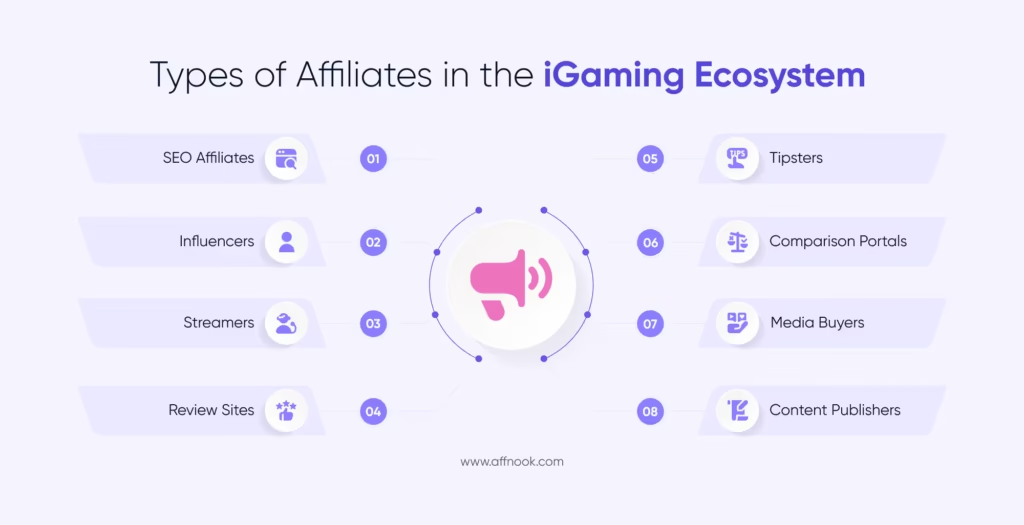
Different Types of Affiliates iGaming Marketers Should Work With
Not all affiliates deliver the same results. Some excel at driving high-intent traffic, while others are better at building brand awareness or reaching iGaming niche audiences.
The most successful iGaming marketers avoid relying on a single affiliate type. Instead, they build a diverse partner network that combines multiple traffic sources, audience segments, and promotional strategies. This approach helps reduce risk, improve player acquisition, and create more sustainable growth.
SEO Affiliates
SEO affiliates attract users through organic search traffic. They create content that ranks in search engines for keywords related to casinos, sportsbooks, betting strategies, bonuses, and gaming guides.
Common examples include:
- Casino review websites
- Sportsbook comparison portals
- Bonus and promotion directories
- Betting strategy guides
- Gaming resource websites
SEO affiliates are particularly valuable because they reach users who are actively researching gaming platforms and are often close to making a decision.
Key benefits:
- High-intent traffic
- Consistent player acquisition
- Long-term visibility in search engines
- Lower dependency on paid advertising
Content Publishers
Content publishers focus on educating and engaging audiences through informative content. Rather than promoting offers directly, they build trust by providing valuable insights, analysis, and industry updates.
Examples include:
- Industry blogs
- Sports news and analysis websites
- Gaming portals
- Betting education platforms
- Niche online publications
Because their audiences trust their expertise, content publishers can drive qualified traffic that is more likely to engage with operator brands.
Key benefits:
- Strong audience credibility
- Higher engagement levels
- Improved brand awareness
- Quality traffic from informed users
Influencer Affiliates
Influencers leverage their personal brands and communities to promote gaming and betting platforms. Their recommendations often feel more authentic than traditional advertisements, making them effective at driving engagement and player interest.
Popular channels include:
Influencer affiliates are especially effective for reaching younger audiences and creating brand visibility within gaming communities.
Key benefits:
- High audience engagement
- Increased brand exposure
- Strong community trust
- Effective promotion of new launches and campaigns
Tipster Communities
Tipsters are sports betting experts who provide predictions, betting advice, and match analysis to dedicated audiences. Their followers often rely on their recommendations when selecting sportsbooks and placing bets.
These communities can be found through:
- Premium betting groups
- Sports prediction websites
- Telegram channels
- Discord servers
- Subscription-based tipster platforms
Since their audiences are already active bettors, tipster affiliates often generate highly qualified traffic and strong conversion rates.
Key benefits:
- Access to active betting audiences
- High conversion potential
- Strong audience loyalty
- Consistent player acquisition opportunities
Media Buying Affiliates
Media buying affiliates operate more like performance marketers. Instead of relying on existing audiences, they purchase traffic and optimize campaigns to generate conversions at scale.
Common traffic sources include:
- Native advertising
- Display advertising
- Push notification campaigns
- Search advertising
- Social media advertising
These affiliates are highly data-driven and continuously optimize campaigns based on performance metrics and return on investment.
Key benefits:
- Rapid campaign scaling
- High-volume traffic generation
- Advanced optimization capabilities
- Ability to enter new markets quickly
How to Create a Successful Affiliate Program from Scratch
Launching an affiliate program is relatively easy. Building one that consistently attracts quality partners and generates long-term revenue is much harder.
Many operators assume affiliates will automatically join once a program goes live. In reality, affiliates have hundreds of programs to choose from. They evaluate commission rates, tracking capabilities, payment reliability, and overall partner experience before deciding where to invest their traffic.
That’s why successful affiliate programs are built on strong foundations. Before scaling, iGaming marketers need to focus on four key areas.
1 . Define Clear Program Goals
Before recruiting affiliates, it’s important to understand what success looks like for your business.
Are you trying to increase the number of first-time depositors? Expand into new markets? Improve revenue from existing players? Or simply boost brand awareness?
Having clear goals helps shape every aspect of your affiliate strategy, from the commission model you offer to the type of partners you recruit.
For example, if your priority is entering a new GEO, partnering with local content publishers and influencers may deliver better results than focusing solely on large review sites. Similarly, if profitability is the goal, revenue share agreements might make more sense than aggressive CPA deals.
Without clearly defined objectives, affiliate programs often become reactive instead of strategic.
2. Develop Competitive Offers That Affiliates Want
Affiliates are constantly comparing programs. A good commission rate alone isn’t enough to stand out.
Top-performing partners look for programs that are easy to work with and capable of converting traffic effectively.
A competitive affiliate offer typically includes:
- Attractive commission structures
- Reliable tracking and attribution
- Fast and transparent payments
- High-converting landing pages
- Flexible deal structures
- Dedicated affiliate support
Remember, affiliates are running businesses too. If another operator provides better support and stronger earnings potential, they’ll simply send their traffic elsewhere.
The goal isn’t necessarily to offer the highest payouts, but to create a program that delivers long-term value for both parties.
3. Simplify the Partner Onboarding Process
First impressions matter.
Nothing discourages affiliates faster than lengthy approval processes, unclear terms, or complicated setup requirements.
The easier it is for partners to get started, the faster they can begin promoting your brand.
An effective onboarding process should include:
- Quick application approvals
- Simple tracking setup
- Instant access to affiliate links
- Clearly defined commission terms
- Transparent payment schedules
- Easy access to creatives and promotional assets
Think of onboarding as the beginning of a partnership, not an administrative task. A smooth experience creates trust and encourages affiliates to become active faster.
4. Provide Marketing Resources
Even the best affiliates need support to maximize results.
Providing ready-to-use marketing materials helps partners launch campaigns faster and maintain consistent brand messaging across channels.
Some of the most valuable resources include:
- Display banners and ad creatives
- Dedicated landing pages
- Email templates
- Bonus and promotional assets
- GEO-specific creatives
- Brand guidelines
- Social media resources
Top affiliates appreciate operators who actively help them succeed. The more resources you provide, the easier it becomes for partners to drive quality traffic and generate better conversions.
At the end of the day, affiliate marketing is built on partnerships. When operators invest in their affiliates’ success, affiliates are more likely to invest their traffic, time, and audience into promoting the brand.
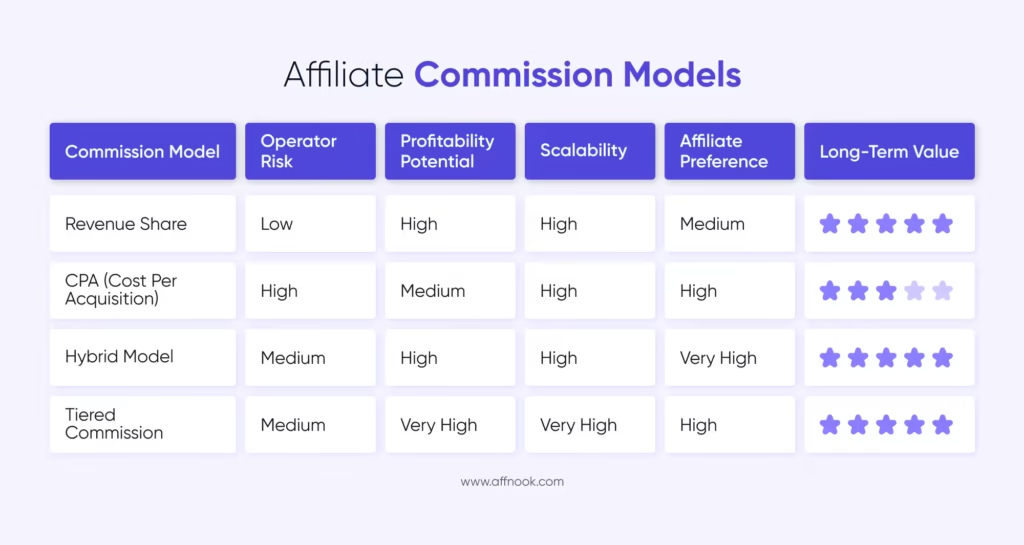
Affiliate Commission Models Every iGaming Marketer Should Know
Choosing the right commission model is one of the most important decisions when building an affiliate program.
The payout structure you offer doesn’t just affect costs. It influences the type of affiliates you attract, how motivated they are to promote your brand, and the overall profitability of your program.
There’s no universal “best” model. Different affiliates have different expectations, and many successful operators use multiple commission structures to accommodate various partner types.
Let’s look at the most common models used by iGaming marketers.
1. Revenue Share
Revenue Share is one of the oldest and most popular affiliate models in the iGaming industry.
Instead of receiving a one-time payment, affiliates earn a percentage of the net revenue generated by the players they refer. As long as those players remain active, affiliates continue earning recurring commissions.
For example, if a player generates $1,000 in Net Gaming Revenue (NGR) and the agreed commission is 30%, the affiliate earns $300.
Why Affiliates Like Revenue Share
- Opportunity to generate recurring income
- Long-term earning potential
- Incentive to send high-quality players
Why Operators Prefer Revenue Share
- Lower acquisition costs upfront
- Better alignment between operators and affiliates
- Sustainable long-term partnerships
2. CPA (Cost Per Acquisition)
Under the CPA model, affiliates receive a fixed payment whenever a player completes a predefined action, typically making their first deposit.
For example, an operator might pay $150 for every qualified first-time depositor (FTD).
Unlike Revenue Share, earnings are immediate and predictable.
Why Affiliates Like CPA
- Faster payouts
- Predictable earnings
- No dependence on player lifetime value
Why Operators Use CPA
- Easy budgeting and forecasting
- Simple performance measurement
- Faster scaling opportunities
3. Hybrid Model
The Hybrid model combines the best aspects of Revenue Share and CPA.
Affiliates receive an upfront payment for every qualified player while also earning a percentage of the revenue generated by those players over time.
For example:
- $75 CPA per FTD
- Plus 20% Revenue Share
This model creates a win-win situation. Affiliates enjoy immediate earnings while still benefiting from long-term player value.
Why Hybrid Models Are Becoming More Popular
- Balances risk between operators and affiliates
- Attracts experienced partners
- Encourages long-term collaboration
- Provides both immediate and recurring income
Many modern iGaming marketers favor hybrid deals because they create stronger relationships and align incentives for both parties.
4. Tiered Commission Structures
Not all affiliates deliver the same volume or player quality. Tiered commission structures reward top performers with higher payouts as they achieve predefined milestones.
For example:
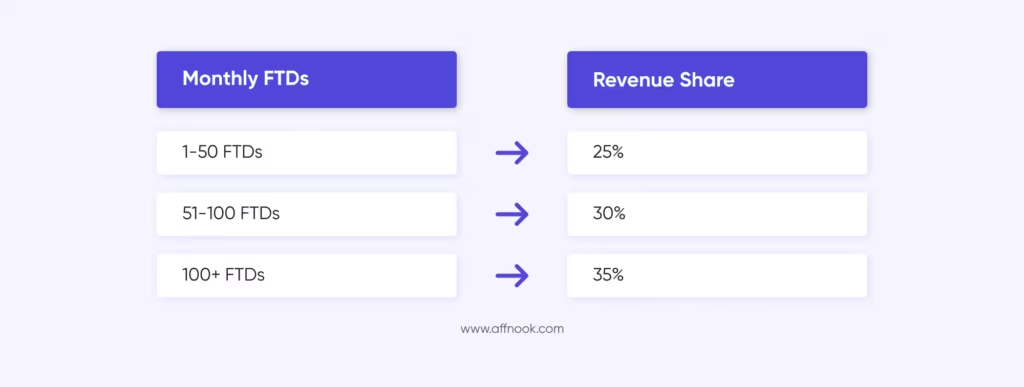
This approach encourages affiliates to scale their efforts because higher performance leads to greater rewards.
Benefits of Tiered Models
- Motivates affiliates to increase traffic volume
- Rewards high-performing partners
- Strengthens loyalty
- Creates healthy competition among affiliates
Many operators also combine tiered structures with CPA or hybrid agreements to further incentivize growth.
How iGaming Marketers Recruit High-Quality Affiliates
A successful affiliate program isn’t built by simply launching a platform and waiting for affiliates to sign up.
The best iGaming marketers actively look for partners and build relationships with them. They understand that quality affiliates can become long-term growth partners, so recruitment is an ongoing process rather than a one-time task.
Here are some of the most effective ways operators find and attract the right affiliates.
1. Attend Industry Events
Industry conferences remain one of the best places to meet affiliates face-to-face and build lasting partnerships.
Events like SiGMA Europe, iGB Affiliate London, and SBC Summit bring together operators, affiliate managers, content publishers, and media buyers from around the world.
These events provide opportunities to:
- Discover new affiliates
- Strengthen existing relationships
- Learn about market trends
- Explore partnership opportunities
In affiliate marketing, relationships matter, and networking often leads to some of the most valuable partnerships.
2. Leverage Affiliate Directories
Affiliate directories make it easier to find established partners in specific markets and niches.
Whether you’re looking for casino review sites, sports betting tipsters, or content publishers, directories can help you identify affiliates that already have access to your target audience.
Instead of recruiting blindly, you can focus on partners that align with your brand and business goals.
3. Build Referral Programs
Your existing affiliates can be one of your best sources for finding new partners.
Many operators encourage affiliates to refer to other publishers by offering referral bonuses or additional incentives.
This approach helps create a steady pipeline of new affiliates while bringing in partners that are already familiar with the industry.
Since referrals come from trusted sources, they often result in stronger and more productive relationships.
4. Use LinkedIn for Outreach
LinkedIn has become a powerful channel for affiliate recruitment.
Many affiliate managers use the platform to connect with content creators, media buyers, comparison websites, and industry professionals.
A personalized message and genuine conversation can often open the door to new partnerships.
Rather than sending generic pitches, successful iGaming marketers focus on understanding an affiliate’s audience and showing how both sides can benefit from working together.
At the end of the day, recruiting affiliates is about building relationships, not just acquiring traffic. The operators who invest time in finding the right partners often build stronger and more profitable affiliate programs over the long run.
How iGaming Marketers Track Affiliate Performance and Attribute Conversions Accurately
Affiliate marketing is built on trust, and trust starts with accurate tracking.
No matter how many affiliates you recruit or how attractive your commission plans are, your program won’t scale if you can’t track clicks, conversions, and player activity reliably.
That’s because attribution determines which affiliate deserves credit for a conversion. Without it, operators may face payment disputes, inaccurate reporting, and missed opportunities to optimize campaigns.
This is why tracking and attribution have become some of the most important components of a successful affiliate program.
Why Accurate Tracking Matters
Good tracking gives iGaming marketers complete visibility into affiliate performance. It helps teams understand where players are coming from, which partners are delivering quality traffic, and how marketing spend translates into revenue.
With accurate tracking, operators can:
- Measure clicks, registrations, and FTDs with confidence
- Identify top-performing affiliates and campaigns
- Prevent commission disputes
- Detect suspicious or fraudulent traffic
- Optimize campaigns based on real data
- Improve overall ROI
Simply put, better tracking leads to better decisions.
Understanding Different Tracking Methods
Not all tracking methods offer the same level of accuracy. As privacy regulations evolve and third-party cookies become less reliable, many operators are moving toward more advanced tracking solutions.
Pixel Tracking
Pixel tracking has been widely used in affiliate marketing for years because it’s easy to implement.
However, it has several limitations. Browser restrictions, ad blockers, and cookie policies can lead to missing conversions and inaccurate reporting.
While pixel tracking works for basic setups, it may not be sufficient for growing affiliate programs.
Server-to-Server (S2S) Tracking
Server-to-Server (S2S) tracking has become the preferred option for modern iGaming operators.
Instead of relying on browsers or cookies, conversion data is passed directly between systems, making tracking more reliable and accurate.
Benefits of S2S tracking include:
- Higher conversion accuracy
- Reduced tracking loss
- Better privacy compliance
- Improved data reliability
- More accurate commission calculations
Platforms like Affnook support server-to-server tracking, helping operators capture conversions more accurately while providing affiliates with reliable reporting they can trust.
Why Multi-Touch Attribution Matters
Player journeys are rarely simple.
A player might first discover your brand through a review website, later see a social media post, and finally convert after clicking an email campaign.
If you only use last-click attribution, you’ll miss important touchpoints that influenced the conversion.
Multi-touch attribution provides a more complete picture by analyzing how different channels and affiliates contribute throughout the player’s journey.
This helps iGaming marketers:
- Understand the true value of each channel
- Allocate budgets more effectively
- Reward affiliates fairly
- Improve campaign performance across the funnel
Centralized Reporting Makes Optimization Easier
Tracking data becomes even more valuable when it’s available in one place.
Instead of switching between spreadsheets and multiple tools, modern affiliate teams need a centralized dashboard that provides real-time insights into clicks, registrations, FTDs, conversions, and revenue.
This is where platforms like Affnook help operators simplify affiliate management. With real-time reporting, flexible attribution models, and reliable tracking capabilities, teams can monitor performance, optimize campaigns faster, and scale affiliate partnerships with confidence.
After all, affiliate marketing isn’t just about generating traffic. It’s about understanding what drives results and making smarter decisions based on accurate data.
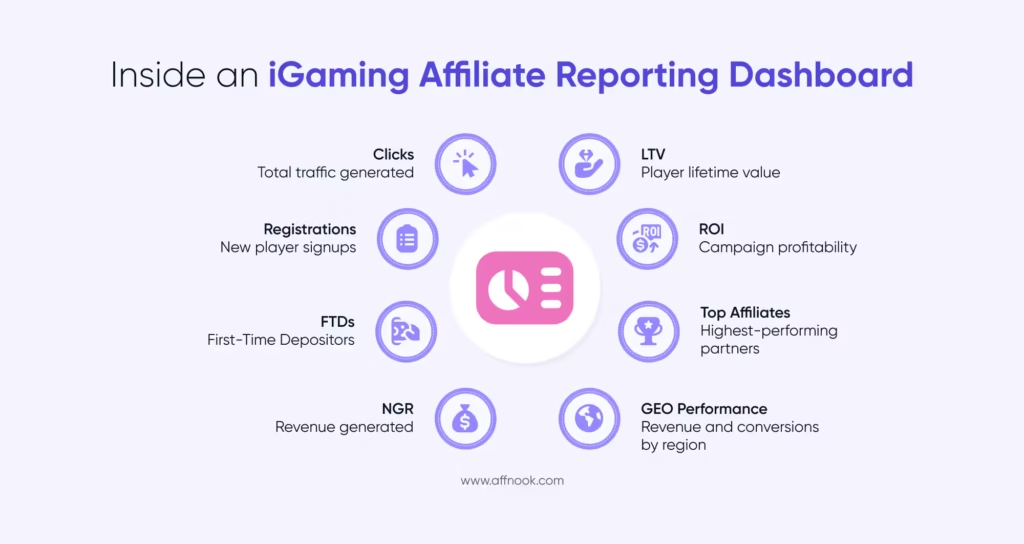
What Metrics Should iGaming Marketers Track in Affiliate Reporting Dashboards?
Affiliate marketing generates a lot of data. But data only becomes valuable when it helps you make better decisions.
That’s why reporting dashboards are so important. They give iGaming marketers a real-time view of what’s happening across their affiliate programs, helping them understand which partners are driving results and where optimization is needed.
Instead of relying on spreadsheets or manually collecting reports, modern affiliate teams use centralized dashboards to monitor performance and make faster decisions.
Clicks: How Much Traffic Are Affiliates Sending?
Clicks are usually the first metric marketers look at. They show how much traffic affiliates are driving to your website or landing pages.
While high traffic is important, clicks alone don’t tell the full story. Quality matters more than quantity.
For example, an affiliate sending 10,000 clicks isn’t necessarily better than one sending 1,000 highly targeted visitors that actually convert.
Registrations: How Many Users Sign Up?
Registrations show how many visitors have created an account after clicking an affiliate link.
This metric helps marketers understand whether landing pages, offers, and user journeys are encouraging players to take the next step.
A high number of registrations often indicates that affiliates are attracting relevant audiences.
First-Time Depositors (FTDs): The Most Important Acquisition Metric
For most iGaming marketers, First-Time Depositors (FTDs) are one of the most important KPIs.
FTDs represent users who not only signed up but also made their first deposit. This metric directly reflects the quality of affiliate traffic and is often used for commission calculations.
More importantly, FTDs help operators identify which affiliates are delivering players with real revenue potential.
Conversion Rate: Is the Traffic Actually Converting?
Conversion rate shows the percentage of visitors who complete a desired action, such as registering or making a deposit.
If an affiliate is sending thousands of clicks but generating very few FTDs, it could indicate poor traffic quality or issues with the user journey.
Monitoring conversion rates helps marketers optimize campaigns and focus on affiliates that deliver results instead of just volume.
Net Gaming Revenue (NGR): Which Affiliates Drive Revenue?
Not all players contribute equally.
Net Gaming Revenue (NGR) helps operators understand how much actual revenue is generated from affiliate traffic after deducting bonuses, taxes, and other expenses.
This metric is especially important for revenue share programs because affiliate payouts are often based on NGR.
Looking beyond registrations and FTDs allows marketers to focus on profitability rather than just acquisition.
Player Lifetime Value (LTV): Which Players Stay Longer?
Acquiring players is only the first step. Long-term profitability depends on how valuable those players become over time.
Player Lifetime Value (LTV) measures the total revenue a player generates throughout their relationship with the brand.
Affiliates that bring loyal, high-value players are often more valuable than those delivering large volumes of short-term traffic.
Return on Investment (ROI): Is Your Affiliate Program Profitable?
At the end of the day, every marketing activity comes down to ROI.
Return on Investment helps iGaming marketers evaluate whether affiliate campaigns are generating more revenue than they cost.
By monitoring ROI, teams can:
- Allocate budgets more effectively
- Identify top-performing affiliates
- Eliminate low-performing partnerships
- Scale profitable campaigns with confidence
Why Real-Time Reporting Matters
Affiliate programs move quickly, and waiting days or weeks for reports can slow down decision-making.
Real-time reporting gives marketers instant visibility into clicks, registrations, FTDs, revenue, and partner performance.
Platforms like Affnook help operators track all these metrics from a single dashboard, making it easier to monitor campaigns, compare affiliate performance, and optimize growth opportunities without relying on multiple tools or spreadsheets.
When you have accurate, real-time data, scaling your affiliate program becomes much easier.
What Challenges Do iGaming Marketers Face in Affiliate Marketing?
Affiliate marketing can be one of the most profitable acquisition channels for operators, but it isn’t without challenges.
As affiliate programs grow, managing partners, maintaining compliance, and ensuring traffic quality become increasingly complex. Even well-established programs face issues that can impact profitability and long-term growth.
Here are some of the most common challenges iGaming marketers encounter.
How Do You Deal With Fraudulent Traffic?
Not all traffic is created equal.
Some affiliates may intentionally or unintentionally send low-quality traffic that inflates numbers without generating real value for the operator.
Common types of affiliate fraud include:
- Bot traffic that creates fake clicks and activity.
- Fake registrations that never turn into active players.
- Incent traffic, where users sign up only to claim rewards and bonuses.
- Duplicate accounts and bonus abuse.
- Click spam and fraudulent attribution practices.
These activities can increase acquisition costs and distort campaign performance.
This is why many operators rely on advanced tracking and fraud detection systems to monitor traffic quality and ensure they reward genuine player activity.
How Do Attribution Conflicts Affect Affiliate Programs?
Modern player journeys are rarely straightforward.
A player might discover your brand through a review site, click a social media ad later, and finally convert after receiving an email campaign.
When multiple channels contribute to the same conversion, determining who deserves credit becomes challenging.
Poor attribution can lead to:
- Commission disputes with affiliates
- Inaccurate performance reports
- Misallocated marketing budgets
- Difficulty measuring campaign effectiveness
Using clear attribution models and reliable tracking systems helps iGaming marketers ensure conversions are credited fairly.
How Do iGaming Marketers Stay Compliant Across Different Markets?
Compliance remains one of the biggest challenges in the industry.
Advertising rules, licensing requirements, and responsible gaming regulations vary from country to country. What is allowed in one market may be prohibited in another.
Operators need to ensure that affiliates follow local regulations related to:
- Advertising practices
- Bonus promotions
- Responsible gaming guidelines
- Age restrictions
- Data privacy requirements
Monitoring affiliate activity and maintaining clear program guidelines are essential to avoiding regulatory risks and protecting brand reputation.
What Happens When Top Affiliates Leave?
Building relationships with quality affiliates takes time.
However, partners won’t hesitate to move elsewhere if they find better opportunities.
Common reasons for partner churn include:
- Uncompetitive commission structures
- Delayed payments
- Poor communication
- Lack of transparency
- Inaccurate reporting
- Limited marketing support
Affiliate relationships are built on trust. Operators that consistently provide reliable tracking, transparent reporting, timely payments, and strong support are more likely to retain their best-performing partners.
Why Technology Plays a Key Role in Solving These Challenges
As affiliate programs scale, managing these challenges manually becomes difficult.
Modern affiliate platforms like Affnook help iGaming marketers tackle these issues with real-time reporting, accurate attribution, automated commission management, and centralized partner tracking.
By giving operators better visibility into traffic quality and affiliate performance, technology makes it easier to build sustainable partnerships and scale affiliate programs with confidence.
The reality is that challenges are inevitable. But with the right processes and tools in place, iGaming marketers can turn those challenges into opportunities for long-term growth.
Conclusion
Affiliate marketing has evolved from a supporting acquisition tactic into one of the most important growth channels for iGaming marketers.
Its performance-based nature, ability to reach highly targeted audiences, and potential for long-term partnerships make it uniquely valuable in a competitive and highly regulated industry.
However, success requires more than simply launching an affiliate program. Operators must build strong partnerships, choose the right commission models, implement accurate tracking, monitor performance through comprehensive reporting dashboards, and continuously optimize their affiliate ecosystem.
The iGaming brands that invest in affiliate relationships, data-driven decision-making, and scalable affiliate management technology will be best positioned to acquire quality players, improve profitability, and sustain long-term growth in an increasingly competitive market.
Help Section
Why is affiliate marketing important for iGaming marketers?
Affiliate marketing helps iGaming marketers acquire quality players through performance-based partnerships. Instead of spending money upfront on ads, operators only pay when affiliates generate measurable results such as registrations, FTDs, or revenue.
What are the most common commission models in iGaming affiliate marketing?
The most common commission models are Revenue Share, CPA (Cost Per Acquisition), Hybrid, and Tiered commissions. Each model offers different benefits depending on an operator’s acquisition goals and affiliate strategy.
How do iGaming marketers track affiliate performance?
iGaming marketers track performance using metrics such as clicks, registrations, FTDs, conversion rates, Net Gaming Revenue (NGR), Player Lifetime Value (LTV), and ROI. Modern affiliate platforms also provide real-time reporting and attribution capabilities.
What challenges do iGaming marketers face in affiliate marketing?
Some common challenges include fraudulent traffic, attribution conflicts, regulatory compliance, and retaining top-performing affiliates. Accurate tracking and reliable affiliate management tools can help overcome these challenges.