In the iGaming industry, players sign up, deposit money, and start playing on your platform. On the surface level, this process looks like a simple acquisition.
But in many cases, this process begins with a referral code.
Referral code is a unique string of letters and numbers. It quietly connects one player to another and helps platforms track where new users are coming from.
In the iGaming industry, where competition is high, user acquisition is expensive, and referral programs have become crucial. Instead of spending too much money on ads or on iGaming affiliates, Brands are encouraging players to invite others in exchange for bonuses. And this whole process runs on a referral code.
In this article, you will learn about the referral code, how it works in iGaming, and why it matters.
What is a Referral Code?
A referral code is a unique combination of numbers, letters, or both that is assigned to an iGaming affiliate or player. This code is used to track and attribute new users’ activities, like registration or first-time deposit, or actions back to the person who shared the code.
In Simple terms, it acts as a tracking mechanism that connects three parties:
- The referrer (existing user or affiliate)
- The referred user (new player)
- The platform or operator
When a new player or user signs up with the help of this code, the system automatically records the referral and rewards the referrer according to the terms and conditions.
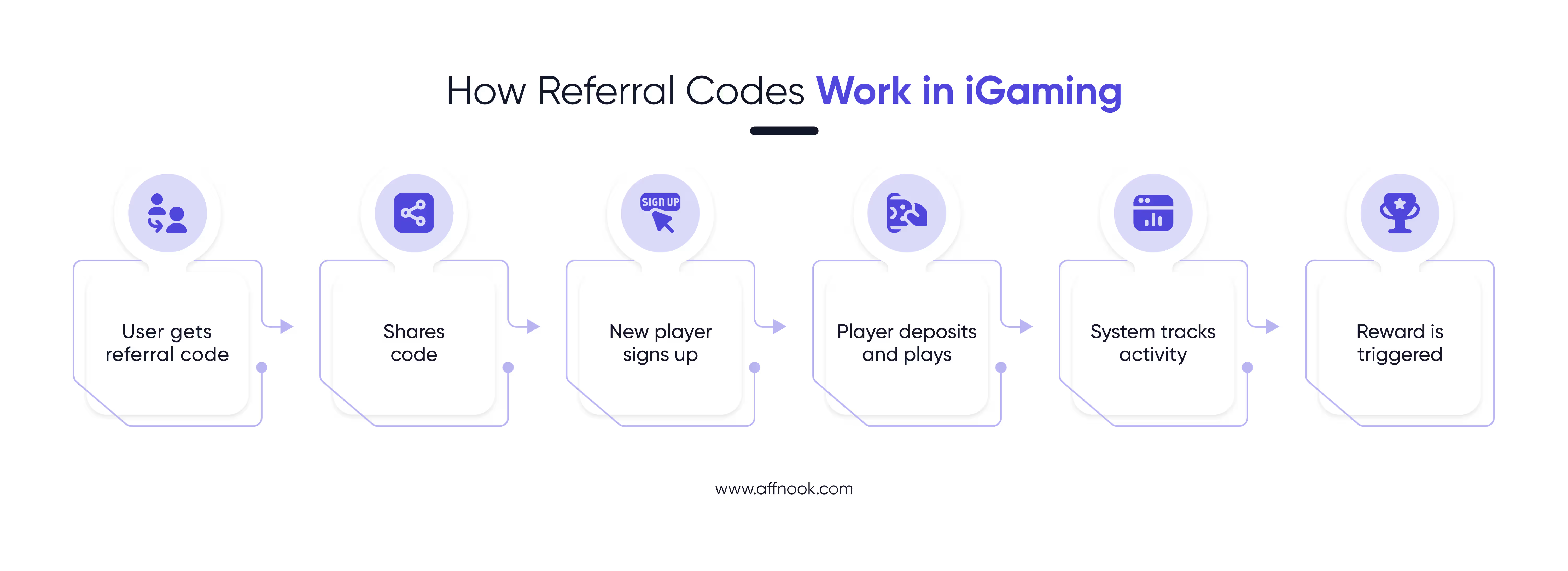
How Referral Codes Work in iGaming
In iGaming, a referral code is not just used for tracking; it helps operators acquire new players, improve engagement, and reward meaningful actions.
Let’s understand how the process works:
Step 1: Code Creation
The platform creates a unique referral code for each player or affiliate. This code is directly linked to their account for tracking.
Step 2: Code Sharing
The user shares the code with others through different channels, such as:
- Social media
- WhatsApp or Telegram
- Streaming platforms
- Blogs or websites
Step 3: Player Signup
A new player signs up using the referral code or clicks on a referral link where the code is already applied.
Step 4: Activity Tracking
After signing up, the system tracks important actions such as:
- First-time deposit (FTD)
- Number of bets placed
- Re-deposits or continued activity
Step 5: Reward Trigger
Once the player completes the required actions, the system automatically gives rewards to the referrer.
These rewards can include:
- Cash bonuses
- Free bets
- Revenue share
- CPA (cost per acquisition) payouts
This entire process ensures that operators do not just reward signups, but reward real player activity and value.
Why Referral Codes Matter in iGaming
In iGaming, referral codes play an important role in how iGaming brands acquire and retain players. They also help operators to grow faster while maintaining better control over quality and costs.
1. Lower Acquisition Costs
If you are promoting your brand through paid channels, it can be expensive because the results are unpredictable. So with the help of the referral code, you can turn your existing players into acquisition sources. Since rewards are usually tied to actions like deposits or bets, operators spend only when real value is generated.
2. Higher Conversion Rates
Users or players who join through a referral already have a level of trust in the iGaming platform. This trust reduces hesitation during signup and increases the chances of completing key actions like depositing. As a result, conversion rates are generally higher than traditional traffic sources.
3. Improved Player Quality
Not all traffic is equal. Referred users often come from relevant audiences and are more likely to engage with the platform. They tend to place more bets, return more frequently, and generate better lifetime value compared to users acquired through broad campaigns.
4. Better Control Over Rewards
With referral codes, operators can define clear conditions for payouts. Instead of rewarding simple signups, they can link incentives to meaningful actions such as FTDs, bet volume, or retention milestones. This ensures that rewards align with actual revenue.
5. Scalable and Sustainable Growth
Referral programs can scale without a proportional increase in marketing spend. As more users participate and share their codes, the system creates a self-sustaining loop of acquisition. With the right structure, this becomes a long-term growth channel rather than a one-time campaign.
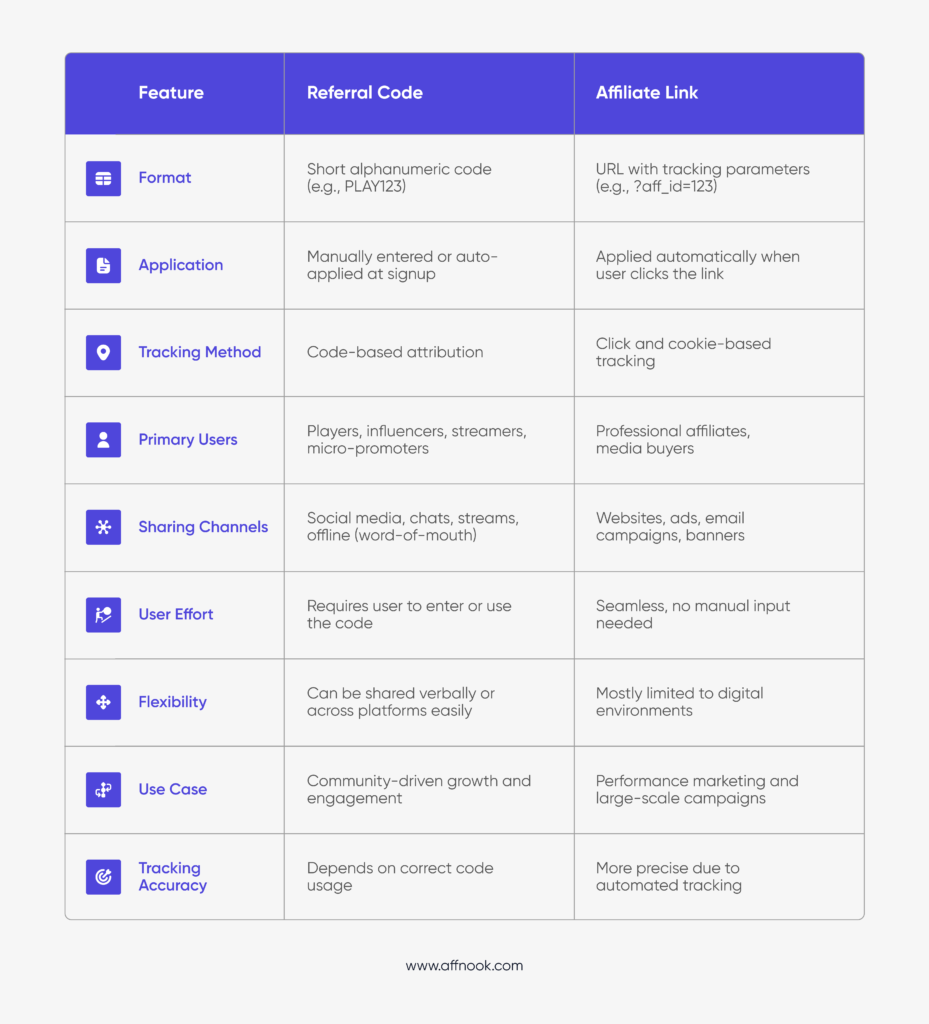
Referral Code vs Affiliate Link
Both referral codes and affiliate links are used for tracking, but they differ in how they are shared, tracked, and optimized within iGaming programs.
Today, most iGaming platforms combine both systems. This allows operators to track users more accurately while giving flexibility to affiliates and players in how they promote the platform.
Types of Referral Code Models in iGaming
Operators use different referral models based on their growth goals, budget, and player lifecycle strategy. Each model defines how rewards are triggered and how value is distributed.
1. Single-Level Referral
In this model, the referrer earns rewards only for users they directly bring in. Once the referred player signs up and completes key actions like depositing or betting, the reward is triggered.
This is the most common and easy-to-manage model.
2. Multi-Level Referral
Here, the referrer earns not just from direct referrals but also from secondary referrals (users invited by their referred players).
This creates a network effect and can help scale faster, but it requires careful control to avoid misuse and reward leakage.
3. Action-Based Referral
Rewards are linked to specific player actions instead of just signups. For example:
- Minimum first-time deposit (FTD)
- Number of bets placed
- Retention over a certain period
This model ensures that operators reward real engagement and not just volume.
4. Hybrid Referral Model
This approach combines multiple reward structures, such as:
- CPA (cost per acquisition)
- Revenue share
- Performance-based bonuses
It gives operators more flexibility and control, allowing them to align rewards with both short-term conversions and long-term player value.
Some Common Challenges with Referral Codes
Referral systems can drive strong growth, but without the right setup, they can also lead to inefficiencies and losses. Operators need to manage these challenges carefully.
1. Fraud and Abuse
Referral programs are often targeted by bad actors trying to game the system. Common issues include:
- Fake or duplicate accounts
- Self-referrals to claim rewards
- Use of VPNs, proxies, or bots
Without proper checks, this can lead to wasted payouts and distorted performance data.
2. Low-Quality Traffic
Not every referred user brings value. Some users may sign up just to claim a bonus and never deposit or engage further. This affects overall ROI and campaign performance.
3. Inaccurate Tracking
If tracking systems are not properly configured, attribution can break. Missing or incorrect data makes it difficult to identify which referral code is actually driving results.
4. Poor Reward Structuring
Rewarding users only for signups can lead to high costs with little return. If incentives are not linked to actions like deposits, bets, or retention, operators may end up paying for low-value users.
5. Lack of Visibility
Without real-time reporting, operators cannot monitor performance effectively. This makes it harder to optimize campaigns or identify top-performing referrers.
Conclusion
A referral code may seem like a small element in the iGaming ecosystem, but its impact is massive. It transforms players into promoters, reduces acquisition costs, and drives high-quality traffic.
However, its true potential is unlocked only when combined with smart tracking, fraud prevention, and performance-based rewards.
For iGaming operators looking to scale efficiently, mastering referral systems is no longer optional. It is a strategic necessity.
And with platforms like Affnook, managing and optimizing every referral code becomes not just easier, but far more profitable.
Help Centre
What is a referral code in iGaming?
A referral code is a unique combination of letters and numbers used to track new users who sign up through an existing player or affiliate. It helps operators attribute registrations, deposits, and activity to the referrer.
How does a referral code work in online casinos or sportsbooks?
A player shares their referral code, and a new user signs up using it. The platform tracks the new user’s activity, and once conditions like deposits or bets are met, rewards are given to the referrer.
What is the difference between a referral code and an affiliate link?
A referral code is manually entered or shared, while an affiliate link automatically tracks users through a URL. Referral codes are often used by players, while affiliate links are used by professional marketers.
Are referral codes better than paid ads in iGaming?
Referral codes can be more cost-effective because rewards are tied to actual player actions like deposits, unlike ads where costs are incurred upfront without guaranteed results.