Every sportsbook wants more players.
The first instinct is usually simple: increase the advertising budget, launch campaigns across multiple platforms, and drive as many registrations as possible.
It sounds like the right strategy.
But here’s the reality.
A campaign can generate thousands of sign-ups while still failing to create profitable players. Many sportsbook operators have discovered that high registration numbers don’t always translate into long-term revenue. If players deposit once and never return, your advertising spend becomes much harder to justify.
This is why Sportsbook Ads should never work alone.
Your paid advertising campaigns and affiliate program should support each other instead of competing for the same players. When both channels share data, attribution, and performance insights, they become much more effective.
In this guide, you will learn how to build Sportsbook Ads that not only attract players but also strengthen your affiliate programme, improve player quality, and maximize return on every marketing dollar.
Why Sportsbook Ads Alone Are No Longer Enough
The sportsbook industry has become extremely competitive.
Almost every operator advertises across multiple channels, including:
- Google Search
- Display Advertising
- Social Media
- Influencer Marketing
- YouTube
- Podcasts
- Connected TV
- Affiliate Websites
- Sports News Portals
As advertising costs continue to rise, simply buying more impressions is no longer a winning strategy.
According to Statista Market Insights, global revenue in the Sports Betting market is projected to reach US$88.11 billion in 2026
Instead of asking:
How can we buy more traffic?
Successful operators ask:
How can every marketing channel work together?
That’s the difference between spending money and building a scalable acquisition engine.
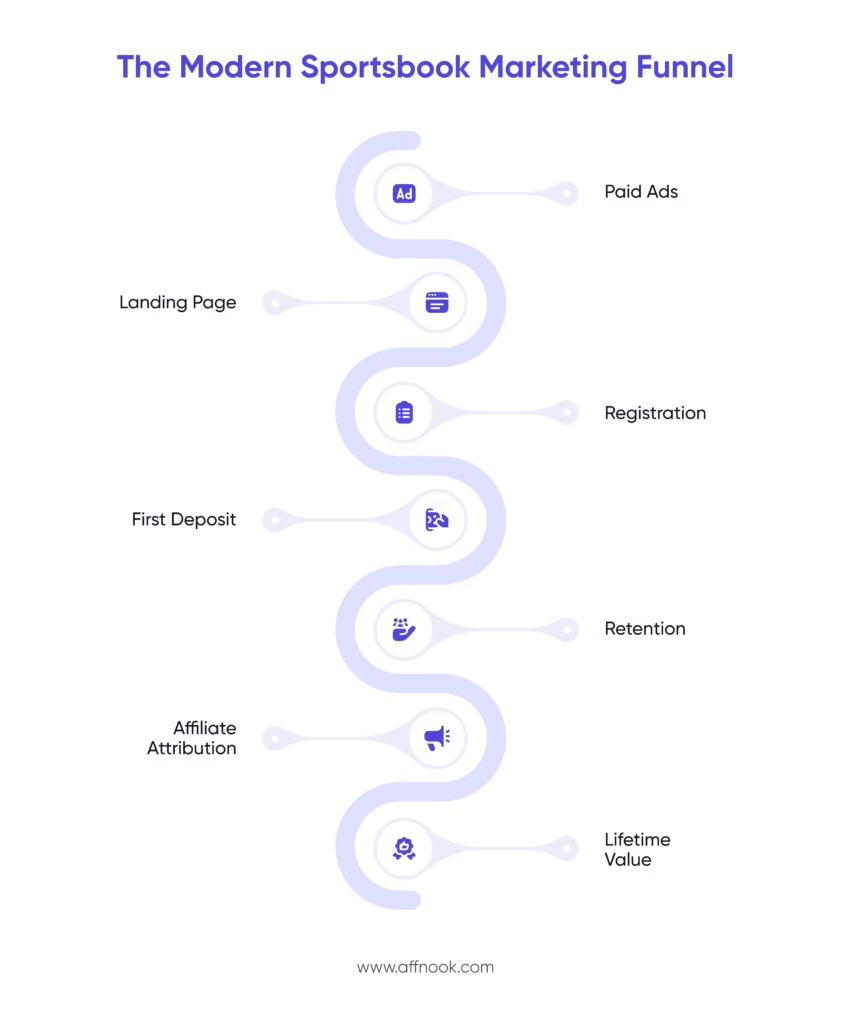
The Biggest Mistake Sportsbook Operators Make
One of the biggest mistakes sportsbook operators make is treating paid advertising and affiliate marketing as separate growth channels.
In many organizations, each team works toward its own goals:
- The paid media team focuses on registrations from Google Ads and paid campaigns.
- The social media team drives engagement and brand awareness.
- Affiliate managers measure partner performance and conversions.
- CRM team works on player retention and reactivation.
While every team is performing well individually, they’re often measuring success differently.
The paid media team celebrates more registrations.
The affiliate team celebrates new partner acquisitions.
The CRM team celebrates higher retention rates.
But very few teams look at the entire player journey, from the first ad click to long-term player value.
This siloed approach often leads to:
- Duplicate player acquisition across channels
- Attribution conflicts
- Higher customer acquisition costs (CAC)
- Inconsistent reporting
- Wasted marketing budget
The most successful sportsbook operators don’t optimize channels in isolation. They align every acquisition channel around one common goal:
Acquire high-value players who deliver long-term revenue, not just registrations.
Understanding the Role of Every Sportsbook Ad Channel
Not every marketing channel serves the same purpose. A successful Sportsbook Ad strategy doesn’t rely on a single iGaming platform. Instead, it combines multiple channels to guide potential players from awareness to registration, first deposit, and long-term engagement.
The key is understanding what each channel does best and how it supports your affiliate programme.
Search Advertising
Search advertising captures players with high purchase intent. When someone searches for terms like:
- Best sportsbook
- Live betting app
- Football betting odds
- Bet on Premier League
They’re already looking for a betting platform. This makes search ads one of the strongest channels for driving immediate conversions.
Search campaigns are particularly effective for:
- Promoting welcome bonuses
- Targeting major sporting events
- Capturing brand and competitor searches
- Driving First-Time Deposits (FTDs)
Social Media Advertising
Social media platforms like Meta, Instagram, TikTok, and X (formerly Twitter) are excellent for building awareness and engaging sports fans.
Unlike search users, most social media users aren’t actively looking for a sportsbook. They’re discovering brands while scrolling through content.
A strong social media strategy includes:
- Educational betting content
- Short-form videos
- Match-day promotions
- Interactive polls and contests
- Brand storytelling
While social ads may not always generate immediate conversions, they help build familiarity with your brand. When combined with retargeting campaigns, they can significantly improve conversion rates.
Display Advertising
Display advertising helps keep your sportsbook visible across sports news websites, blogs, and mobile apps.
Although display ads generally have lower click-through rates than search ads, they play an important role in increasing brand recall. A potential player may see your banner several times before deciding to visit your website.
Display campaigns work best for:
- Brand awareness
- Retargeting previous visitors
- Promoting major tournaments
- Supporting other advertising channels
Consistent visibility helps keep your sportsbook top of mind when players are ready to place a bet.
Video Advertising
Video has become one of the most engaging advertising formats, especially among sports audiences.
Whether it’s YouTube pre-roll ads, short-form social videos, or streaming platform ads, video allows operators to explain promotions in a more engaging way than static banners.
Video campaigns are ideal for:
- Introducing your sportsbook brand
- Explaining welcome offers
- Showcasing app features
- Building excitement around live sporting events
Well-produced videos also create stronger emotional connections with sports fans, making them more likely to remember your brand.
Influencer Marketing
Sports creators, betting analysts, and content creators have built loyal communities that trust their opinions.
Partnering with the right iGaming influencers can help sportsbooks reach highly engaged audiences in a more authentic way than traditional advertising.
However, operators shouldn’t judge influencer campaigns by follower count alone. Instead, they should measure:
- Click-through rates
- Registrations
- First-Time Deposits
- Player retention
- Revenue generated
The goal isn’t to reach the biggest audience—it’s to attract the right players.
Affiliate Marketing
Affiliate marketing is one of the most cost-effective acquisition channels because it is performance-based. Instead of paying for impressions or clicks, operators typically reward affiliates only when they generate measurable results, such as registrations or First-Time Deposits.
Affiliates reach players through:
- Betting review websites
- Odds comparison platforms
- Tipster websites
- Sports blogs
- YouTube channels
- Email newsletters
Because affiliates already have trusted audiences, they often attract players who have completed their research and are ready to register.
To maximize results, affiliate marketing shouldn’t operate independently from paid advertising. When combined with accurate tracking and attribution, it helps operators understand how different marketing channels influence the same player journey and where advertising budgets deliver the highest return.
Sportsbook Ads and Affiliate Marketing Should Work Together
Paid advertising and affiliate marketing are often treated as separate acquisition channels, but in reality, they influence the same player journey. When these channels work separately, they can create unnecessary competition instead of supporting a unified acquisition strategy.
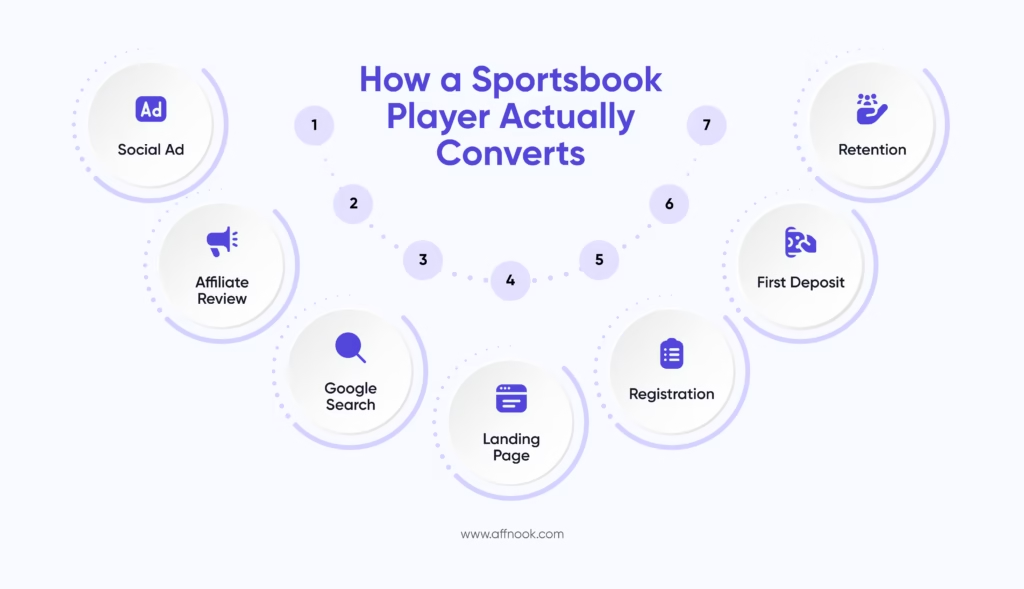
Consider a typical player journey:
- The player sees your Facebook ad during a live football match.
- Later, they read an affiliate’s review comparing different sportsbooks.
- They watch a YouTube video explaining the latest welcome offers.
- Before signing up, they search Google for your sportsbook.
- Finally, they register and make their first deposit.
So, which channel deserves the conversion?
The answer isn’t always straightforward.
Without a proper attribution model, every channel may claim credit for the same player. Paid media reports a successful campaign, the affiliate expects a commission, and marketing teams are left with conflicting performance data.
This lack of visibility makes it difficult to answer important questions, such as:
- Which channel introduced the player to your iGaming brand?
- Which touchpoint influenced the final decision?
- Which marketing investment generated the highest-value player?
The most successful sportsbook operators don’t rely on assumptions. They use accurate attribution and tracking to understand the complete customer journey across every touchpoint.
When paid advertising and affiliate marketing share performance data, operators can:
- Allocate budgets more effectively.
- Reward affiliates based on their true contribution.
- Reduce channel conflicts and duplicate reporting.
- Optimize campaigns based on player quality, not just conversions.
Instead of competing for the same conversion, Sportsbook Ads and affiliate marketing should work together to create a seamless acquisition strategy that delivers higher-quality players and better long-term returns.
How to Build Sportsbook Ads That Drive Long-Term Growth
Launching a successful Sportsbook Ad campaign isn’t just about getting more clicks or registrations. The real challenge is turning advertising spend into players who deposit, stay active, and generate long-term revenue.
Here’s how successful sportsbook operators optimize every stage of the acquisition journey.
1. Measure What Matters: Why Attribution Is More Important Than Clicks
Clicks are easy to measure, but they don’t tell you whether your advertising is actually driving business growth.
A player rarely registers after seeing just one ad. Their journey usually involves multiple touchpoints before making a decision.
For example, a player may:
- Discover your brand through a Meta ad.
- Read an affiliate review.
- Search for your sportsbook on Google.
- Visit your website and register.
- Make their first deposit days later.
Without proper attribution, it’s impossible to know which marketing channel truly influenced the conversion.
Instead of asking Which ad got the click?, operators should ask:
- Which channel generated the First-Time Deposit (FTD)?
- Which campaign attracted players who continued betting?
- Which affiliate referred the highest-value customers?
- Which marketing investment delivered the best return over time?
These insights help marketing teams allocate budgets more effectively and invest in channels that generate long-term value rather than short-term wins.
2. Optimize the Landing Page Experience
Even the best Sportsbook Ads can fail if the landing page creates friction.
After clicking an ad, players expect a fast, seamless experience. Every extra second of loading time or unnecessary registration step increases the chance they’ll leave.
An effective sportsbook landing page should include:
- Fast loading speeds
- Mobile-first design
- Clear welcome offers and promotions
- A simple registration process
- Trust signals such as licensing and security badges
- Responsible gambling information
- Clear calls to action
Improving the landing page doesn’t require increasing your advertising budget. Small improvements in user experience can significantly increase conversion rates.
Successful operators continuously A/B test landing pages to identify which layouts, offers, and messaging perform best.
3. Deliver a Consistent Message Across Every Marketing Channel
Most players interact with your brand several times before they register.
Now imagine they see these offers:
Google Search – 100% Signup Bonus
Instagram – Get Free Bets Today
Affiliate Review – Exclusive Cashback Promotion
While each message sounds attractive, the inconsistency creates confusion. Players may wonder which offer is correct or whether they’ve landed on the right sportsbook.
A stronger strategy is to keep your promotions, branding, and messaging aligned across every acquisition channel.
Consistency helps:
- Build brand trust
- Improve recognition
- Reduce confusion
- Increase conversion rates
No matter where a player discovers your sportsbook, they should experience the same value proposition.
4. Don’t Let Paid Ads Compete With Your Affiliates
One of the most common mistakes operators make is allowing paid advertising and affiliates to target the same audience without coordination.
For example, your paid search campaign and one of your affiliates may both bid on your brand keywords.
The result?
- Higher advertising costs
- Internal competition
- Frustrated affiliate partners
- Confusing attribution reports
Instead, define a clear acquisition strategy for every channel.
This may include:
- Brand keyword ownership
- Generic keyword campaigns
- Geo-targeted promotions
- Event-specific advertising
- Exclusive affiliate offers
When each channel has a clearly defined role, they complement each other instead of competing for the same player.
5. Focus on Player Quality, Not Registration Volume
High registration numbers may look impressive in marketing reports, but they don’t always indicate campaign success.
A campaign that generates 5,000 registrations but very few deposits is less valuable than one that attracts 500 active bettors.
That’s why experienced sportsbook marketers focus on player quality instead of player volume.
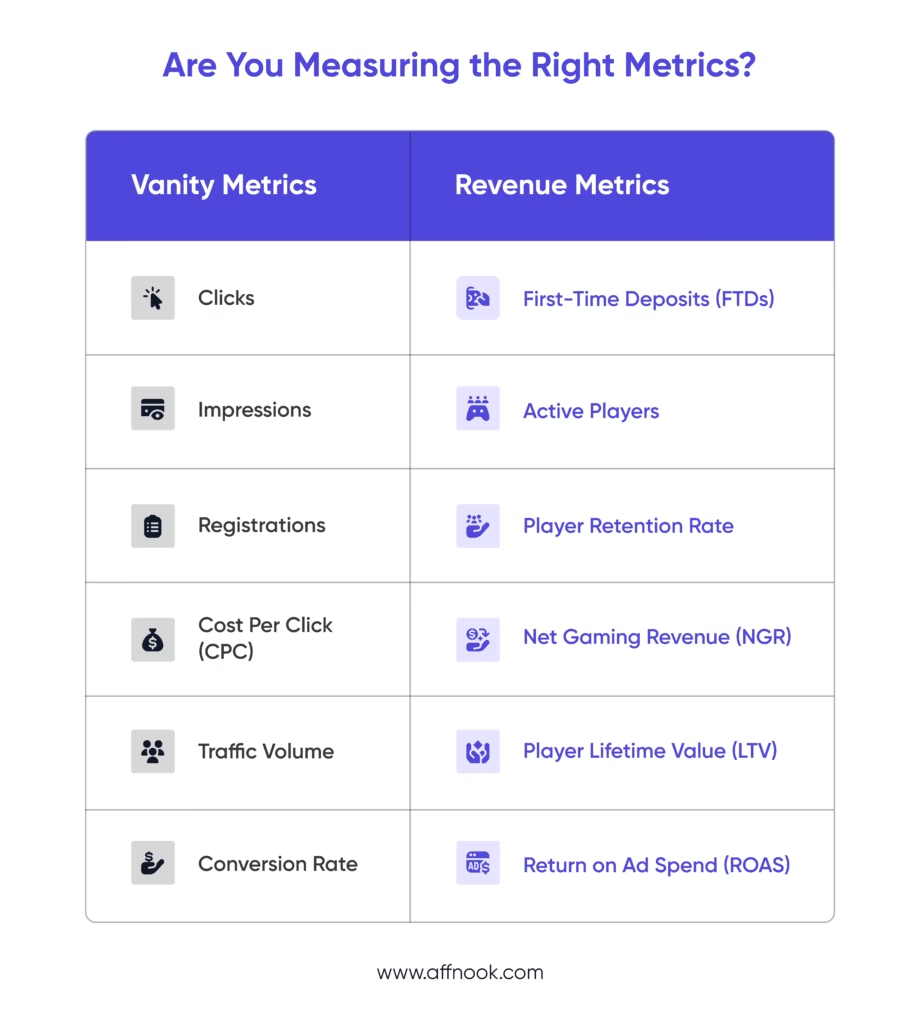
The most important performance metrics include:
- First-Time Deposits (FTDs)
- Deposit frequency
- Betting activity
- Player retention
- Net Gaming Revenue (NGR)
- Player Lifetime Value (LTV)
- Return on Ad Spend (ROAS)
These metrics provide a much clearer picture of whether your Sportsbook Ads are driving sustainable business growth.
6. Connect Paid Advertising and Affiliate Reporting
Many sportsbook operators still manage their marketing data across multiple platforms.
For example:
- Google Ads
- Meta Ads
- Affiliate platform
- CRM
- Analytics software
Each platform reports performance differently, making it difficult to understand the complete player journey.
A centralized reporting system provides a unified view of every acquisition channel.
When paid advertising and affiliate data are connected, marketers can:
- Identify the most profitable traffic sources
- Detect low-quality traffic earlier
- Understand which affiliates contribute the highest-value players
- Optimize budgets using real performance data
- Reduce attribution conflicts between channels
Better reporting leads to better marketing decisions.
7. Use Real-Time Data to Optimize Campaigns Faster
Sports betting is driven by live events.
Major football matches, cricket tournaments, UFC fights, and other sporting events can generate sudden spikes in player activity.
If campaign reports are delayed by several days, valuable optimization opportunities may already be lost.
Real-time reporting allows marketing teams to:
- Increase budgets for high-performing campaigns
- Pause underperforming ads immediately
- Monitor affiliate performance as it happens
- Identify traffic quality issues quickly
- Respond faster during major sporting events
The faster marketers can act on performance data, the more efficiently they can spend their advertising budget.
8. Protect Your Advertising Budget from Fraud
Not every click or registration comes from a genuine player.
Advertising fraud affects both paid campaigns and affiliate marketing, leading to inflated costs and inaccurate performance data.
Some of the most common fraud risks include:
- Bot traffic
- Fake registrations
- Click spam
- Incentivized traffic
- Duplicate accounts
- Device spoofing
Without proper fraud detection, operators may end up paying for traffic that never generates revenue.
By identifying suspicious activity early, sportsbook operators can protect their advertising budget, improve reporting accuracy, and ensure affiliate commissions are paid only for legitimate player activity.
In today’s competitive market, preventing fraud is just as important as acquiring new players. It safeguards both marketing performance and long-term profitability.
Info 3
Why Tracking Is the Foundation of Better Sportsbook Ads
Even the most creative campaign can fail if tracking is inaccurate.
Without reliable tracking, marketers cannot answer simple questions like:
- Which campaign generated revenue?
- Which affiliate referred the player?
- Which ad produced repeat deposits?
- Which traffic source should receive a larger budget?
Comprehensive tracking connects every marketing channel into one complete player journey.
Instead of guessing, operators make decisions using accurate performance data.
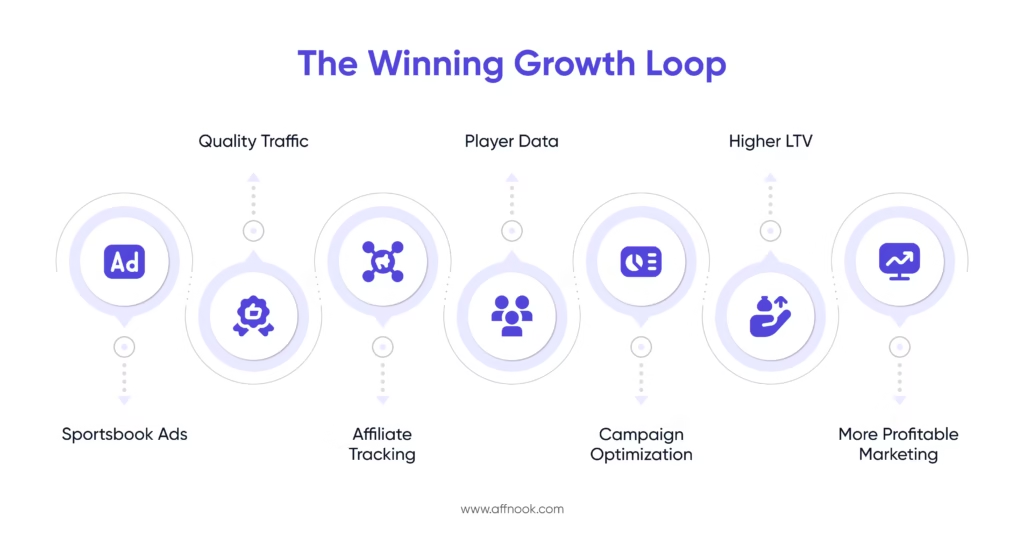
How Affnook Helps Sportsbook Operators Maximize Every Marketing Channel
Running successful Sportsbook Ads requires more than launching campaigns.
You also need complete visibility into how every acquisition source contributes to revenue.
Affnook helps sportsbook operators manage affiliate marketing with the data needed to optimize paid advertising as well.
With Affnook, teams can:
- Track affiliate performance in real time
- Monitor First-Time Deposits (FTDs)
- Analyze traffic quality
- Detect fraudulent activity
- Manage payouts efficiently
- Access detailed reporting
- Attribute conversions more accurately
- Optimize campaigns using actionable insights
Instead of treating paid advertising and affiliate marketing as separate channels, Affnook helps operators understand how both contribute to player acquisition and long-term growth.
Conclusion
Successful Sportsbook Ads are no longer just about generating clicks or registrations.
They are about creating a connected acquisition strategy where paid advertising, affiliate marketing, tracking, and player analytics work together.
When every marketing channel shares the same goal, operators gain a clearer understanding of what drives long-term player value. Instead of chasing vanity metrics, they can invest in campaigns that consistently deliver quality players and stronger returns.
As competition in the sportsbook industry continues to grow, the operators that succeed will be those who stop treating advertising and affiliate marketing as separate efforts. By combining accurate attribution, real-time reporting, fraud prevention, and performance insights, every Sportsbook Ad becomes part of a larger growth engine.
With the right tracking and affiliate management platform like Affnook, sportsbook operators can make smarter marketing decisions, improve campaign efficiency, and turn every advertising channel into a valuable contributor to sustainable revenue.
Hep Section
What are sportsbook ads?
Sportsbook ads are marketing campaigns that promote online sportsbooks across channels such as search engines, social media, display networks, video platforms, and affiliate websites to acquire new players and increase betting activity.
Which advertising channels work best for sportsbook operators?
The most effective sportsbook advertising channels include Google Search, Meta Ads, YouTube, display advertising, influencer marketing, affiliate websites, sports blogs, and email marketing. The right mix depends on your audience, budget, and acquisition goals.
How can sportsbook ads improve affiliate marketing performance?
Sportsbook ads can support affiliate marketing by increasing brand awareness, driving qualified traffic, and providing attribution insights. When both channels share tracking and reporting data, operators can identify which touchpoints contribute most to player acquisition and long-term revenue.
Why is attribution important for sportsbook advertising?
Attribution helps sportsbook operators understand which marketing channels influence a player’s journey, from the first interaction to registration and deposit. Accurate attribution enables better budget allocation, fair affiliate commissions, and improved campaign optimization.
How do you measure the success of sportsbook ads?
The success of sportsbook ads is measured using KPIs such as First-Time Deposits (FTDs), conversion rate, cost per acquisition (CPA), Return on Ad Spend (ROAS), Player Lifetime Value (LTV), Net Gaming Revenue (NGR), and player retention rather than clicks or registrations alone.