Keno slips were used by the Han dynasty to build the Great Wall of China, amongst other things. Lotteries were popular amusement at parties held during the Roman Empire.
It may appear peculiar to some, but iGaming is not a domain of private entities alone. Governments around the world often choose to participate in the iGaming niche commonly referred to as ‘lottos’ or a national lottery, at their discretion.
What’s the need, you may ask.
Most commonly, lotteries are a quick, easy and regulated way to raise funds or revenue, without having to raise taxes — prone to receive harsh and negative responses from citizens. However, their role in entertainment cannot be missed.
The people, on the other hand, tend to enjoy lotteries for their own reasons. For one, there is the distinct chance of winning big amounts, if luck or chance is in their favor. A second reason is, national lotteries can also have favourable tax rules, which means much of the winnings do end up with the lucky winner.
Lotteries are organized across the world, in various manners. Some come up through the implicit support of the government, while others rely on online gambling regulations for their existence. So what makes a lottery ‘national’?
What is a National Lottery?
All around the world, the definition of what constitutes a national lottery relies completely on how the government chooses to run the platform. The process may be initiated as:
- A single-winner lottery
- Raffles with monetary and non-monetary gifts
- A fixed prize lotto
- A 50-50 draw, where the win is 50% of the revenue, and so on.
All in all, any lottery organized directly or through a third-party, and backed by the government of a given country can be referred to as the national lottery of that country.
The legal definitions, however, may range far and wide.
In the UK, The National Lottery conducts a range of activities which come under this classification:
- Thunderball
- EuroMillions
- Lotto
- Lotto HotPicks (based on the Lotto results for the same day)
- EuroMillions HotPicks (based on the EuroMillions results for the same day)
In Finland, the national lotto is conducted through Veikkaus Oy, which is the Finnish national betting agency and owned fully by the government. They organize 20 different games, through which is largely for citizens alone, due to a large DDos attack in 2009.
Who Benefits from National Lotteries?
The beneficiaries of any lottery event are generally from amongst those who draw tickets or raffles for the said event. The winner or player can be considered the primary beneficiary of any lottery, national or otherwise.
When governments organize a lotto, their end goal may be to raise money for a specific cause, such as a war effort, public infrastructure building, rehabilitation of a given community or a variety of smaller causes being grouped together.
Here are three ways in which various governments have put this money to work:
- The Australian government conducted a national lottery called ‘Golden Casket Art Union’ in 1916 to raise money for veterans of the First World War.
- In the UK, at the moment, ~25% of the money goes to ‘good causes’ as defined by the British Parliament.
- According to NPR, about 60% of the proceeds of lotteries in the US end up going to the winners — signalling a more user-aligned manner of conducting the draw.
The size of prizes across national lotteries also tends to vary greatly.
Global Overview of National Lottery Markets
National lotteries are surprisingly common across all continents, and most regulated iGaming markets, where betting is legal.
The global lottery market offers users several government operated participation options, which may be directly available on a government portal, or run through a single-license operator with strict regulatory oversight.
In most regulated markets or regions where national lotteries are run at all, they tend to be monopolies or near-monopolies, due to one or more of the following factors:
- The entire regulatory structure is set up to limit this type of operation strictly to governments, or,
- They are run in countries where other forms of iGaming like sports betting and retail betting are also disallowed.
North America
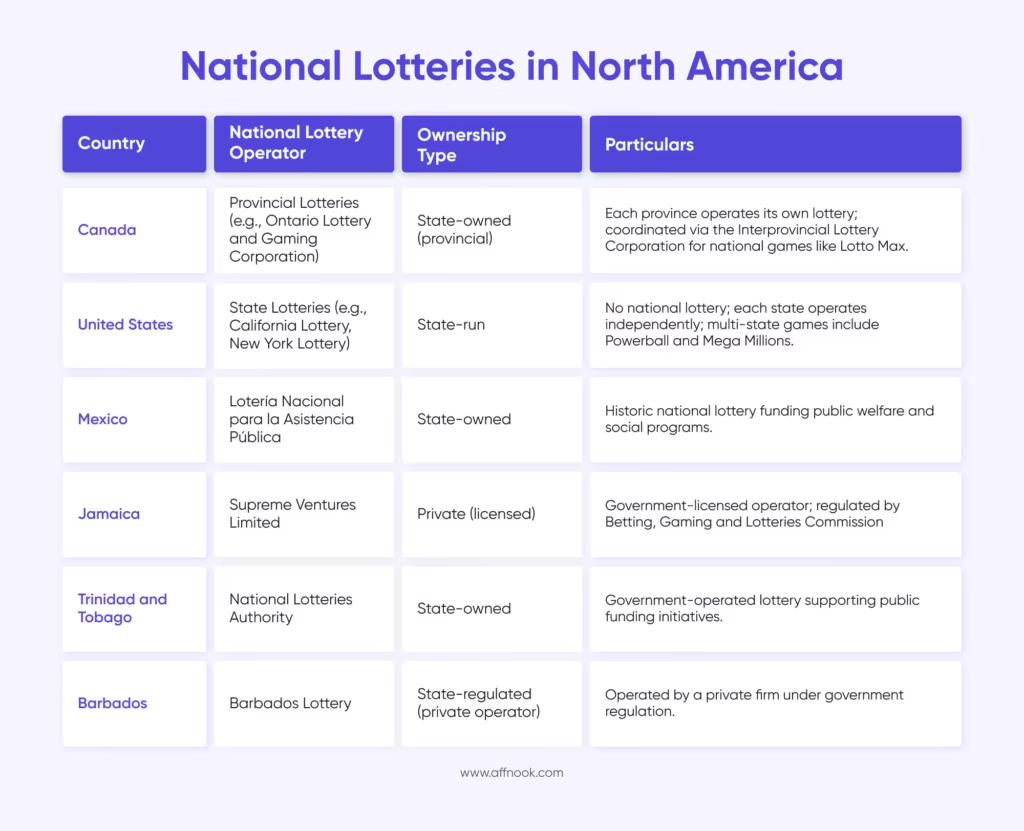
In the United States, there is no singular national lottery in place. Instead, the federal nature of the government has enabled 45 states to hold their own lotteries, which collectively form large pools of winnings in the form of the ‘Powerball’ or ‘Mega Millions’.
Additionally, the territories of the US Virgin Islands, District of Columbia and Puerto Rico also participate.
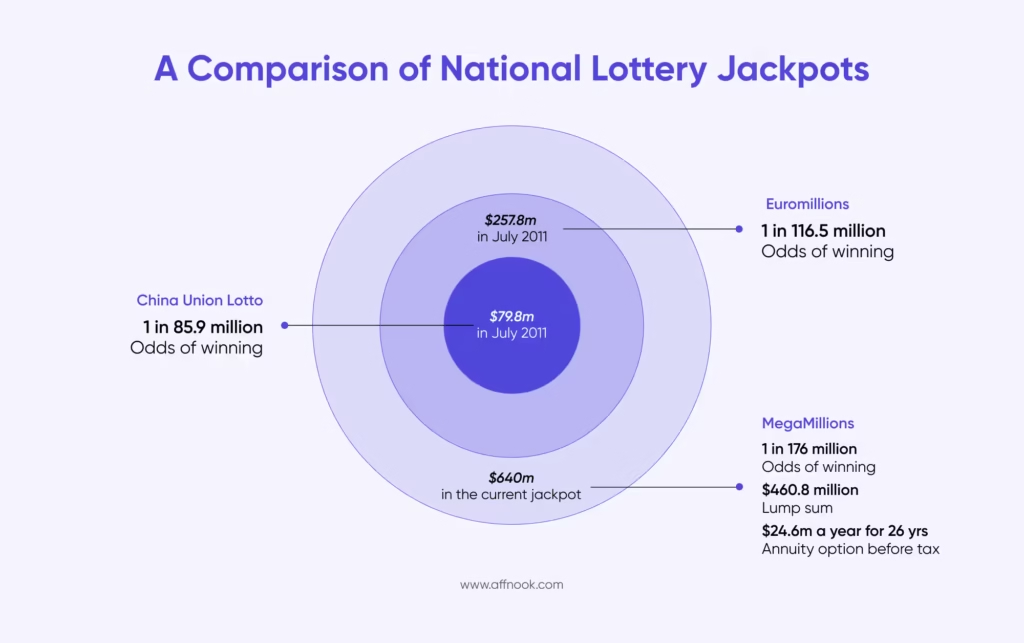
According to Grand View Research, the US dominates the lottery market in terms of revenue share. Consider the fact that jackpots have a tendency to reach massive numbers such as $1 billion.
While common American pastimes such as the Superbowl and betting on even elections are commonly known, the phenomenon of lottery participation is perhaps less visible. Not only is there nation-wide participation, but revenue accrued from these activities reaching $67.1 billion in 2025.
However, the bids aren’t for massive amounts. Users can put in as little as a single dollar to be eligible to win the entire lottery. For larger lottos like the two mentioned above, 50% of the collected amount goes to jackpots, while the rest is used for administrative costs, commissions for ticket retailers and ‘good causes’ which include:
- Homeless shelters in Arizona,
- Education in California,
- K-12 Public Schools in Idaho,
- The State Highway Fund in Mississippi, and so on.
In Canada, five provincial corporations organize what may be commonly seen as the ‘national lottery’. These are:
- Atlantic Lottery Corporation,
- Loto-Québec,
- Ontario Lottery and Gaming Corporation,
- Western Canada Lottery Corporation, and,
- British Columbia Lottery Corporation.
‘Lotto 64/9’ and ‘Lotto Max’ are two of the three national lottery games. Of course, there are more regional variations of these three games which are available at the local level to iGaming enthusiasts, such as ‘Keno’, ‘Lotto 4’, ‘Atlantic 49’, etc.
The market, at the moment, was worth $17,259.8 million in 2025 and is expected to continue growing at 4.9% CAGR, as per data from Grand View Research.
Europe
The ‘EuroMillions’ is a transnational lottery which is held across European nations. This biweekly event is conducted across nine nations: Austria, Belgium, France, Ireland, Luxembourg, Portugal, Spain, Switzerland and the UK.
As it happens, the pooled revenue (or the collective quantum of gross gaming revenue) gained from so many of the highest per capita income countries created a jackpot which is massive — even lifechanging. Winning draws can go up to €250 million.
However, this isn’t an isolated event. Several countries hold their own lotteries as well, such as the Cyprus Government Lottery, Germany’s provincially conducted lotteries and the Norsk Tipping in Norway.
A comprehensive list of all national-level lotteries conducted in the entire continent of Europe is listed below.
While we examine the range of events, it is important to consider the participation in such occasions.
Take for instance that in Finland, about 70% people take part in the national lottery conducted by the government annually. Or, consider the El Gordo in Spain — an event held since 1812, where children sing the winning numbers out — that sees roughly 70-90% of the country’s adult population taking part.
In terms of activities at online casinos in the UK, lotteries are the most popular format of iGaming amongst all age groups. In 2025, within the 25-44 years age group, 36% participated, with 43% of players being male.
Considering that most markets in Europe are mature, the participation across countries remains high. Additionally, the fact that governments conduct such events ensures responsible gaming occurs, with little to no expectation of gambling addiction taking over.
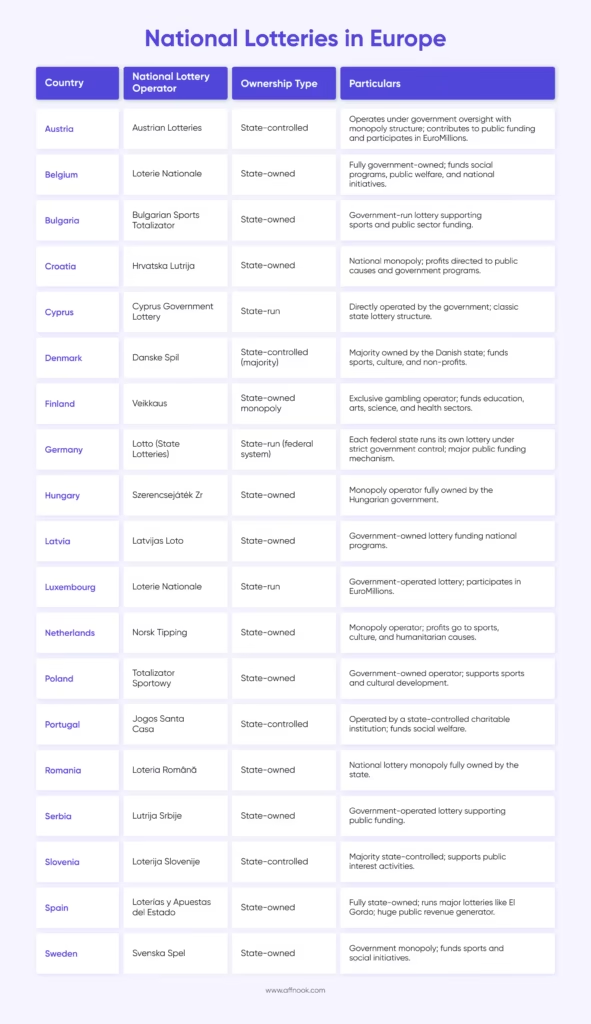
Asia
The Asia-Pacific lottery market generated revenue worth $143,154.1 million in 2025 and is expected to continue growing at 6% CAGR till 2033. Within this larger segment, draw-based games were the most prominent, having the most number of participants.
If you consider the entire iGaming market for 2026, in terms of lotteries, Asia alone accounts for 38.3% of the world’s revenue.
Within Asia, China offers the largest national lottery called ‘The China Welfare Lottery’. The largest single win recorded from the event was worth $96 million in 2024. According to taxation norms in the country, one fifth of any jackpot goes directly to the individual income tax contribution.
The Lottery 520 (now discontinued in 2020) was an initiative of South Korea’s finance ministry. By being available at convenience stores and through local ATM kiosk marketing around the country, this lottery vehicle was incredibly accessible, and easy to participate in.
In the case of pension lotteries and the Korean Lottery Commission’s “Lotto”, the average ticket size was usually KRW 8,000.
Similarly, other Asian countries also have their own lottery schemes, such as:
- Vietlott, held in Vietnam, which is a national electronic lottery
- State lotteries in India across Kerala, Goa, Sikkim, etc.
- Thai Lottery managed by a state enterprise under the Ministry of Finance, among others.
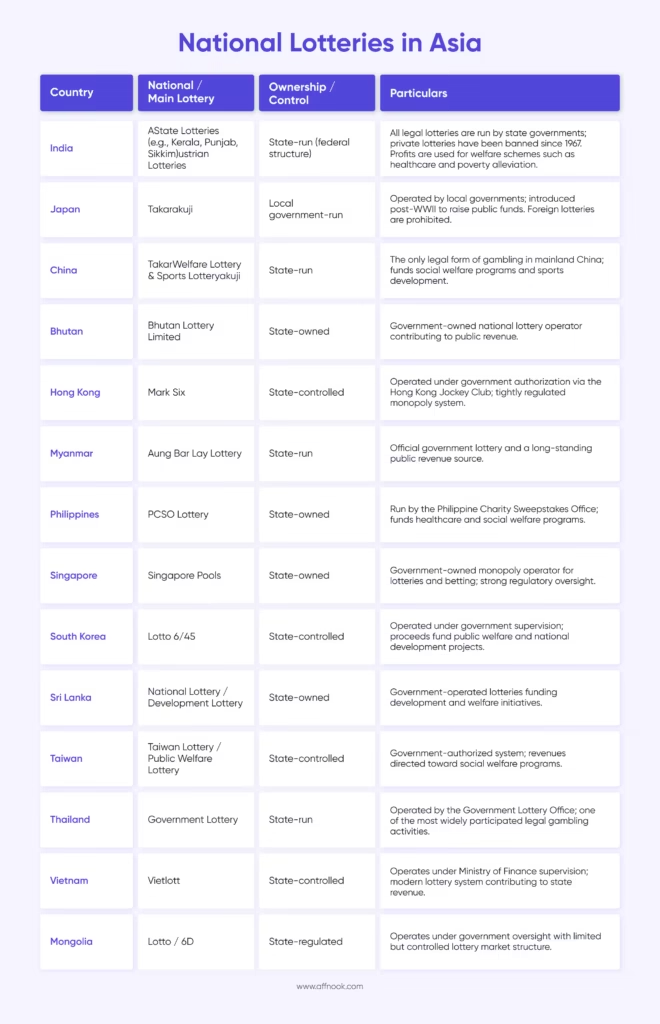
The comprehensive details of all the national lottery events conducted across Asia are listed below.
Oceania
Australia’s lottery system enables all kinds of players to conduct their own events, including state-government-owned, not-for-profit ventures as well as privately owned and run formats. At the national level, the lotteries are generally conducted by all 3 players.
The 3 major conductors of lotteries in the country are:
- The Lottery Corporation, which is an official government licensed operator, which operates in all states except Western Australia.
- LotteryWest, which is present primarily in Western Australia.
- The LotteryOffice, which is completely owned and operated by the Australian government.
But this isn’t the only country in Oceania which offers its citizens the opportunity to engage in a type of offline slot machine, at a country-wide level.
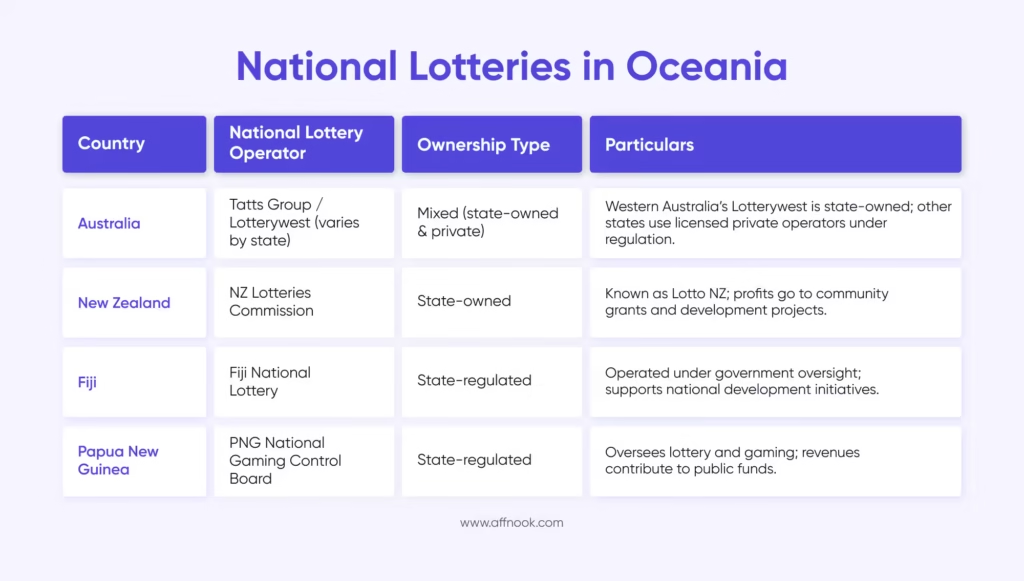
The entire list is mentioned below.
Africa
The availability of lotteries varies greatly, across the continent. The regulations and maturity of the markets also finds a great deal of variance.
South Africa’s National Lottery, regulated by the National Lotteries Commission, is among the continent’s most established, with proceeds directed toward charitable causes. Operated by ITHUBA Holdings since 2015, this lottery offers users the options of games such as:
- Lotto
- PowerBall
- Sportsstake
Nigeria, Kenya, and Ghana also operate government-backed lottery schemes.
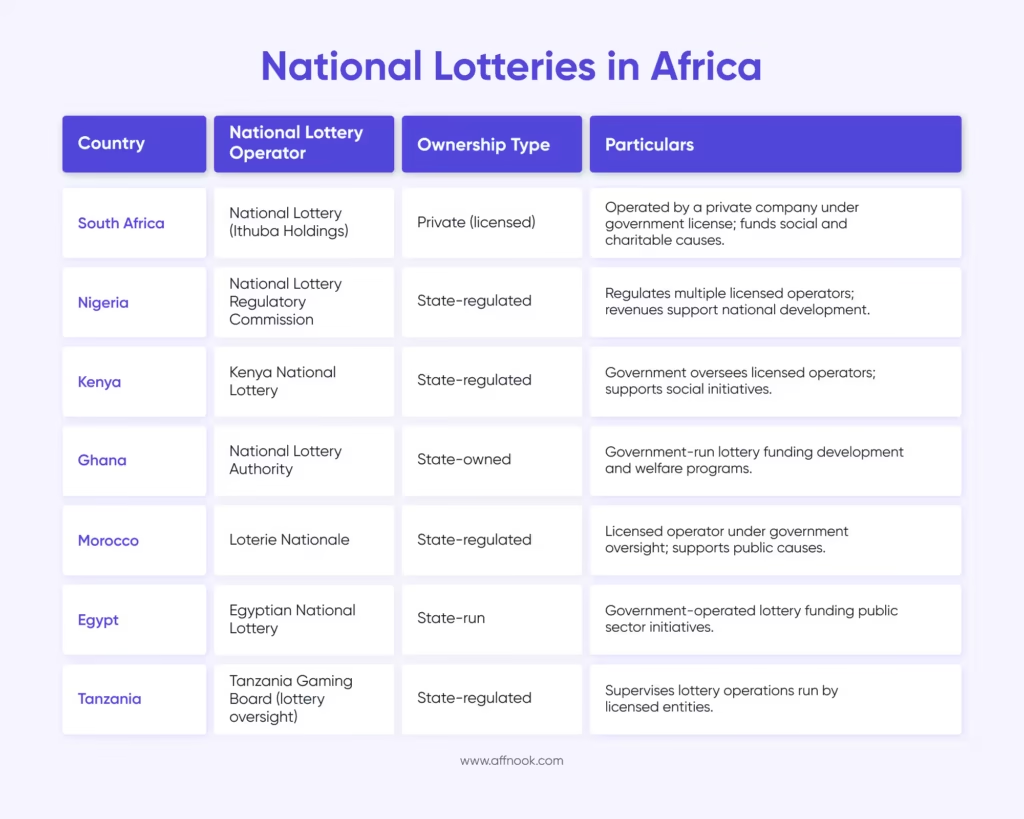
Here’s where else they can be found:
Across much of the continent, physical ticket distribution remains dominant due to limited internet penetration, though mobile-based participation is growing rapidly, particularly in East Africa, where mobile-based payments infrastructure supports accessible, low-cost entry points for players.
South America
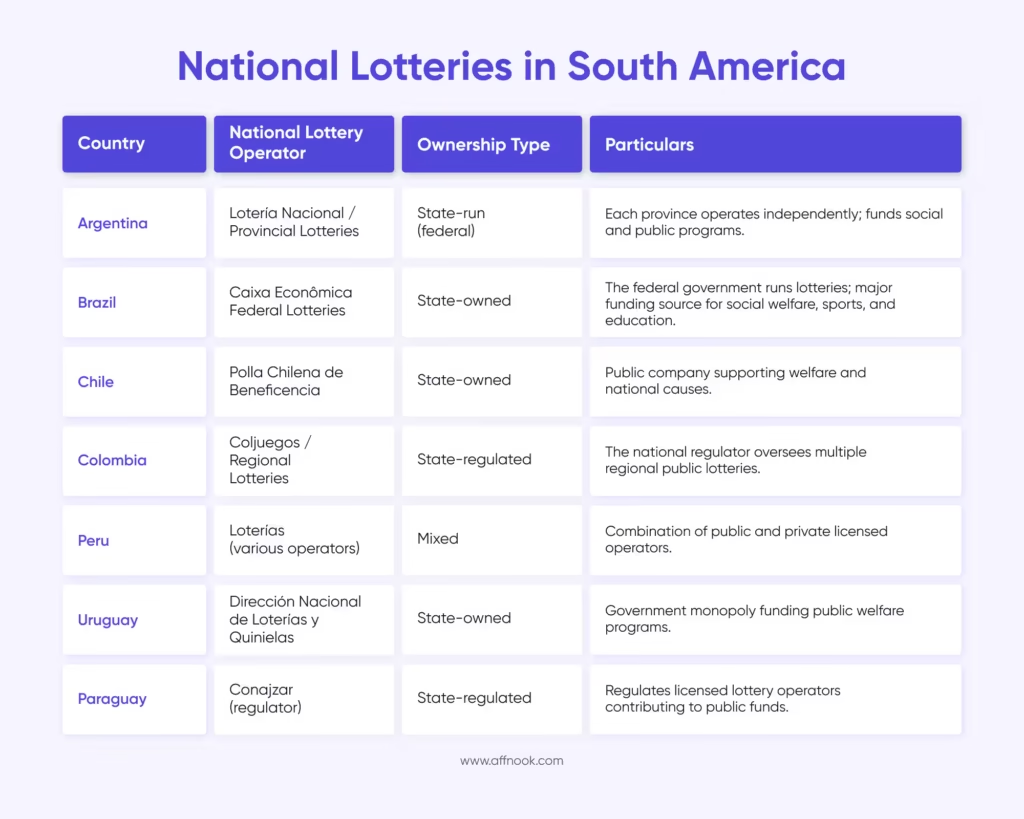
South America hosts a range of nationally organized lotteries, often deeply embedded in local culture.
Brazil’s Caixa Econômica Federal operates multiple government-run draws, including the popular “Mega-Sena”, which regularly produces jackpots comparable to those seen in larger global markets. The minimum jackpot here is R$2.5 million (roughly US $475,000).
Colombia, Argentina, and Chile each maintain state-backed lottery systems, with proceeds frequently directed toward health and education initiatives.
Which National Lotteries Can iGaming Players Participate In?
The broad regulatory framework set up in these countries through regulatory bodies determines whether the players there can take part or not.
Of course, the basic eligibility criteria for regulation across all new iGaming formats as well as existing ones applies to most lotteries as well: participants must be of legal age and aware about the rules.
Additionally, the lottery is one instrument which finds a great deal of success in the offline medium, since the activity in many countries has a lot to do with raising money for welfare initiatives and governmental spending. Therefore, small ticket sizes and physical tokens allow for distribution.
As national lotteries become another form of online mobile gambling, the scope for transnational and international participation grows.
Consider the fact that “The Lottery Office” in Australia enables the citizens of the country to participate in various events, including:
- The UK Lotto
- The Irish Lotto
- Italian Super Jackpot
- La Primitiva, and more.
The various national lottery events discussed throughout this article also can be found, and engaged with online. However, this does not extend to all lotteries.
The benefits of going online cannot be emphasized enough. From increased accessibility, cross-device enablement to greater national-level penetration and geo-fencing across countries, there’s a lot to gain from switching platforms.
Online Accessibility of National Lotteries
While offline channels are serving the majority of higher value (and longest engaged) players — over 65% — there is potential for the online channel to make lotteries bigger.
Taking the medium online will also allow for better user experiences and real-time wins, which is currently available to players through crash games and its variations within the larger mobile gambling market.
Moreover, going digital — and global — will mean existing multinational operators and brands may be required to run these events on their platforms through governmental permissions. This means possible business expansion, and by extension, a drive towards marketing online gambling for this niche too.
For online casino operators and brands, a national lottery is a positive addition to the roster for the following reasons:
- Lotteries are a low-friction user acquisition channel. A prospect doesn’t have to wonder about wagering limits or minimum registration amounts. As little as $1 can be spent on a ticket or raffle, that still opens up the possibility of winning.
- It’s a unique opportunity to capture mobile-first users. The amount of involvement required to participate is as low as simply buying the ticket. It can be done on-the-go, from anywhere.
- A lottery is a great vehicle to also advertise similar products on the same platform. Think: reality show betting, or the increasingly growing world of prediction markets.
The less stated benefits also include the fact that licensed providers in these markets won’t have to invest in extending their technology stack to accommodate this new format. Instead, the same iGaming software which enables online casino, gambling, slots or dealer games can also work for lotteries.
If the operator possesses an RNG certification from a recognized body, and has incorporated provably fair systems and fair return to player rates to achieve true randomization, they are all set.
Third-Party Lottery Betting Platforms vs Official Channels
However, just because an operator offers a lottery in a given country of operation on their platform doesn’t make it a “national lottery”. It could simply be a game available through a third-party betting platform.
Such a platform may also have other services like cricket betting or more non-traditional formats, appreciated by niche, localized audiences, such as contrarian betting. In this case, they are betting platforms, and not official channels.
There is also the chance that the same lottery can be entered through official platforms and third-party providers. In such a case, the government may have partnered with a private entity to increase the reach and availability of their offering.
Affiliate Marketing Opportunities in National Lottery Ecosystems
For operators, brands, and affiliate networks active in regulated lottery markets, the lottery vertical offers a set of advantages that are often overlooked in favour of higher-margin casino or sportsbook products.
Understanding how to extract value from lottery traffic — and route it effectively — is increasingly a competitive differentiator.
Why Lottery Traffic Matters for Operators and Affiliates
Lottery-related search terms generate consistently high volumes across markets, regardless of season. More importantly, the audience is broad.
Unlike casino or sports betting, which skew toward experienced gamblers, lottery players span age groups, income levels, and geographies — making this traffic uniquely scalable for brands operating across multiple jurisdictions.
For affiliate networks, this leads to all kinds of advantages:
- Lower cost-per-click on lottery keywords compared to casino equivalents, which means a steadier ROI on advertising spend.
- Wider top-of-funnel reach, particularly in markets where lottery is culturally normalized or has a lengthy history.
- A softer regulatory environment in certain jurisdictions, reducing compliance friction for advertising content.
Conversion Pathways that Occur Naturally
National lottery users who are already registered on a platform represent a warm audience for adjacent products. Operators running lotteries should have deliberate cross-sell strategies in place, particularly for:
- Lottery to casino: Slot mechanics are intuitive for lottery players already comfortable with chance-based outcomes.
- Lottery to sports betting: Jackpot excitement translates well to accumulator-style bets.
- Lottery to multi-product ecosystems: Brands offering a unified wallet and single sign-on across verticals see significantly stronger lifetime value from lottery-acquired users.
Tracking Challenges Related to Lotteries
Lottery campaigns introduce attribution complexities that standard iGaming tracking setups may not adequately handle. Key challenges include:
- High traffic, variable intent: Lottery audiences are broad, but conversion rates vary significantly by market, draw type and prize size.
- Cross-device journeys: Users frequently discover a lottery draw on desktop and complete their purchase on mobile, creating gaps in standard cookie-based attribution.
- Cookie deprecation: As third-party cookies are phased out, operators and networks relying on legacy tracking infrastructure will face growing blind spots in campaign data.
However, using postback tracking and tools like Affnook which are built for cookieless attribution recording allows operators, brands and affiliates networks to bypass all of these roadblocks.
Summing Up
National lotteries present a compelling and often under-leveraged opportunity for operators, brands, and affiliate networks operating within regulated iGaming markets. The combination of:
- broad demographic reach,
- cultural embeddedness, and,
- natural seasonality
makes the lottery vertical a reliable source of scalable, top-of-funnel traffic — one that, when managed well, feeds higher-value products across a platform.
For affiliates, the key lies in building conversion pathways beyond the lottery itself. For operators, it lies in pairing accessible product design with infrastructure that can handle the volume and complexity that major draws bring.
Help Centre
What is the national lottery?
A national lottery is any government-backed draw, raffle, or numbers game organised at a country level, either run directly by the state or through a licensed operator under strict regulatory oversight
Its primary purpose usually lies in either entertaining players or creating sources of revenue for specific activities which the government wishes to undertake. These could be infrastructure, education, healthcare, or community welfare programmes.
Is “Powerball” a national lottery? And is “EuroMillions” a national lottery?
The Powerball is a national-level lottery held across 45 states in the United States of America. It is conducted on the federal or state level. The EuroMillions operates similarly in Europe, available across 9 countries on the continent.
Both are transnational in structure, though each participating country or state treats them as part of their own regulated framework.
When did the UK national lottery start?
Launched in 1994 (on November 19, to be exact), the UK national lottery was first conducted by the Camelot Group, which played the role of being its first licensed operator. Its debut was shown live on the television, which attracted significant participation from across the nation.
Since then, it has expanded to include multiple game formats, including EuroMillions, Thunderball and various instant win scratchcard products available both in-store and online.
How to claim national lottery scratchcards?
If a user wins a small scratchcard, it can be redeemed at the authorized retailer’s outlet, where the given card was purchased. Mid-range ones can often be collected through the website of the lottery-conducting body, or in older markets, through post.
Large prizes, however, require a formal claims process, which includes the verification of the winner’s identity and a direct transfer to their bank account, usually handled through the lottery operator’s dedicated prize fulfilment team.
How long do national lottery payments take?
Payment timelines vary depending on prize size and the operator’s internal processes. Smaller wins paid at retail are immediate. Online account credits typically process within 24 to 72 hours.
Larger jackpot payments, which require identity checks and formal verification, can take anywhere from a few days to several weeks before funds are fully transferred to the winner.