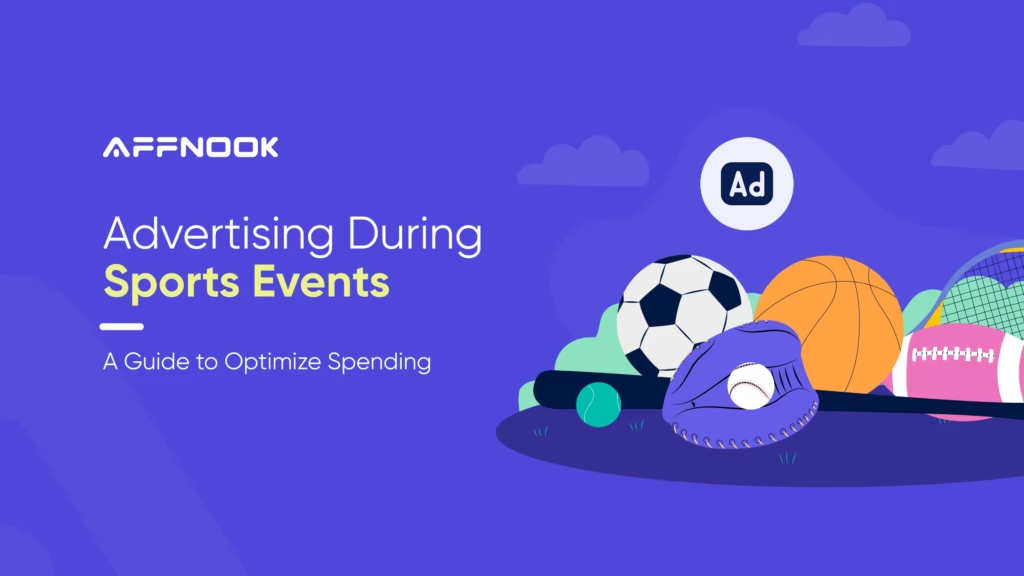
There are only a few global sporting events, including the FIFA World Cup, UEFA Champions League, International Cricket World Cup, and Olympics, that create drastic spikes in betting intent compared to others. They provide the greatest opportunity for returns on online gambling advertising around them when executed correctly.
Rather than spreading expenditure across all major sporting events, brands should focus their efforts on these key timeframes and begin preparing as early as possible.
By deciding on their annual budget, marketing channels, and campaign structure early, iGaming brands can create and scale all advertising in tandem with periods of excessive demand. This grants them the ability to rapidly increase spending, capture quality traffic, and maximise their return on investment during these peak periods.
Global Sports Events: A High-value Window
Why These Events Matter
Global sporting events help boost interest in online gambling, leading many new people to want to bet on these types of events. Therefore, advertisers have a fixed time period during which they can establish a strong connection with potential customers by leveraging the moments of peak demand.
- Unmatched global reach: In total, over 5 billion people have turned up to watch the FIFA World Cup 2022 (Argentina–France), with the final being viewed by around 1.5 billion.
This unmatched global reach makes the FIFA World Cup one of the most valuable moments for online gambling advertising, offering iGaming operators access to massive, high-intent audiences at scale.
- Huge betting volume: The betting volume placed worldwide on the FIFA World Cup 2022 through one major betting company was over $2 billion. This demonstrates how betting activity increases when there are significant sporting events.
- Surge in engagement: Events like the UEFA Champions League, Rugby World Cup, Kentucky Derby, and other international competitions attract viewers but also significantly increase betting volume and liquidity, driving competition among operators.
Because these sporting events attract continuous interest and have generated significant consumer activity, operators can use their knowledge of previous editions of the sporting event to know when peak levels of interest will occur, as well as where to promote their advertising campaigns.
Rather than waiting until just before an upcoming sporting event, bookmakers can develop marketing strategies that focus on global sporting events to maximize their potential to grow their revenues.
Planning Your Advertising Budget
The success of online gambling advertising around global sports events isn’t necessarily determined by the amount of dollars you spend, but by the timing and type of ads you run.
Pre-Event Preparation
Pre-event advertising allows you to warm your audience, test messaging several weeks before the event, and allows platforms to optimize.
During this time, you should:
- Identify your high-intent audience using historical betting behavior, deposit frequency, and event engagement from prior tournaments.
- Test your creatives, offers, and landing pages to identify which messaging drives higher registration-to-deposit rates for each audience segment.
An example would be a live–score–themed banner showing a goal celebration versus a stats-driven banner highlighting player performance, both of which can create a better user experience based on what you tested. - Set your benchmark for performance.
Maintaining steady, controlled spending during this phase reduces inefficiencies once demand peaks.
Peak Event Strategy
Match days, knockout rounds, and finals- these are the periods when both competition and user interest are at their peak. Flexible and performance-based budgets are critical during these times to ensure online gambling advertising remains efficient, responsive, and ROI-driven.
Examples of effective tactics include the following:
- Bidding higher on campaigns that are performing well
- Prioritizing live and in-play betting audiences
- Pause any underperforming campaigns in real-time
Using focused allocation will allow business owners to take advantage of peak demand while not overspending or wasting resources.
Post-Event Retargeting
After an event has passed, interest isn’t lost; however, it does take a different direction. Many people showed interest in your event, were present, and viewed it, but still have not registered or made a registration or deposit. This makes retargeting after an event critical to ensure you get your ROI.
This phase focuses on:
- Targeting users who engaged with your event and giving them personalised offers
- Encouraging users who made a second deposit and continue to bet
- Converting short-term users into long-term players
Lower spending in this area can still yield very high-efficiency results. This is due to the fact that the audience is already familiar with your brand and requires fewer incentives to make a purchase or conversion.
This is how you plan your budget to keep your online gambling ad spend in check.
Real-Time Data and Creative Optimization
Betting intentions can change rapidly at high-profile sporting events. Therefore, current information allows for real-time changes to online gambling advertising efforts. This takes into account all of the rapid changes in a bettor’s behaviour based on new information.
Advantages of Real-Time Signals
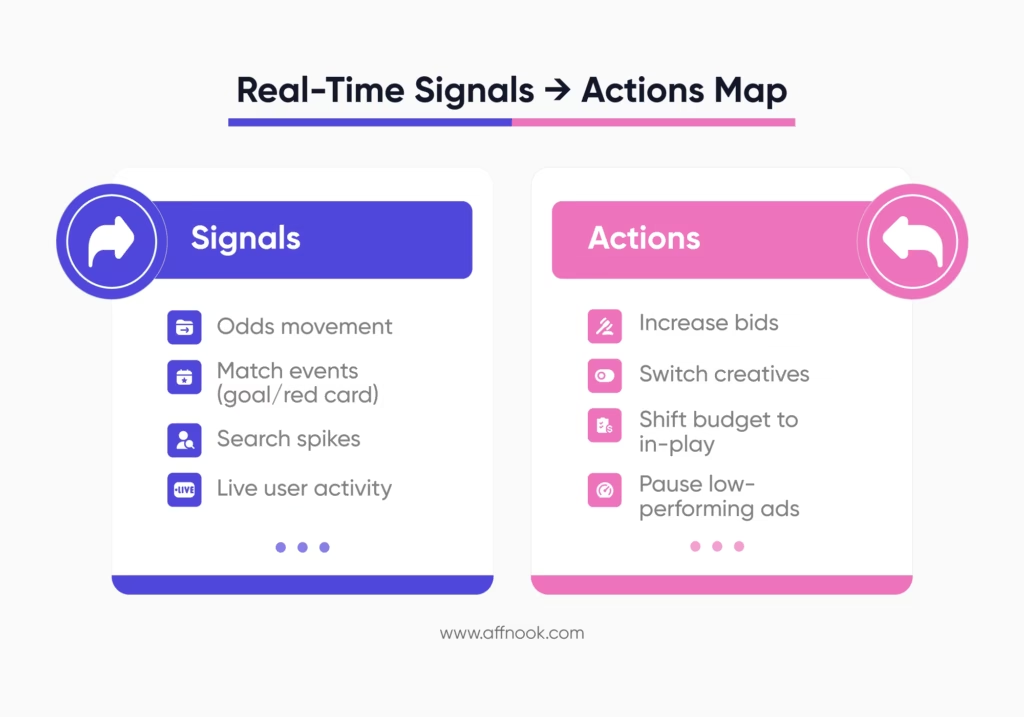
Operators use live signals, such as:
- match progress,
- changes in odds,
- increases in search volumes,
- user activity, etc.
This is to establish how to adjust their bidding strategy, budget levels, and target audiences based on when consumer interest is at its highest.
It means that resources can be allocated at these peak times (i.e., shortly before kick-off, during half-time, after the final whistle, etc.) and away from low engagement periods (like between match days).
The use of real-time data allows operators to efficiently reach the audience with the highest probability of converting at that moment.
Optimizing Creative Ads
Live event creative performance depends on relevance. Advertisements reflecting real-time context, like:
- the match currently being played,
- the current odds,
- and events surrounding it, consistently outperform generic equivalents.
For instance, during live football or rugby matches, operators have reported higher clickthrough rates by dynamically adapting their creatives to incorporate in-play action such as goals, red cards, or current odds rather than using static pre-match betting ads over the duration of the event.
By refreshing messages during the most relevant times and by ensuring alignment of offers to live events, engagement will increase, click-through rates will improve, and operators will convert greater interest without necessarily increasing their total spending.
Audience Segmentation and Personalization
Just because global sports events attract massive audiences doesn’t mean that all users have the same intent. The most effective online gambling advertising will reach all users by segmenting them and then delivering an appropriate offer based on the user’s behavior and context.
Segmenting by Behavior and Intent
User interaction fluctuates dramatically during sporting events. These fluctuations come from both casual and high-frequency bettors.
Operators can group their audience into various segments based on the actions performed (e.g., bet, browse, deposit). This helps create tailored messages and more efficient budget allocations from operators across all different segments.
Users who have placed in-play wagers during recent events can be shown odds boosts or bet-and-get offers, while those who have simply browsed the markets could be offered low-risk welcome bonuses that encourage a new deposit.
Performance-driven offers will work best for higher-intent segments, while entry-level messaging will be more appropriate for casual or first-time users.
Geo and Demographic Targeting
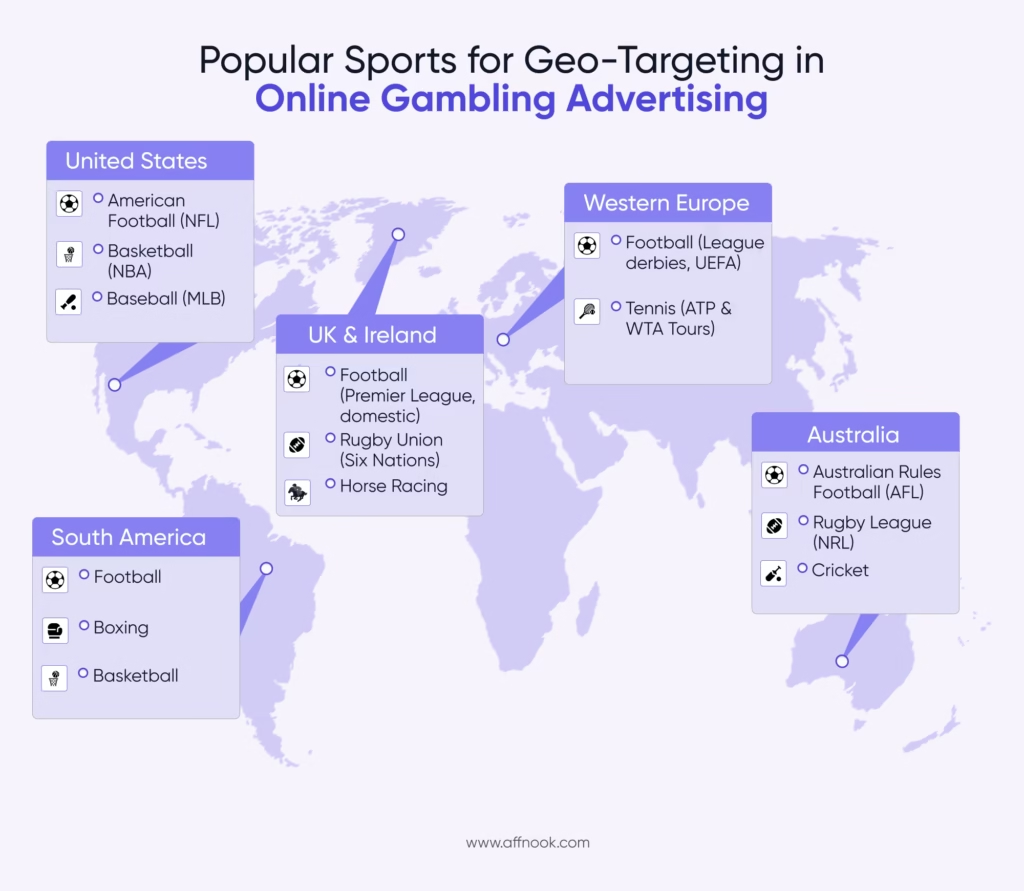
The impact that geography and demographics have on how users respond to sports betting marketing is large. Different regions have different levels of interest, preferred sports, and betting habits, which means localized messaging is a must.
For example, operators can align their promotion of live rugby betting during Six Nations match windows in the UK and derby-based football during local rivalry matches in Europe. This allows them to align campaigns with areas of peak interest in certain regions without increasing their cost of doing so.
By aligning their creative, offers, and timing with regional preferences and time zones, operators can obtain better engagement and conversion rates without increasing the overall cost of marketing.
Channel Strategy: Where to Spend for Maximum ROI
The performance of your online gambling advertising activities during global sports events is determined by the channels used to reach consumers.
Understanding when and where to spend your advertising budget, using both immediate and long-term consumer data, is important. It will allow you to allocate your budget to those sports channels that will give you the most return on investment, versus spending equally across all channels.
Programmatic and Real-Time Bidding
With programmatic advertising, operators are able to make real-time bid adjustments based on user behaviour, performance, and live event signals.
This capability gives operators the freedom to channel budgets immediately towards placements that have the greatest potential for high conversion rates and stop spending in areas that do not warrant the spend due to inefficiency.
Maximizing ROI:
When it comes to programmatic spend, it is recommended to focus on high-intent moments such as match kick-off, half-time, and in-play betting windows. Use data from previous performance to help you identify the most premium sports inventory to advertise within each of these high-intent moments.
By using strict frequency caps and automated bid rules, you can maximize your budgets by scaling them only when there’s a higher probability of conversion. This will help you avoid paying excessive amounts for online gambling advertising during competitive periods.
Search and PPC
Throughout all major sports events, search is one of the most significant intent-based marketing channels, particularly for live betting and event-specific queries. When users conduct searches during a match, such as for a specific type of bet, they are typically closer to making an actual purchase decision than those who do not search until after the event.
Maximizing ROI:
Operators should:
- bid aggressively on only high-intent keywords,
- create event and match-specific ad copy,
- and make bid adjustments dynamically around peak periods of time during the match, such as at kick-off, half-time, or timeouts during games like cricket, football, rugby, etc.
Social Media and Content Platforms
Social media channels create opportunities for brands to get back in touch with users who previously interacted with:
- match information,
- odds pages, or
- event ads before and during sporting events
These channels are a great opportunity to reconnect with those who are already interested in your brand.
Maximizing ROI:
Operators can reduce spend by retargeting users who:
- watched match clips,
- visited betting pages, or
- engaged with event-related posts,
All this can be done while still reaching high-intent customers using look-alike audiences derived from active depositors or people who deposited the most recently into the account as potential new high-intent users.
To create continued relevance throughout high-traffic times, it is helpful for operators to use short-form creative strategies such as live score updates, limited-time odds boosts, or match-specific offers.
OTT and Streaming Partners
OTT and streaming platforms are services utilized to view live or on-demand sports streamed through the internet, including sports-related platforms, broadcaster streaming applications, or connected TV environments.
Unlike traditional digital ads, placements on these platforms appear alongside premium, full-screen sports content, often on smart TVs or mobile apps, where viewer attention is significantly higher.
Maximizing ROI:
Because OTT inventory is premium and limited, campaigns achieve better performance when targeting live matches, pre-game build-up, and half-time rather than an extended, always-on schedule.
Using sport, league, or event-specific placements in conjunction with geo targeting provides better impression management. On the other hand, creatives that are contextualised and match the timeframes of the event deliver improved outcomes without additional costs.
Common Mistakes and How to Avoid Them
In high-traffic periods, ineffective online gambling advertising often results from poor planning, weak targeting, and limited performance visibility.
- Not having access to real-time performance indicators.
- Targeting all audiences instead of high-intent betting segments.
- Launching untested creatives and offers during events with high levels of competition.
- Delivering static ads that do not reflect the live context of the match.
- Not retargeting after the event to achieve a positive ROI.
Addressing these issues early helps operators maintain efficiency and protect ROI during peak-demand events.
Real Life Examples
LiveScore Bet — World Cup In-Image Ad Campaign
Through a collaboration with LiveScore Bet during the 2022 FIFA World Cup, a major sports publisher was able to eliminate the traditional approach of placing advertisements on web pages.
With LiveScore Bet, they place the ads directly into high-quality football images on the leading sites such as football365.com and teamtalk.com. This in-image placement was aimed at football fans of 18 years and above who are actively engaging with World Cup content.
Key Outcome:
This innovative approach supported online gambling advertising by placing engaging ad formats directly in front of the users when they were actively consuming FIFA World Cup content. The campaign acted as a means to raise interest in betting offers and the relevance of ads.
By combining these in-article placements with contextual relevancy, advertisers can leverage the periods when user interest is at its peak and sustain capped costs, thereby boosting the ROI of the campaign as a whole.
Bet365 — “Breaking News” Premier League Campaign
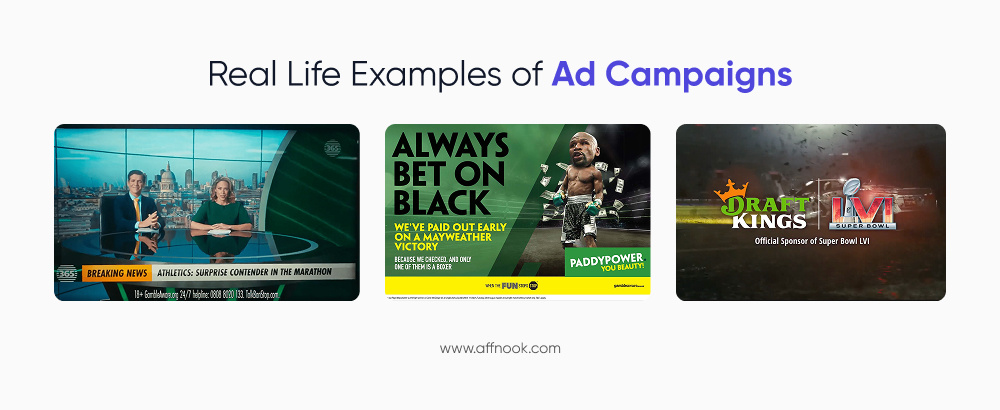
For the launch of the Premier League season, Bet365 has created a creative marketing campaign that uses a parody-style news story format for its launch.
This humorous approach has allowed their customers and communities on digital platforms to connect with the unpredictable nature of betting on sporting events in a way that they might not have previously imagined.
What It Shows:
Rather than following a traditional model of promotional banners, Bet365 used a much more creative approach through storytelling and entertainment to create an identity for their business as well as to differentiate themselves from the competition to gain market share.
Sports marketing companies can adopt this approach when planning their online gambling advertising strategy for major sports events.
Paddy Power — Character-Driven Entertainment Ads
Paddy Power employs humorous personalities in its marketing efforts, but it doesn’t use traditional promotional methods. Instead, the majority of their advertising focuses on how people feel about watching their favorite teams and playing sports.
Key takeaway:
The takeaway from this is that emotional resonance with target audiences during peak periods increases brand awareness and improves the efficiency of future acquisitions.
DraftKings — Super Bowl Emotional Positioning
During the Super Bowl, DraftKings used marketing to show sports gambling as a part of each sporting ritual, where people feel a sense of belonging and are passionate fans.
Lesson:
Through the use of the emotion-first marketing message, they broadened the potential to attract people who may not typically participate in sports betting, meaning they will create brand equity and lift in the long term, even though there may not be evident short-term metrics.
Metrics and KPIs for Success
To accurately measure the ROI from online gambling advertising during global sporting events, it is necessary to utilize multiple metrics. This will help you to evaluate the performance of your advertising in terms of user acquisition, efficiency, and retention:
- Cost per Acquisition (CPA): Track how acquisition costs have changed during peak and non-peak times.
- Registration to Deposit Rate: The quality of the users that were acquired, not just their quantity.
- Betting Activity & Handle: The frequency of first bets placed by acquired users, as well as their in-play betting activity and the average size of their bets.
- Lifetime Value (LTV): The ability to determine whether the users that were acquired through an event actually provide longer-term LTV.
- Retention and Repeat Deposits: Understand how effectively the strategies implemented after the event convert the interest generated from that event into long-term engagement.
- Channel-Level ROI: Compare the performance of different channels in terms of the highest return on investment for the peak event spend.
Tracking and attributing these KPIs accurately is possible through iGaming affiliate software like Affnook, which enables operators to monitor acquisition sources, user behavior, and post-event performance across channels in real time.
These KPIs will help determine whether the spend on the event generated sustainable growth or simply created short-term spikes in traffic.
Conclusion
Online gambling advertising through global sports events presents significant opportunities and potential for success through careful planning rather than reactive spending. Operators who plan year-round, allocate appropriately, and optimize in real time can achieve peak ROI and continue to create long-term player value.
Help Centre
How can online gambling advertising budgets be optimized during major global sports events?
To achieve maximum efficiency and profitability in online gambling advertising, advertisers should focus their budget allocation on important, high-value events and divide budgets among pre-event, peak, and post-event phases, taking advantage of real-time reporting of performance to adjust budgets toward channels with the highest rates of conversion.
Which global sports events deliver the highest ROI for online gambling advertising?
Such high-intent betting events as the FIFA World Cup, UEFA Champions League, Cricket World Cup, and Olympic Games have consistently produced the greatest number of new bettors, registrations, and deposits. Therefore, the best return for online gambling advertising investments.
Why is real-time data important for online gambling advertising during live sports?
The advertisers can modify their bid prices, advertising materials, and target customers in accordance with the users’ activities and game outcomes in real-time. By taking full advantage of real-time performance reporting, online gambling advertising remains competitive and profitable during times of intense competition.
How does audience segmentation improve online gambling advertising performance during sports events?
Audience segmentation is a way for online gambling companies to customize offers for users based on their behaviour, intentions, and location, allowing operators to make targeted offers to quality users and spend their advertising budgets where they are most productive.
What metrics should operators track to measure success in online gambling advertising campaigns?
Key metrics include CPA, registration-to-deposit rates, betting activity, lifetime value, retention, and channel-level ROI. These give operators the ability to determine whether their online gambling advertising investments support long-term growth or simply create short-term traffic.